Your next getaway should be about choosing a great pitch, not worrying about whether your vehicle will still be there when you return. A few well-chosen accessories, backed by sensible everyday habits, can make your caravan, campervan or motorhome harder to target without turning every stop into a security drill.
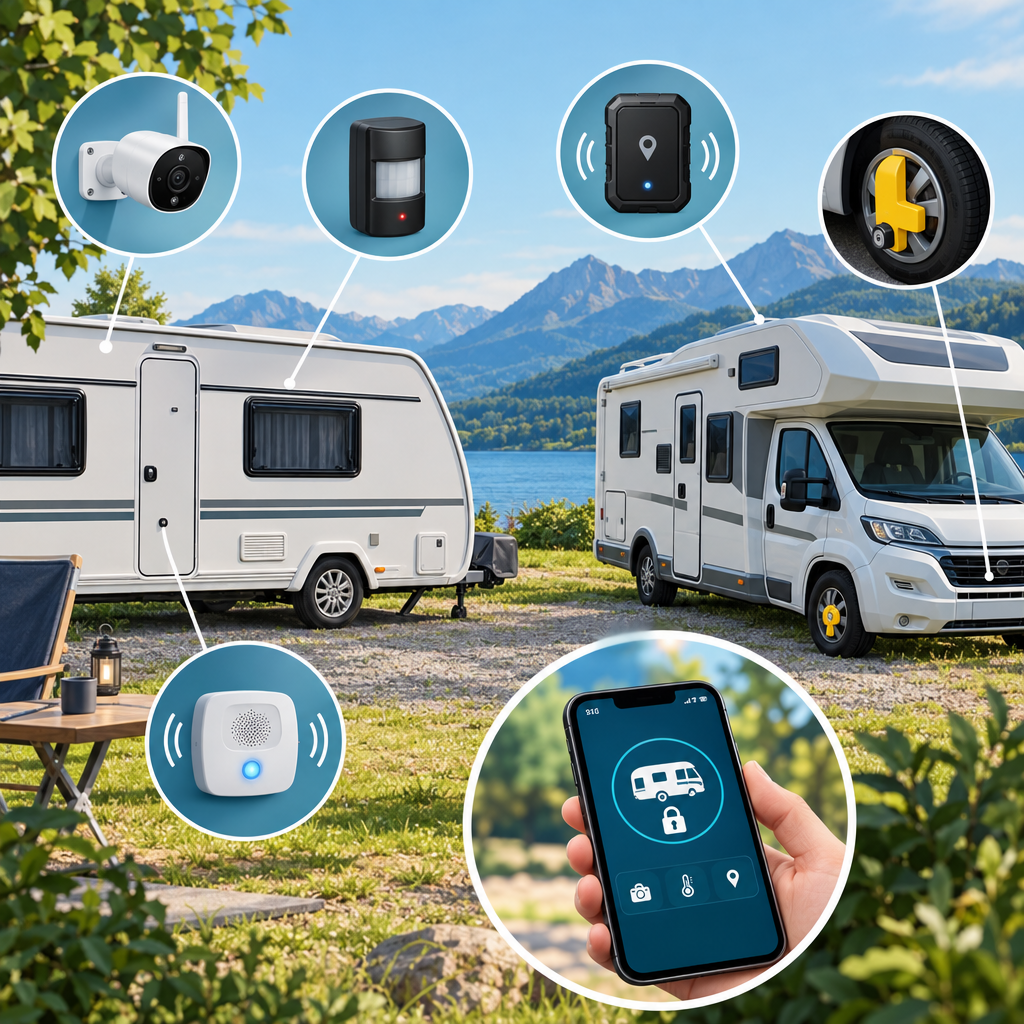
The most useful approach is layered security. Visible deterrents, such as a wheel clamp or steering wheel lock, can discourage opportunists. Strong physical barriers make theft more difficult and time-consuming. Alarms help draw attention to interference, while trackers can alert you to unexpected movement and support recovery if the vehicle is stolen. Each layer has a different job, so complementary devices usually make more sense than relying on one expensive gadget.
Your priorities will depend on what you drive or tow. For a touring caravan, preventing someone from hitching up and towing it away is central. Campervans and motorhomes also need protection against vehicle theft, alongside secure doors, windows and storage compartments.
Before shopping, think about where you usually park and how long your vehicle stays unattended. A caravan spending winter in storage faces different risks from a campervan parked on a driveway or a motorhome used for regular overnight stops.
Set a realistic budget and read your insurance conditions first. Your insurer may specify particular devices, ratings or fitting requirements. Start with those essentials, then choose extra protection that suits your travels and is simple enough to use every time.
In a Hurry? Jump Straight to Our Product Reviews
Already know what you need? Skip straight to our tested gear & buying guides below ↓
Table of Contents
- Locks, Wheel Clamps and Other Physical Deterrents
- Alarms That Protect Your Vehicle and Living Space
- Trackers and Connected Theft Alerts
- Cameras, Lighting and Smart Monitoring
- Safety Gadgets That Deserve Space on Your Checklist
- Choose the Right Kit and Build Better Security Habits
- Finish with a Simple Pre-Trip and Storage Check
- Related Posts:
Locks, Wheel Clamps and Other Physical Deterrents
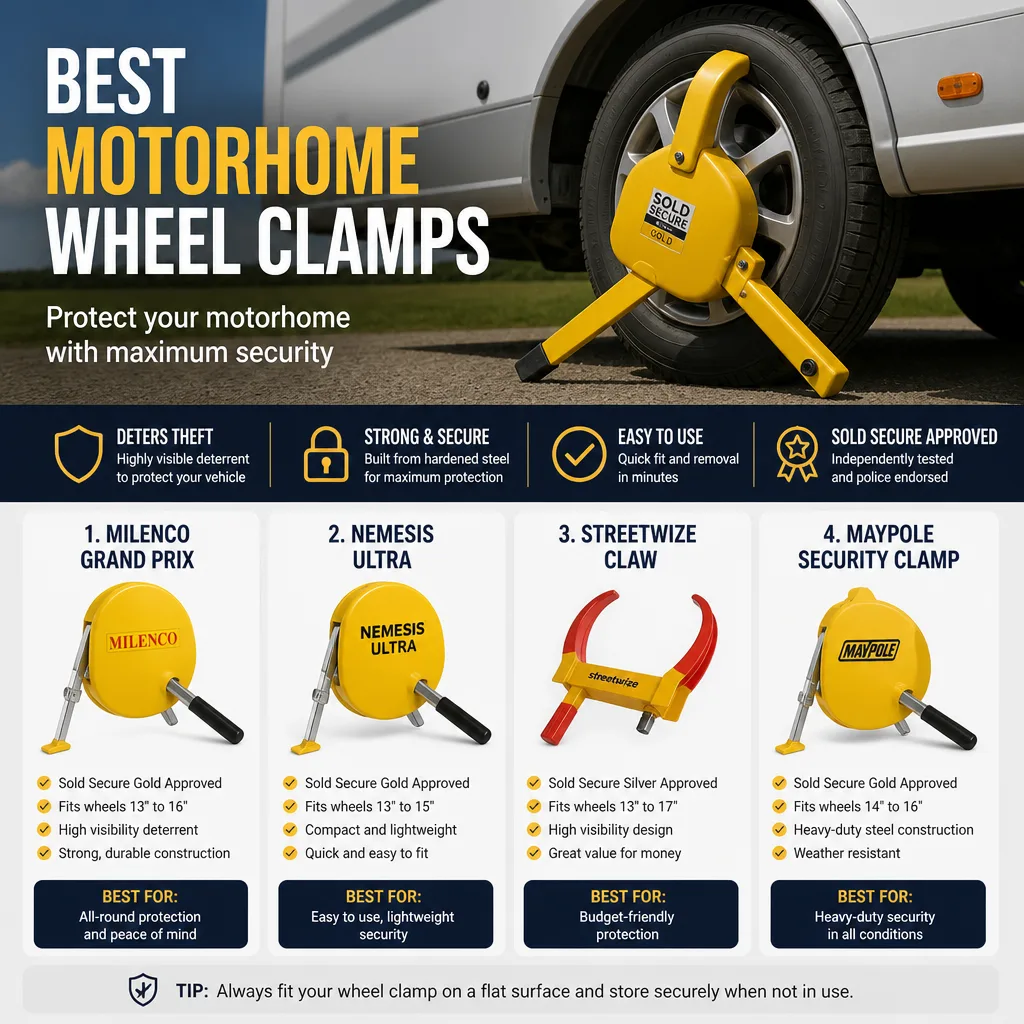
Physical security works best when devices protect different weak points. For touring caravans, a hitch lock secures the coupling to help prevent unauthorised hitching. A wheel clamp grips a tyre and wheel to restrict rotation, while a wheel lock typically secures through the wheel to a dedicated receiver or chassis mounting. Designs vary, so check how each device works. Pairing a hitch lock with suitable wheel protection creates two separate obstacles, rather than relying on one lock.
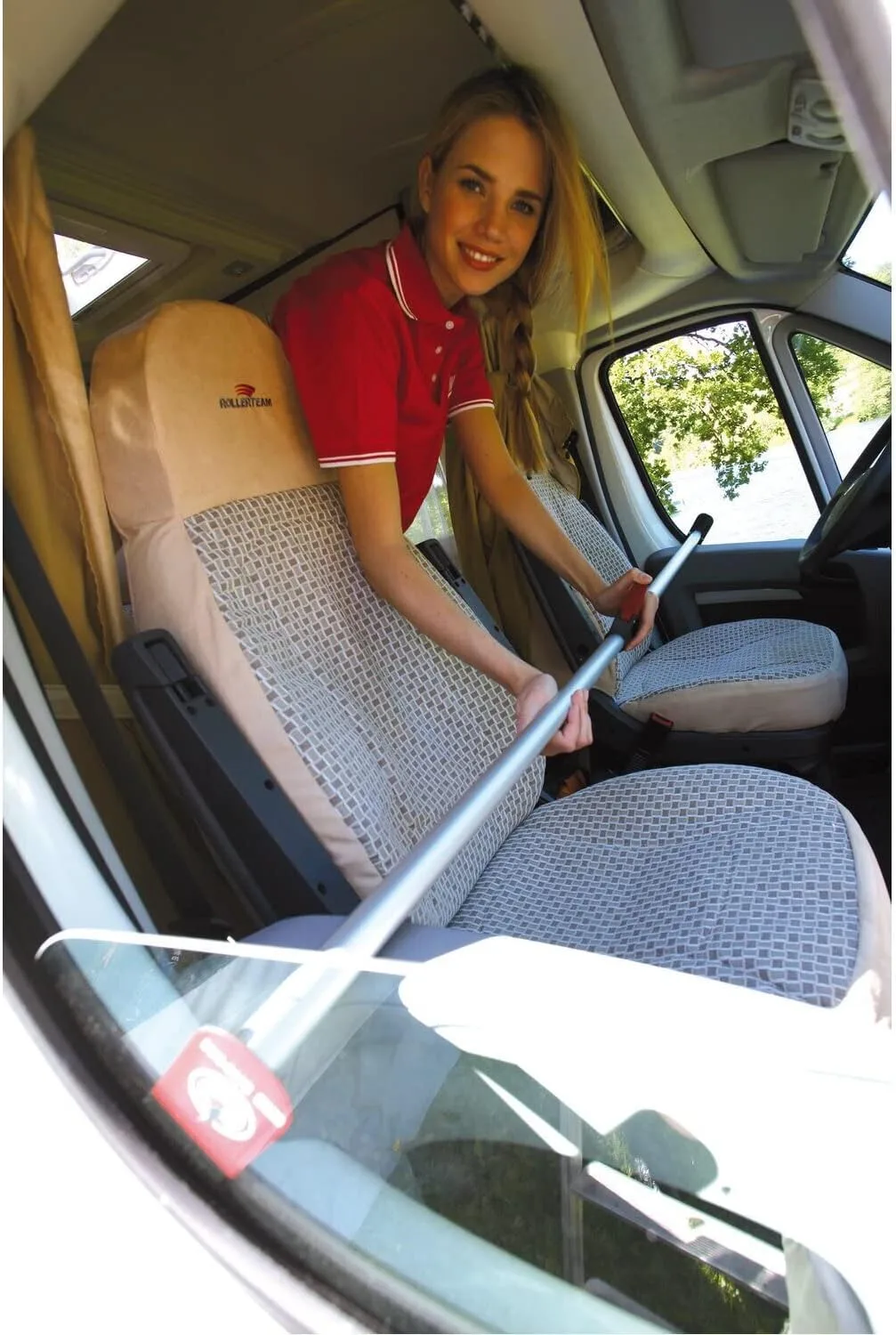
For campervans and motorhomes, a visible steering wheel lock can discourage opportunists, while a pedal lock restricts access to driving controls. A professionally fitted additional immobiliser can provide another barrier to starting or driving the vehicle. Check compatibility with your exact model, including its electronics, transmission and any existing security system.
Consider access to belongings, too. Habitation door locks and model-specific cab door upgrades can reinforce entry points. Suitable locks for external lockers, garages and bike racks help protect equipment, although their effectiveness also depends on the strength of the door, rack and mounting points.
When shortlisting accessories, look for:
- Independent security testing, such as Sold Secure approval where relevant.
- Robust construction and a precise, model-specific fit.
- Manageable weight and straightforward fitting, so you will use them consistently.
Check the exact product and rating against your insurer’s requirements. Approval of one device does not mean every product from that brand qualifies.
Finally, additional locks must never compromise emergency exits or trap occupants inside. Before using any lock while you are aboard, make sure everyone can release it quickly from inside without searching for a key.
Alarms That Protect Your Vehicle and Living Space
An alarm adds another layer of protection, but check exactly what it covers. A factory-fitted cab alarm may leave habitation doors, windows and external storage compartments unprotected. Look for a system designed for your vehicle’s full layout, with sensors covering vulnerable access points.
Common features serve different purposes:
- Door contacts trigger when a protected door or locker opens. Window contacts can extend protection to the living area.
- Movement sensors detect activity inside, helping identify entry through an unmonitored opening.
- Tilt detection can warn if someone raises the vehicle, potentially signalling attempted wheel theft or loading onto a recovery truck. Check how the system handles normal suspension movement.
- Tamper alerts flag interference with protected components, such as the siren or wiring, depending on the system.
For overnight stops, a night or perimeter mode is particularly useful. It keeps entry-point sensors active while disabling internal movement detection, allowing people or pets to move around inside. Check which sensors remain armed rather than assuming every system works alike.
A standalone siren draws attention nearby, but you may not hear it from a distant pitch or while out exploring. Connected alarms can send phone notifications, although these depend on mobile coverage and may involve subscriptions. Check standby power consumption, particularly during storage.
Choose an installer familiar with leisure vehicles where professional fitting is needed. Position sensors according to the manufacturer’s guidance, away from moving blinds, heater airflow and other potential triggers. Test the system regularly, including after layout changes, so it remains dependable without disturbing neighbouring pitches with false alarms.
Trackers and Connected Theft Alerts
A tracker can help you locate your caravan, campervan or motorhome and support recovery if it is stolen. It does not physically prevent theft, so treat it as another security layer rather than a replacement for sturdy locks.
Useful features include movement alerts and geofencing, which notifies you when the vehicle leaves a set area. A backup battery can keep the tracker working if its main supply is disconnected, while tamper notifications may warn of interference. For longer storage periods, look for low-power settings, but check whether these reduce how frequently the location updates.
With a self-monitored tracker, alerts come to your phone and you decide what action to take. A professionally monitored service typically has a control centre that checks alerts, contacts you and follows an agreed recovery procedure, potentially liaising with police. Confirm operating hours, coverage and any steps you must complete to activate recovery support.
Compare the purchase price, fitting charges and subscriptions, including roaming coverage for overseas trips. Satellite positioning can struggle inside buildings or beneath cover, and mobile connections may be unreliable in remote areas. Neither location updates nor alerts are guaranteed everywhere.
Bluetooth item finders are not equivalent to dedicated vehicle trackers. They generally rely on nearby compatible devices to report their position, and anti-stalking alerts may reveal their presence to someone travelling with the stolen vehicle.
If an alert suggests theft, contact the police and follow your provider’s recovery process. Share available location information, but never approach suspected thieves or attempt recovery yourself.
Cameras, Lighting and Smart Monitoring
Cameras can help you check on your caravan or motorhome and record suspicious activity, but each type has limits. A dashcam with parking mode usually watches the view through the windscreen, sometimes with rear-camera coverage too. Check how recording is triggered: some models capture impacts rather than continuous activity. Compact security cameras can cover a doorway, garage or living area, while a video doorbell mainly shows whoever approaches the entrance. None provides all-round protection on its own.
Live viewing and remote alerts may need mobile data, a reliable Wi-Fi or cellular connection, and an ongoing subscription. Campsite Wi-Fi is not always dependable, so check whether the camera can record locally when offline.
Power matters, particularly during storage or long stays without a mains hookup. Parking-mode dashcams can drain starter batteries unless correctly installed with low-voltage protection. For leisure-battery-powered equipment, confirm voltage compatibility, power consumption and suitable wiring. Low-voltage cut-offs help, but do not make battery capacity unlimited.
Position cameras to cover useful access points without obstructing the driver’s view or emergency exits. For outdoor units, check weather resistance and how securely they mount. Look at real night-time footage before buying, since window reflections and poor lighting can obscure faces. Protect recordings with secure local storage or a suitably protected cloud account.
Motion-activated lighting can improve visibility where permitted. Aim it towards your own entrance, not neighbouring pitches, and follow campsite rules.
Respect other people’s privacy, minimise coverage of shared spaces and check local recording rules. Keep connected devices updated and use strong, unique passwords, with two-factor authentication where available.
Safety Gadgets That Deserve Space on Your Checklist
Security gadgets help protect your vehicle and belongings, but personal safety equipment protects the people travelling in it. Both deserve space in a well-protected caravan, campervan or motorhome.
Fit smoke and carbon monoxide alarms explicitly suitable for leisure vehicles. They detect different hazards, so one does not replace the other. Follow each manufacturer’s guidance on positioning, installation, testing and replacement, including the alarm’s expiry date. Check them before trips and never remove batteries simply to silence a nuisance alert.
A fire blanket and a suitable extinguisher are also worth carrying, positioned where you can reach them without approaching a fire. Choose equipment appropriate for your vehicle and likely risks, and learn how to use it beforehand. If a fire starts, getting everyone outside and calling the emergency services comes first. Only tackle a small fire if it is safe, you know what you are doing and you have a clear escape route.
An LPG leak detector can provide an additional warning of escaped gas when correctly selected and positioned. It is not a carbon monoxide alarm, and it cannot replace ventilation, safe appliance use or professional gas-system checks. Treat any suspected leak seriously, even if the detector stays silent.
For travelling days, a tyre-pressure monitoring system offers useful early warnings of pressure loss, with some systems also reporting temperature. Choose sensors compatible with your tyres’ operating pressures. Monitoring remains a backup, not a substitute for checking cold pressures, tyre condition and age, or keeping the vehicle within its loading limits.
Choose the Right Kit and Build Better Security Habits
Start with your insurer’s requirements before buying anything. Check whether your policy specifies particular locks, security ratings, trackers or storage arrangements, including when devices must be used. Then prioritise strong physical protection, adding alarms, tracking and cameras according to your parking risks and budget.
Your priorities will depend on how you use the vehicle:
- A caravan in storage: focus on approved hitch and wheel protection, plus a secure storage site. A tracker with low-power settings may be useful during long unattended periods.
- A campervan on the driveway: consider a visible steering wheel lock, compatible additional immobilisation and better protection for cab doors.
- A motorhome used for extended touring: prioritise practical door security, an alarm with a suitable night mode and tracking coverage for the countries you visit.
Compare total ownership costs, not just purchase prices. Professional fitting, subscriptions, replacement batteries, servicing and mobile data plans can all affect affordability.
Good habits make every accessory more useful. Lock all access points, including rooflights and external lockers, keep valuables out of sight, and store keys away from doors and windows. For passive keyless-entry vehicles, a tested signal-blocking pouch may reduce relay-theft risk. Check that it actually blocks the key’s signal, and remember it only addresses certain theft methods. Avoid publicly sharing live locations or announcing that your vehicle is unattended.
For longer storage, look for controlled access, good lighting and suitable anchor points where available. Keep an up-to-date inventory of equipment, serial numbers and photographs somewhere separate from the vehicle. These records can help with police reports and insurance claims if something goes missing.
Finish with a Simple Pre-Trip and Storage Check
A quick walk-round before setting off, leaving your pitch or putting your vehicle into storage can catch easily missed details. Keep a checklist on your phone or beside your keys so the essentials become routine:
- Fit the appropriate physical locks when parked: check that hitch locks, wheel clamps or steering wheel locks are properly secured. Remove them before driving or towing.
- Secure access points: close and lock doors, windows, rooflights and external lockers, without compromising emergency exits when anyone remains inside.
- Arm the alarm: select the right mode, particularly if people or pets are staying aboard.
- Check the tracker: confirm it is powered, communicating and showing the expected status in its app or monitoring service.
- Test safety alarms: check smoke and carbon monoxide alarms according to their manufacturers’ instructions.
Before each trip and any extended storage period, check device batteries, backup power and subscription renewal dates. Make sure emergency contact details are current with your alarm or tracking provider, and that you can find the relevant phone numbers quickly. For storage, confirm that your chosen security settings can operate for the whole unattended period without draining the vehicle’s battery.
The best setup is not necessarily the one with the most gadgets. It is compatible with your caravan, campervan or motorhome, meets your insurer’s conditions and is straightforward enough to use every time.
No gadget guarantees security, but sensible layers of protection and a consistent checking routine can reduce risk. Get the basics right, then enjoy your travels with greater peace of mind.
Related Posts:
Fiamma Duo Safe Cab Door Locking Bar for Motorhomes
Protect your motorhome with the Fiamma Duo Safe Cab Door Locking Bar, a durable, visible deterrent that boosts door security and theft protection.
How to Fit a Motorhome Alarm for Better Security
Learn how to fit motorhome alarm systems safely, from choosing sensors and a mounting point to wiring, testing and avoiding costly false alerts on tour.
Motorhome Security Devices Guide for UK Trips
Our motorhome security devices guide explains alarms, trackers, locks and cameras, helping UK owners choose practical protection for safer trips.
7 Best Motorhome Wheel Clamps to Buy
Find the best motorhome wheel clamps for safer touring. Compare fit, strength and ease of use to choose the right clamp for your motorhome.
12 Best Motorhome Safety Gadgets
Discover the best motorhome safety gadgets for safer touring, from alarms to tyre monitors, cameras and gas detectors for peace of mind.