Trading soggy tents for cosy caravans and campervans has become the norm on UK campsites. From Cornwall cliff tops to the Cairngorms, more of us are rolling up with little homes on wheels, often packed with gadgets that make life on the road feel pleasantly familiar.
Used well, camping appliances turn a chilly, cluttered trip into an easy, relaxed getaway. A cool box or camping fridge keeps milk fresh for that first brew of the day. A small dehumidifier stops bedding feeling damp after a wet weekend in Wales. A reliable water pump means proper showers and washing up without lugging heavy containers. Some campers even squeeze in a compact washing machine, a lifesaver with kids, dogs or muddy boots.
The trick is choosing the right mix, not everything you can possibly carry. Every appliance has a cost in weight, space and power use. Caravans and motorhomes in the UK have strict payload limits. Many pitches offer 230V hook up, but not always at high amperage, and off grid stops rely on leisure batteries, LPG gas and maybe a bit of solar.
This guide walks through the main options, from cool boxes and camping fridges to dehumidifiers, water pumps, washing machines and the small extras that make a big difference. Along the way, it will help you balance comfort with simplicity, so you can enjoy a warm, dry bed, cold food and hot drinks, without losing the simple pleasure of waking up to birdsong and big skies.
Power Basics for Camping Appliances
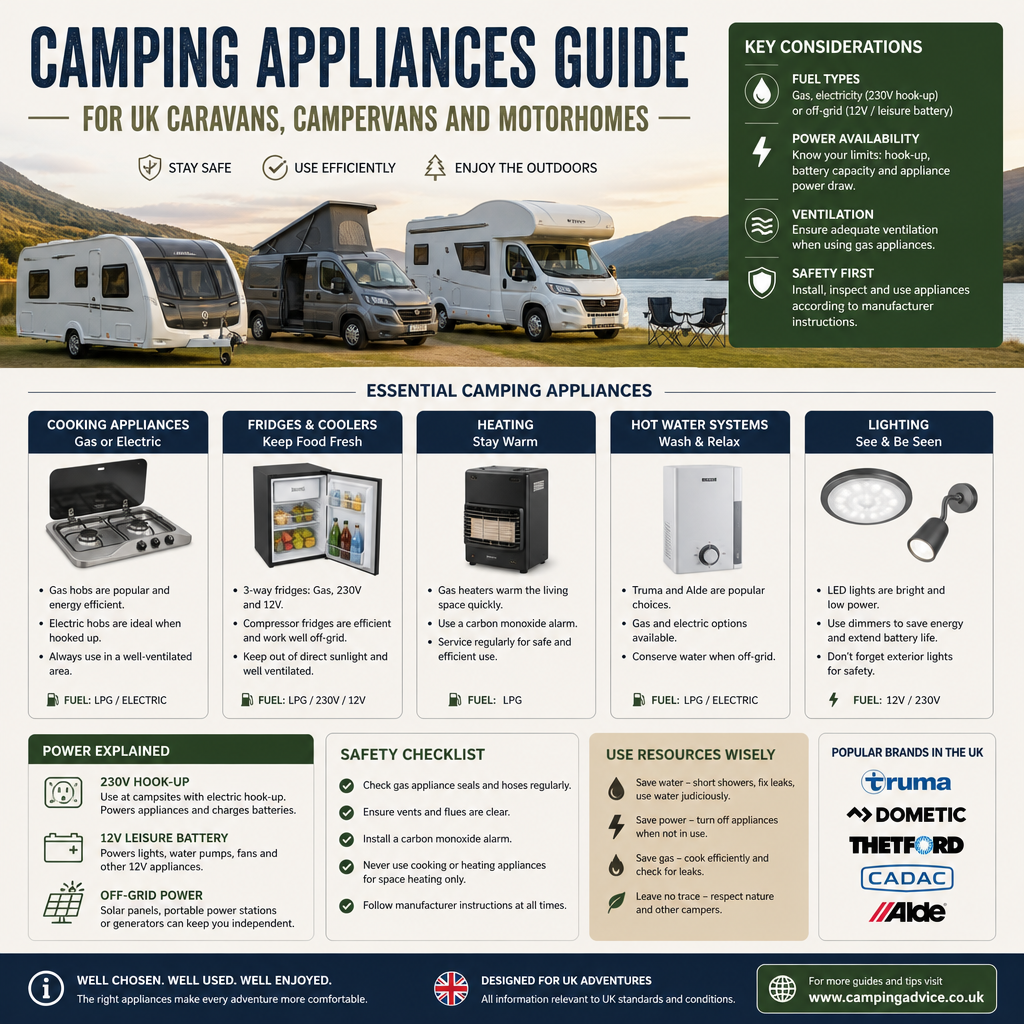
Power for appliances comes from a few main sources in UK caravans and motorhomes: 230V mains hook up, 12V leisure batteries, LPG gas and, increasingly, solar panels. Most campsites offer a 230V hook up, often 6 to 16 amps, which is enough for low watt kettles, camping fridges, a dehumidifier or a small washing machine, as long as you do not run everything at once.
Your 12V leisure battery runs things like LED lighting, water pumps, control panels and some cool boxes. Solar panels simply help top that battery up. LPG gas usually powers heating, hot water and 3 way fridges when you are off grid.
Power use is measured in watts. Amps are simply watts divided by volts, so on 230V hook up a 1000 W kettle uses about 4.3 A. On 12V the same wattage would pull over 80 A, which is why high power appliances stay on mains. Battery capacity is in amp hours (Ah): a 100 Ah battery can in theory supply 5 A for 20 hours. In practice, you should not drain it flat, so planning matters.
Stay safe with hook up: use a proper orange cable, check for damage, keep connections off wet grass and always plug in via an RCD. Follow site rules on maximum load.
It is worth sketching an “energy budget” for a typical day: how long the cool box or camping fridge will run, how often the water pump kicks in, whether you will use a washing machine or dehumidifier. Smart chargers and battery monitors make it much easier to see what you are really using and avoid waking up to a dead battery.
Keeping Food Fresh: Cool Boxes and Camping Fridges
Keeping food fresh is one of the biggest comfort boosts on any UK camping trip, whether you are in a caravan, campervan or motorhome.
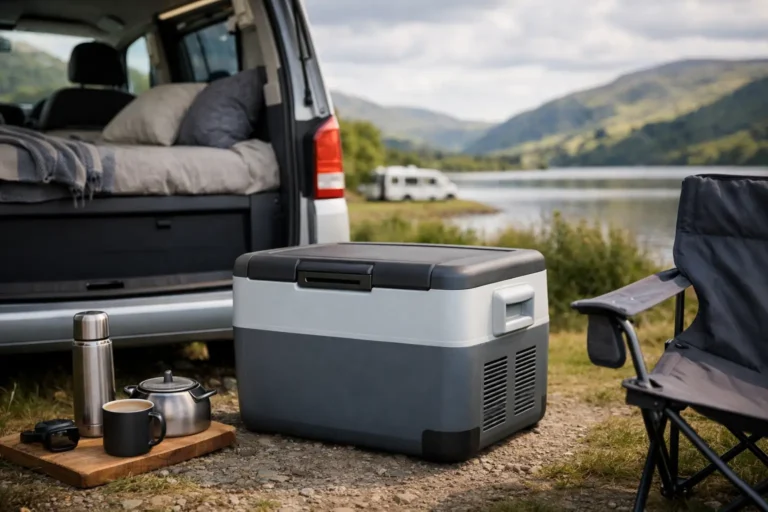
A basic passive cool box is cheap, tough and needs no power, ideal for weekends or festivals. The trade off is constant topping up of ice packs. For best results pre chill everything at home, use frozen water bottles instead of loose ice, keep the cool box in the shade and open it as little as possible.
12V thermoelectric coolers are a step up in convenience, good for drinks and snacks on the move. They cool to a set number of degrees below ambient, which in a hot UK summer can still mean lukewarm. They can also drain a leisure battery if left on constantly, so they are better when you are driving or on hook up.
Compressor camping fridges work like a household fridge, hold low temperatures reliably and are very efficient on 12V, perfect for off grid touring. Three way absorption fridges can run on 230V, 12V or LPG gas, which is brilliant on sites without electric hook up, but they must be well ventilated and kept level for safe, effective cooling.
Built in fridges need clear ventilation grills and regular servicing, especially if used on gas. Freestanding units and cool boxes should be strapped or wedged securely while driving.
Size wise, couples on weekend breaks can often manage with 20 to 40 litres. Families and longer tours usually need 60 litres or more, or a fridge plus a cool box for drinks. In warm weather keep raw meat at the coldest point, avoid overloading, and bin anything you are unsure about. Food safety is worth a little extra space and power.
Tackling Damp and Condensation: Using a Dehumidifier
Damp is one of the biggest hidden enemies of caravans, campervans and motorhomes in the UK. Cool, wet weather, lots of cooking and breathing in a small space, and thin, poorly insulated walls all combine to create condensation on windows, lockers and cold corners. Left alone, this can lead to musty smells, peeling wallboard and even mould.
There are a few ways to tackle it. A mains powered portable dehumidifier is the most effective, great if you are on electric hook up for long stays or when the van is parked at home over winter. Choose a compact model, place it on a firm surface with clear airflow around it, and make sure it cannot tip over while you are away. Empty the reservoir regularly or use a continuous drain into a container, and do not try to “bone dry” the interior, which can be hard on soft furnishings and timber.
Small 12 V dehumidifiers and moisture absorber tubs are gentler options, handy between trips or on unserviced pitches. They will not pull out as much water, but they help keep lockers and beds from feeling clammy.
Daily habits matter just as much. Use extractor fans while cooking and washing, crack a roof light, and wipe down wet windows and aluminium frames each morning. Check window and rooflight seals for leaks, clean any early signs of mould with a suitable cleaner, and air the van thoroughly between trips. A little routine attention keeps damp at bay and your rolling home smelling fresh.
Water On Tap: Pumps, Tanks and Taps
Water systems in UK caravans and motorhomes are usually based around one of three setups: an onboard fresh water tank, an external container like an Aquaroll with a submersible pump, or a fixed pressure pump system that draws from a tank and feeds your taps and shower like a mini home.
The water pump is the heart of it, pushing water to taps, showers and sometimes the toilet flush. Most are 12V units, so they draw power from the leisure battery rather than mains. Compared with household pumps they are smaller, designed for lower pressure and flow, and need to be more frugal with power.
If you are choosing or upgrading a pump, look at flow rate first, usually in litres per minute. Too low and showers feel feeble, too high and you may waste water. Check the power draw in amps and make sure your wiring and fuse are suitable, and pay attention to noise, especially in smaller campervans where a rattly pump can disturb light sleepers. Always match the pump type and pressure rating to your existing pipework, fittings and onboard or external tank.
Regular maintenance keeps everything running smoothly. Clean strainers and filters a few times a season, tighten any weeping joints and look for drips under seats and lockers. Before winter, drain tanks, pipes, the water heater and the pump itself to prevent frost damage.
Simple extras can really improve life on site: inline water filters for better tasting tea, trigger shower heads to save water, and quick release connections between your water pump and Aquarolls or barrels for faster set up and pack down.
Laundry and Clean Living: Camping Washing Machines and More
Longer UK tours quickly generate piles of muddy kit, especially with children, dogs or hobbies like hiking and cycling. Keeping on top of laundry in a caravan, campervan or motorhome takes a bit of planning.
At the simplest end, hand washing in a collapsible bucket or sink works for underwear and light tops, as long as you can wring things out well. Many UK sites have laundrettes, ideal for bedding, towels and big loads, although you will need change and to time your wash around other campers.
For more independence, small twin tub camping washing machines are popular. They usually run on 230 V hook up, have a wash side and a spin side, and take around 2 to 4 kg per load, so think a few T shirts and some underwear, not a full family wash. Power and water use are modest compared to a household washing machine, and they are worth the space if you tour often, stay off grid or travel with kids and pets. Compact automatic units suit larger motorhomes with generous payload and storage, but draw more power and water.
To get the best from a camping washing machine, use short cycles, dose eco detergents carefully to avoid excess suds, and spin twice to cut drying time. In the UK climate, a rotary airer on your pitch, a fold out rack on the bike rack, awning lines and heated towel rails when on hook up all help clothes dry faster.
For everyday cleanliness, small vacuum cleaners, handheld vacs and compact steamers keep floors, upholstery and soft furnishings fresh between washes.
Comfort Extras: Heating, Cooking and Small Essentials
Comfort extras are what turn a chilly van into a cosy rolling cottage, especially in the UK’s mixed weather.
For heating, many caravans and motorhomes use built in gas or diesel heaters that run quietly in the background. When you are on 230 V hook up, a small electric fan heater or oil filled radiator can take the chill off, and low watt heated blankets are brilliant for taking the edge off cold beds without hammering your power supply. Whatever you use, keep soft furnishings clear of vents, never dry clothes directly on heaters, and test carbon monoxide alarms regularly.
Most UK campers still rely on gas hobs and ovens for everyday cooking, backed up by a BBQ outdoors. On hook up, portable induction hobs, air fryers and electric grills are popular because they are quick, clean and easy to control. Check the wattage though, especially if you also run a camping fridge or cool box on 230 V, to avoid tripping the site bollard.
Smaller appliances like electric kettles, toasters, microwaves and coffee makers make mornings easier. Look for low watt models, often labelled “caravan” or “camping”, that stay under common 6 A or 10 A pitch limits.
Good ventilation is essential whenever gas is involved. Use roof lights, open windows a crack, keep vents unblocked and have appliances serviced on schedule.
To keep everything safe on the move, pack appliances in stacking boxes, use non slip mats in cupboards, add bungee straps where needed and give heavier kit a dedicated low level cupboard so it cannot shift while driving.
Choosing Wisely and Travelling Light
Choosing camping appliances is really about balance. You want enough kit to stay comfortable, without filling every cupboard or flattening your leisure battery.
Think about the big categories first. For food, decide where you sit on the cool box to fridge spectrum. A simple cool box is light and cheap, a compressor camping fridge gives you proper temperature control, and a 3 way absorption model suits longer off grid trips if you use gas carefully. For damp control, a small dehumidifier or moisture absorber tubs can make a big difference to comfort, especially in a UK autumn or winter. A reliable 12 V water pump and sensible tank or container setup keeps showers and washing up straightforward. For laundry, a compact camping washing machine is handy for families or long tours, but for weekends a site laundrette and a bit of hand washing may be all you need.
At every stage, weigh up comfort versus space, and power use versus convenience. Check your caravan or motorhome weight limits, and remember that high draw appliances like heaters, kettles and washing machines can quickly eat into campsite amp limits.
Start with the essentials that match your usual style, then add extras as you learn what you really miss on the road. Many UK campsites already provide fridges, freezers, laundrettes and dishwashing areas, which can save you carrying half a house.
The takeaway: choose a lean, sensible set of appliances that works with your van, your power and your trips, so you enjoy the freedom of the open road with just enough home comfort to keep everyone happy, warm and dry.
How to Pick a Campervan Coolbox for UK Trips
Learn how to pick a campervan coolbox for UK touring, from capacity and power use to cooling type, fit and useful features for easier, fresher holidays.
Caravan Gas or Electric Fridge: Which Is Best?
Choosing a caravan gas or electric fridge? Compare 3-way and compressor options for reliable cooling, lower power use and simpler UK touring holidays.
Best Dehumidifier for Caravan Buyers
Find the best dehumidifier for caravan use with simple buying advice on size, power, noise and moisture control for more comfortable UK touring.
Best Caravan Water Pump for Reliable Touring
Find the best caravan water pump for your touring setup. Compare types, pressure, noise and fit, so you can choose reliable water on the road.
2-in-1 Portable Washing Machine Single Tub Mini Washer and Spin Dryer
Discover the TANGZON 2-in-1 Portable Washing Machine, a compact washer and spin dryer ideal for small spaces, camping, dorms and flats.
Hyundai Air Compressor 118psi
Discover the Hyundai 8L oil-free air compressor: lightweight, low-noise and powerful, ideal for tyres, tools and DIY, with a 2-year warranty.