There is a special kind of magic in sitting in your van with the rain pattering on the roof, a mug of something hot in your hands and the inside snug and warm. The right heating turns a basic caravan or motorhome into a true little home, and it can easily double the length of your touring season.
Without decent heat, early spring and late autumn trips quickly lose their charm. Chilly evenings creep in, mornings feel damp, and off‑grid weekends can turn into a race back under the duvet. With the right heater, those same conditions become part of the adventure: frosty walks, clear stargazing and cosy nights in with a book or a film.
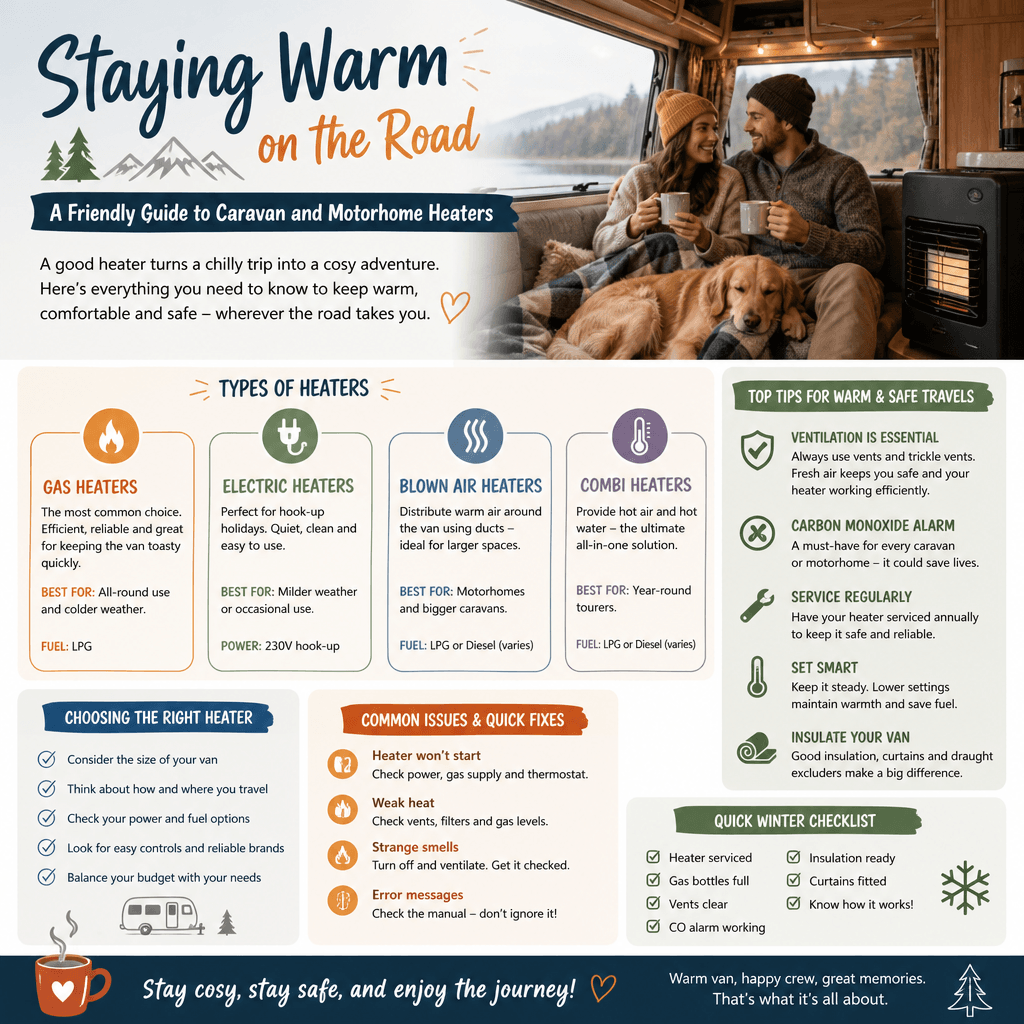
On tour, you will meet a few main types of heater again and again. Electric heaters are the first choice for many who stay on mains hook‑ups. Gas heaters are the classic option for reliable warmth when you are off‑grid. Fan heaters give very quick heat from a compact unit, and ceramic heaters are a modern twist that aim to be efficient and controllable.
Heat output matters, but it is not the only thing to think about. Safety features, running costs, how much power is actually available on a campsite, and the space you have for storing or installing a heater all make a big difference.
There is no single “best” heater for everyone. Instead, there is a best match for how you like to camp, where you go and when you travel. The rest of this guide will help you work out which mix suits you.
| Image | Product | Price |
|---|---|---|
 | Greenfields Outdoor Gas Heater with 8 Canisters, Portable 1.3kW Camping Heater with Ceramic Burner, Compact Lightweight, Auto Ignition Safety Grill for Patio Garden Caravan, Black | |
 | Gas Water Heater, 18L Instant Tankless with LED Display, Battery-Powered Shower Heater with Overheat & Anti-Freeze Protection, for Home, Camping & Caravan (Black) | |
 | Straame Mobile Gas Heater 4.2kW, Foldable Cabinet, 3 Heat Levels, 4 Castors | |
 | Straame Portable Indoor Gas Heater 4.2kW, Black Cabinet with Safety Shutoff |
What to think about before choosing a heater
Before you start comparing models, it helps to be clear about how and where you actually camp. If you are usually on mains hook ups, you can lean more on electric heaters. If you spend a lot of time off grid on rally fields or wild camping spots, gas heaters, or built in gas systems, quickly become more important.
On hook up, the key number is the amperage of the supply. Many sites offer 10 amps, some only 6. To work out what you can run, multiply amps by volts. On a typical 230 volt UK supply, 10 amps gives about 2300 watts total. That has to cover your electric heaters plus kettles, chargers and everything else, so high wattage units can easily trip the bollard.
Gas availability is the other side of the equation. Think about the size of your bottles, how easy it is to refill or swap them where you tour, and how much locker space and payload you can spare. Larger cylinders last longer, but they are heavy and need secure storage.
Space and layout matter too. You need a stable, flat spot for a portable heater, away from soft furnishings and walkways, and suitable locations if you plan a fixed installation. Noise is another factor, especially at night. Some people sleep happily with a fan humming, others prefer quieter convector or oil filled options.
Whatever you choose, build in safety. Look for overheat protection and tip over cut offs, and treat carbon monoxide as a real risk whenever gas is involved. Fit smoke and CO detectors and check them regularly.
Electric heaters: simple plug‑in comfort
Electric heaters are the go‑to choice for many campers on mains hook‑up. You just plug them in and enjoy instant warmth. There are no fumes, no need to monitor gas levels, and no worries about ventilation in the same way you have with combustion appliances, which makes them especially appealing for quick weekend breaks on serviced sites.
For caravans and motorhomes, the most common electric heaters are convector heaters, oil filled radiators, fan heaters and ceramic heaters. Convector heaters warm the air quietly and steadily, ideal for background heat. Oil filled radiators are heavier but very quiet and hold their warmth well, so they suit overnight use. Fan heaters push air over a hot element for rapid heat in a compact package, handy when you first arrive to a cold van. Many ceramic heaters are a modern twist on the fan heater, using a ceramic element that heats quickly and can feel a bit more controlled at lower settings.
The advantages are clear: quick to set up, clean heat, no combustion gases in the living area, and often useful extras like thermostats, timers and frost‑guard modes. On the downside, they are completely dependent on campsite electricity. High wattage models can trip low‑amp hook‑ups, and they are of limited use when you are off‑grid.
Choose electric heaters with multiple power settings, a wide, stable base and proper safety certifications. Never drape clothes over them or block air vents. Remember that built in electric elements in many caravan and motorhome systems are integrated with ducting and controls, so they behave quite differently from simple plug‑in heaters.
Gas heaters: reliable warmth when you are off‑grid
Gas heaters are the go‑to choice for many tourers who love quiet rally fields, CLs and wild camping spots with no electric hook‑up. Instead of relying on campsite cables, you are using the gas you already carry in your bottles.
Most modern caravans and motorhomes have built in gas heating systems. Common designs include blown air heaters, which warm air in a central unit then push it through ducts to outlets around the van, and gas powered combi heaters that also heat your fresh water. These are controlled from a central panel, often with thermostats and timers, and are designed specifically for safe use in leisure vehicles.
There are also portable gas heaters made for caravans and motorhomes, usually with enclosed, flued designs or cartridges that lock securely in place. Always avoid cheap, unvented “indoor” heaters not approved for caravan use, even if they claim to be safe. They can produce high levels of moisture and carbon monoxide.
Gas heaters have some big plus points: strong heat output, independence from campsite electricity and, in many cases, quieter running than some electric fan heaters. On the downside, they need good ventilation, regular servicing of burners and flues, and careless use can lead to serious carbon monoxide risks.
Safety really matters here. Only use heaters designed for indoor or caravan use, keep vents and flues clear, fit working carbon monoxide and smoke alarms, and have your gas system checked by a qualified technician at least once a year.
Fan heaters: fast heat in a compact package
Fan heaters are one of the simplest ways to get quick warmth into a chilly caravan or motorhome. Inside the unit, a heating element warms up while a small fan blows air across it. That warm air is pushed around your living space, so you feel the benefit in minutes rather than waiting for the whole van to gently heat up.
For many campers, the appeal is obvious. Fan heaters are usually compact, inexpensive and easy to tuck in a locker when not needed. They are ideal when you arrive back to a cold van after a day out and want a rapid boost before your main system catches up.
Most portable fan heaters for caravans sit around 500 to 1500 watts. Lower settings, such as 500 or 750 watts, are useful on sites with low amp hook ups or when you are running other appliances. Higher settings, such as 1500 watts, give a strong burst of heat, but you need to watch the total load on your campsite supply.
On the plus side, fan heaters give near instant warmth, are light and easy to move, and can be aimed towards where you sit. Many include thermostat or frost guard modes to maintain a background temperature with less fuss.
The drawbacks are fan noise, a drying feel to the air, and less even heat than oil filled or convector electric heaters. Use them with care: keep them well clear of curtains and soft furnishings, never cover them, and avoid using maximum power when your kettle, microwave or other high draw appliances are on.
Ceramic heaters and other electric options
Ceramic heaters and other electric options
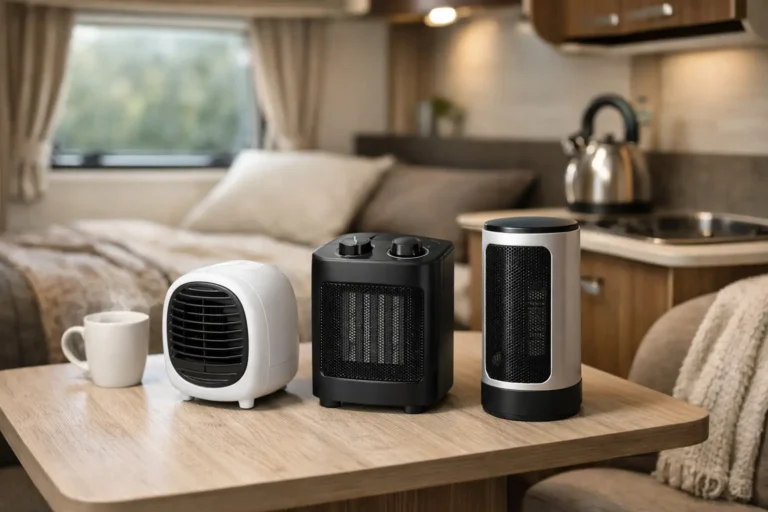
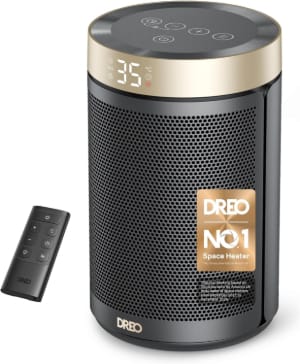
Ceramic heaters are a popular “next step up” from basic fan heaters. Inside, they use ceramic elements that heat up very quickly, then hold and release warmth smoothly. Many ceramic heaters still use a fan to push warm air around your caravan or motorhome, but the heat often feels more even and less harsh than a glowing wire element.
Compared with standard fan heaters, ceramic heaters usually give you finer control. Lower power settings can feel surprisingly effective, which helps you stay within campsite amp limits. Many models add digital thermostats, oscillation and timer functions, so you can keep the van comfortable without constantly fiddling with the controls.
Their main advantages are compact size, fast heat and a good set of modern safety features such as tip over cut off, cool touch cases and overheat protection. They are ideal for taking the chill off the lounge area on a cold evening.
The downsides are similar to other electric heaters. You still need mains hook up, fan noise can be noticeable at higher speeds, and the smarter, smaller units often cost more than basic fan heaters.
For quieter, gentler heat, especially overnight, many campers like oil filled radiators or slim convector electric heaters. They warm more slowly but give a soft, even background heat with almost no noise.
A mix of heater types works well. Use a quiet oil filled or convector heater to maintain background warmth, then add a compact ceramic heater as a quick booster when the temperature suddenly drops.
Built in systems, combined setups and practical safety tips
Many caravans and motorhomes now come with built in heating systems that can run on both gas and electric. You can usually choose gas only, electric only or a mix of the two, which is ideal when you move between full‑hook‑up sites and simple rally fields. Blown air systems push warm air through ducts, while combi units heat both air and water from the same box, often with electric elements to take advantage of campsite power.
A popular approach is to treat built in gas heating as your backbone for really cold weather or off‑grid trips, then use a small electric heater or compact ceramic heater to chase away cold spots, such as near the door or in the washroom. This lets you keep the main system on a lower setting, saving gas and avoiding overloading a hook‑up.
Some newer vans also include underfloor heating and heated towel rails. These do not usually replace the main heater, but add gentle, even warmth underfoot and help dry damp kit, which makes the whole living space feel cosier.
Think carefully about layout. Place portable heaters on solid, level surfaces, away from walkways, soft furnishings and curtains. Route cables so they do not become trip hazards, and leave space around the heater for air to flow freely.
Safety should always come first. Have gas systems and flues serviced regularly, never block fixed vents and do not dry clothes directly on any heater. Carry a working smoke alarm, a carbon monoxide detector, a fire blanket and a suitable fire extinguisher, and test them all regularly.
Choosing the right heater for your touring style
Choosing the right heater really comes down to how and when you tour.
If you are mostly on electric hook‑up, simple electric heaters work well. A quiet oil filled radiator or convector heater can tick over in the background, with a small fan heater or ceramic heater as a quick booster when you come back to a chilly van.
Winter tourers usually need a strong built in system, ideally gas powered with electric elements so you can choose the fuel that suits each site. Many add a compact electric heater to tackle cold spots or use on mild days without firing up the main unit.
Off‑grid explorers rely heavily on gas heaters. A serviced built in gas system is the backbone, backed up by careful gas bottle planning. A low wattage electric heater is still useful for those occasional nights on hook‑up.
If you mostly camp in summer, a modest fan heater or ceramic heater may be all you need for the odd cool evening, as long as it fits your van’s power limits and storage space.
Before you buy, check your caravan or motorhome manual for recommended heater types, electrical limits and ventilation requirements. Think about running costs, where the heater will live, and safety features, not just the price tag.
The clear takeaway: choose a safe, well matched mix of gas and electric heaters that suits your touring style, then keep everything maintained. With the right setup you can refresh tired kit, retire anything unsafe and enjoy longer, cosier trips in comfort, whatever the weather brings.
Caravan Fan Heater Comparison for Cosy Touring
Our caravan fan heater comparison explains wattage, safety, noise and power options, helping you choose comfortable warmth for UK touring trips with ease.
Portable Gas Heater Caravan Buying Guide
Find the right portable gas heater caravan setup with safety tips, sizing advice and smart buying points for warmer, more comfortable UK touring.
Compact Oscillating Ceramic Heater
Timiyou Electric Heater review: fast PTC ceramic warmth, quiet oscillation, 3 modes, ECO saving and advanced safety for efficient home heating
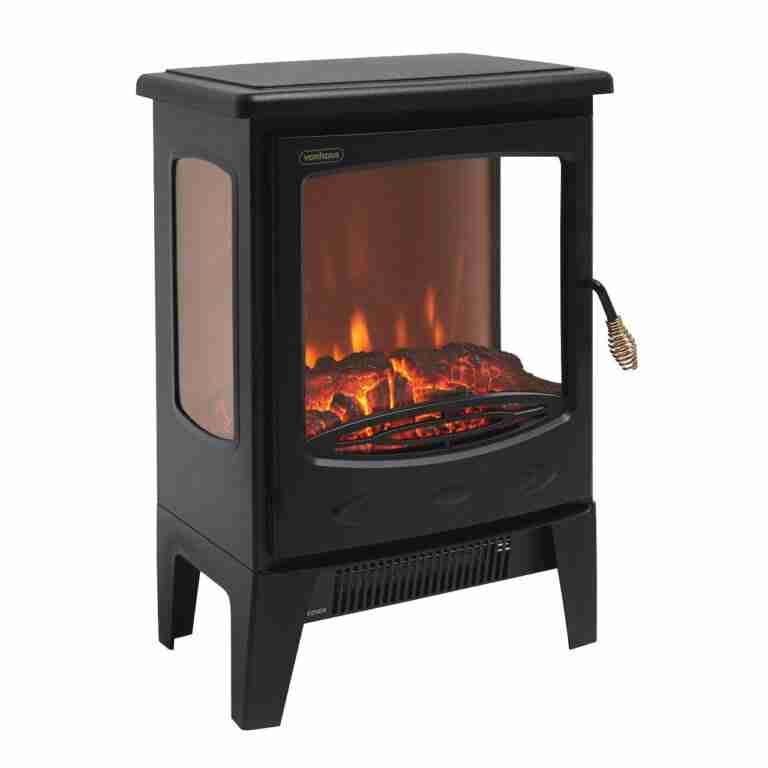
Panoramic Electric Log Stove Effect Heater
Discover the Warmlite Wingham Log Effect Stove Fire, a stylish 2000w electric heater offering realistic flames, efficient warmth and easy controls.
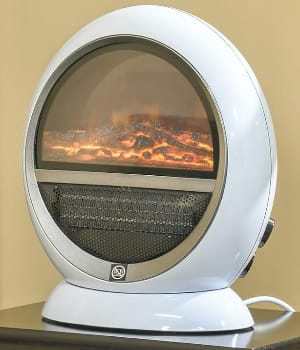
Ceramic Flame Effect Fan Heater
Discover the Garden Mile® Ceramic Flame Effect Fan Heater: compact, energy-efficient, ultra-quiet and stylish heating with a realistic flame for cosy homes.
Small Ceramic Heater
Discover how small ceramic heaters can efficiently and safely heat your caravan or motorhome, offering low running costs, comfort and reliability.