There is nothing romantic about shivering in a damp duvet while your windows drip with condensation. If you camp outside summer, good heating quickly turns from “nice extra” to “essential bit of kit”.
A warm van is not just about comfort. Steady heat helps keep condensation under control, so your mattress, cupboards and bedding do not stay clammy for days. That means less mould, fewer musty smells and a much nicer place to wake up. In very cold weather, decent heating is also a safety issue, especially if you are travelling with kids, pets or anyone who feels the cold.
This is where diesel heaters come into their own. They sip fuel from a tank, run from your 12 V system and keep working happily when you are parked up off grid. You will usually see them rated at 2 kW, 5 kW or 8 kW, and you can choose between neat built in systems or portable free standing units you can move around. A Friendly Guide to Caravan and Motorhome Heaters
In this guide we will walk through how these heaters work, how to pick the right size, and the pros and cons of different setups, so you can match a heater to your van, your budget and the way you actually travel.
How Diesel Heaters Work in a Campervan
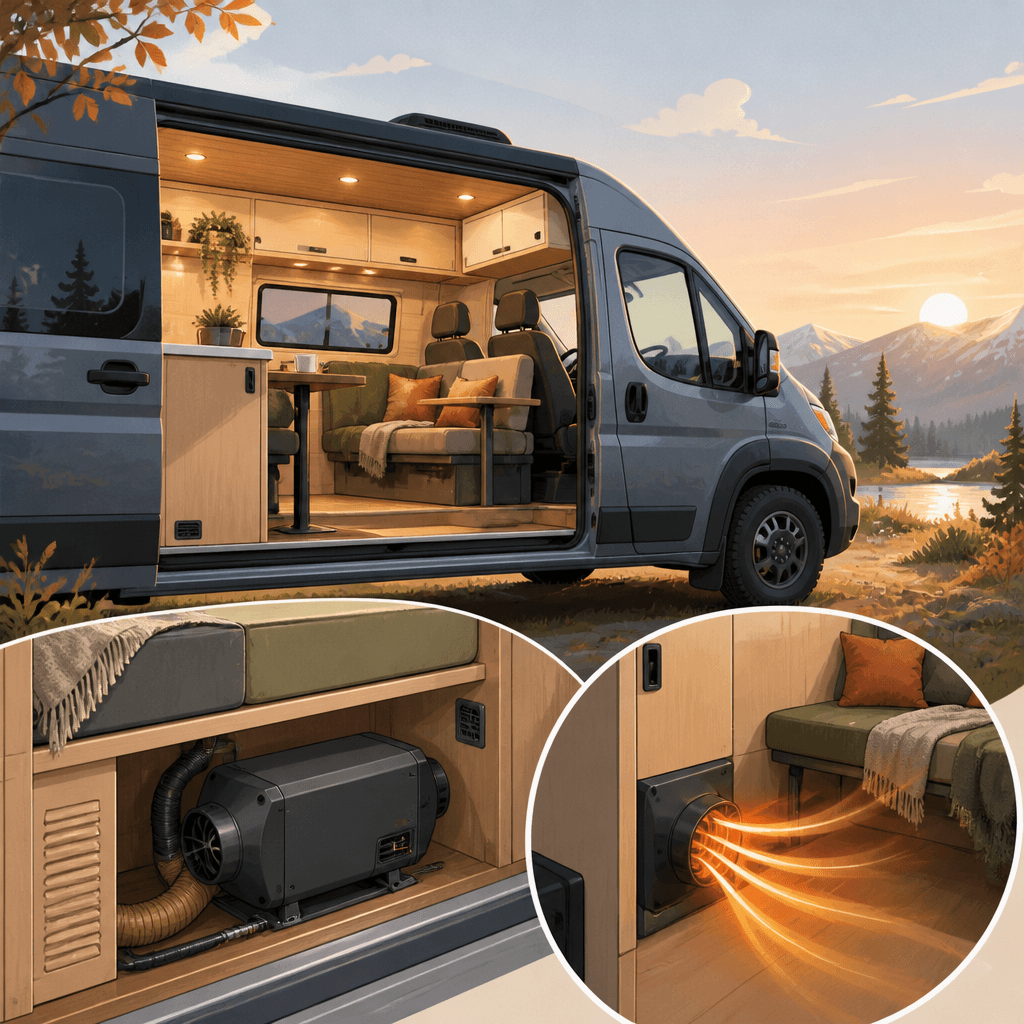
A diesel heater is basically a tiny, very efficient furnace. It takes fuel from your vehicle’s tank or a small separate tank and feeds it into a burner. A glow plug ignites the fuel, the burner heats up a metal heat exchanger, and a 12 V fan blows room air across that hot surface and into your living space as clean, dry warmth.
Crucially, the combustion side is sealed away from the air you breathe. Fresh air is drawn from outside for burning, and the exhaust gases are pushed back outside through a metal pipe, so fumes stay out of the van.
Electrically, they run from your 12V system. On start up they draw a decent chunk of power for the glow plug, often 8 to 10 A for a few minutes. Once running, they typically settle down to roughly 0.5 to 2 A depending on output.
Fuel use is modest. As a guide, a 2 kW unit might burn around 0.1 to 0.2 litres per hour, a 5 kW around 0.2 to 0.5, and an 8 kW roughly 0.3 to 0.8.
Compared with gas heaters or mains electric heaters, diesel wins for off grid touring, since it uses the fuel you already carry and only a small, battery friendly electrical load.

Diesel Heater for Campervan 12V 5KW-8KW Diesel Air Heater

12V 5KW Diesel Air Heater, All in One 5000W Parking Heater Kit with Remote Control Silencer and LCD Display, Fast Heating, for RV Truck, Motorhomes, Boat, Bus, Car Trailer, Caravans (Black)

5000W-8000W Diesel Parking Heater Kit, 12V 5KW-8KW Diesel Air Heater With Remote Muffler And LCD Display For RV Trucks, Boats, Buses, Car Trailers, RV Fast Heating

Hcalory 2KW 12V Diesel Air Heater, Parking Diesel Heater with 10L Fuel Tank
Choosing the Right Size: 2 kW vs 5 kW vs 8 kW
The kilowatt rating is simply the heater’s maximum heat output. More kW means more heat per hour, so the space warms faster and can cope with lower outside temperatures, but it also means higher fuel use at full power.
For small campervans and micro campers, a 2 kW heater is usually ideal. In a compact, reasonably insulated space, anything bigger can feel like using a blowtorch to light a candle. A 2 kW unit can tick over gently, which is quieter and kinder to your battery and fuel.
For medium sized vans and panel van conversions, a 2 kW heater can work well in milder climates or for three season use. If you plan proper winter trips, ski runs, or live full time in the van, a 5 kW unit gives more headroom for very cold nights.
Large vans and motorhomes, especially with high roofs, lots of windows or weaker insulation, may justify a 5 kW or even 8 kW heater.
Try not to oversize. Big heaters run permanently on low tend to cycle on and off, soot up, and make more noise. Think about your insulation, window area and destinations. Scotland in January needs more heat than summer laps of Spain.
Built In or Free Standing: Which Diesel Heater Setup Suits You
A built in diesel heater lives inside your van full time. It has a fixed fuel line, usually from your main diesel tank or a separate reservoir, plus a permanent exhaust through the floor and ducting that sends warm air where you need it.
Built in units look tidy and feel “factory”. They are quieter when mounted well, can be very reliable, and integrate nicely with your dash fuel gauge, thermostats and wall controls. The trade off: higher upfront cost, more complex installation, cutting holes in your floor or side panels and the system is tied to that vehicle.
Free standing diesel heaters are portable boxes that contain the burner, fan, small fuel tank and exhaust stub in one unit. They can sit in the van, garage or awning and blow hot air in through a duct.
Their big wins are low price, minimal van modification and the ability to move them between vehicles, or store them at home in summer. Downsides are extra clutter, a separate tank to refill and the faff of routing hot air and exhaust safely every time.
If you mostly rent, borrow or weekend, a free standing unit makes sense. Full timers and regular winter tourers usually appreciate a built in system.
Features, Safety and Installation Tips
Modern diesel heaters come with some genuinely handy features. A built in thermostat keeps the van at a steady temperature without constant fiddling. Timers and remote controls let you pre‑warm the van, and altitude adjustment helps the burner run cleanly in the mountains. Look for quiet or night modes that slow the fan and reduce ticking from the fuel pump.
You will see two broad groups of brands. Premium names like Webasto and Eberspächer cost more, but offer strong support, spares and proven reliability. Budget “Chinese style” heaters are far cheaper and popular for DIY installs, but quality control, instructions and backup are more variable. If you go budget, buy from a seller with good reviews and available spares.
Whatever you choose, treat safety as non‑negotiable. Route the exhaust fully outside with proper clamps, fit a carbon monoxide alarm and smoke alarm, and always allow some ventilation, even in freezing weather. Use the correct fuel line and joints, fuse the 12 V supply close to the battery, and run suitably thick cable. Mount the heater and exhaust on solid brackets with rubber mounts to cut vibration and noise.
A careful DIYer can install a heater, but if electrics or cutting holes make you nervous, paying a professional fitter is money well spent. For quieter, cleaner running, add an exhaust silencer, keep duct runs smooth and short, and give the heater an occasional blast on full power to burn off soot.
Keeping Warm with Confidence: Final Thoughts and Next Steps
In the end, choosing a diesel heater comes down to a few key decisions: 2 kW, 5 kW or 8 kW, and built in or free standing. Match the output to your van size, insulation and climate, not just the biggest number on the box. A well insulated small camper in the UK might be perfectly happy with 2 kW, while a big, draughty motorhome in the Alps may justify 5 kW or more.
Do not worry if your budget or space only stretches to a modest heater. Even a small, well installed unit can turn shivery evenings into comfortable, extended trips right through autumn and winter.
Plan your setup: allow for safety gear, alarms and proper cabling, and think about future changes, like a van upgrade or adding an awning. A simple next step is to measure your interior, be honest about when and where you camp, then shortlist a few heaters that fit your needs and talk to other owners or a trusted installer.
Get those pieces right and you can look forward to stepping back into a warm, dry van, enjoying quiet, starlit campsites in cooler places, without worrying about freezing.