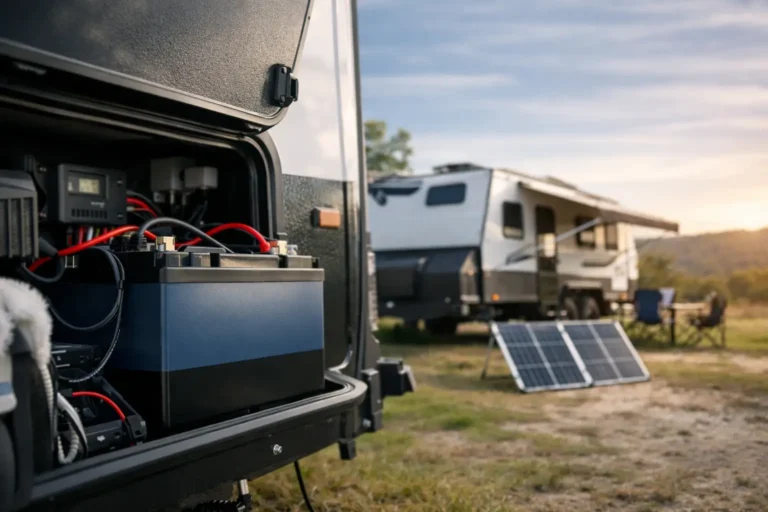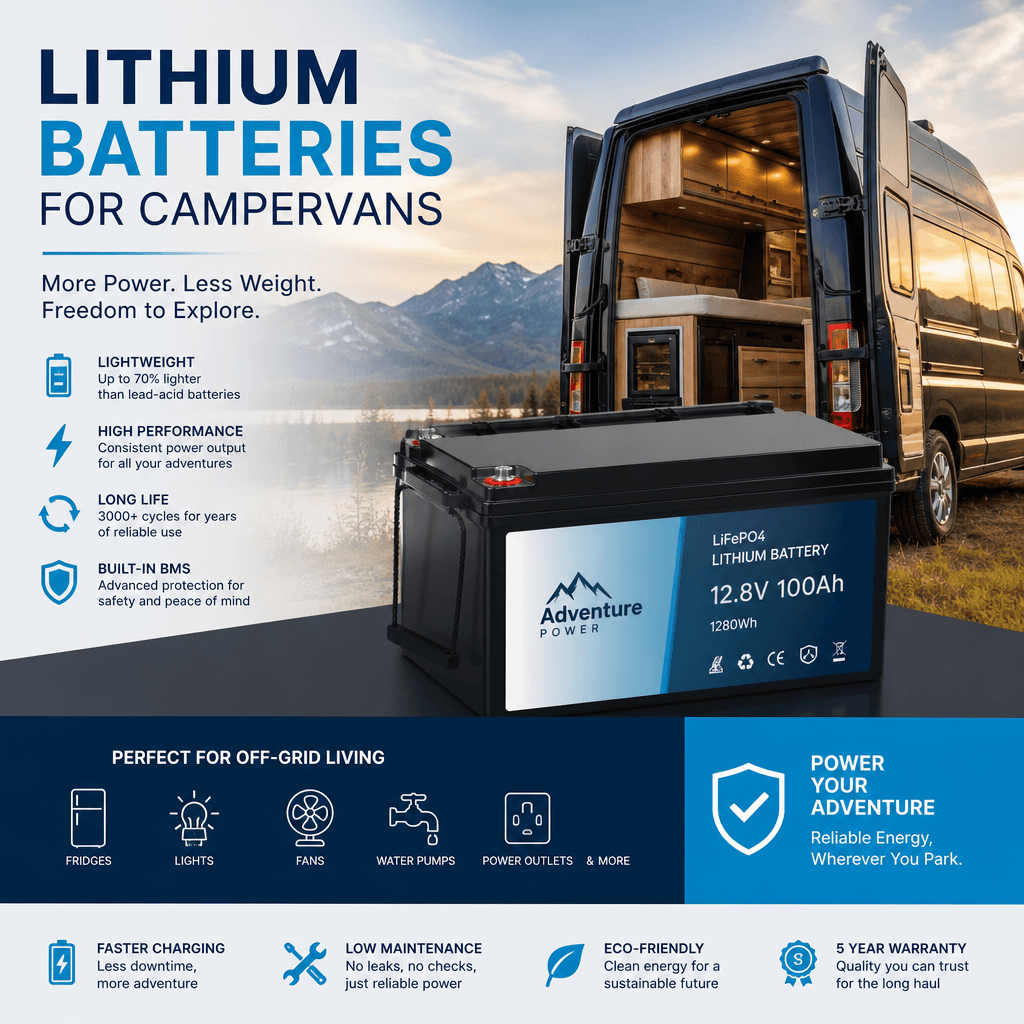
If you love taking your caravan, campervan or motorhome off on adventures, a good leisure battery can make the difference between “just camping” and feeling truly at home. That is why so many owners are now looking at lithium batteries as an upgrade.
Traditional leisure batteries are usually lead-acid. Inside, lead plates and liquid or gel electrolyte store energy. They are proven, familiar, and relatively cheap, but they are heavy, dislike being deeply discharged, and wear out faster if worked hard.
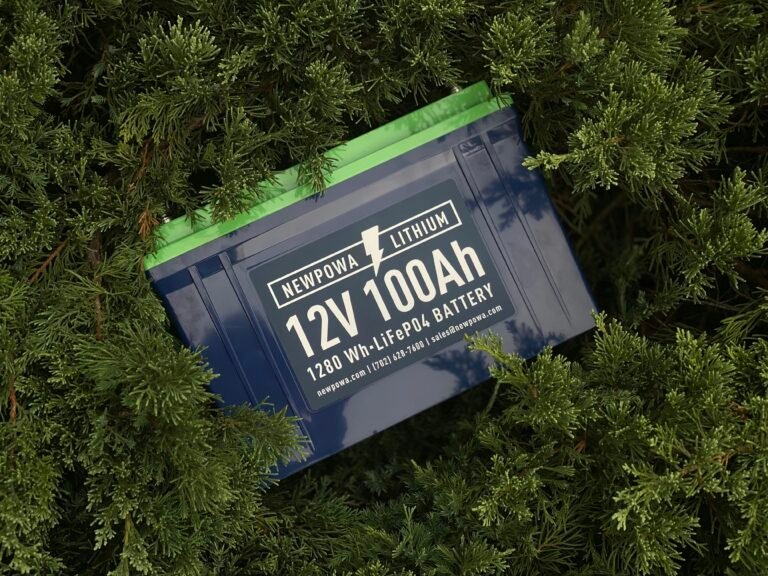
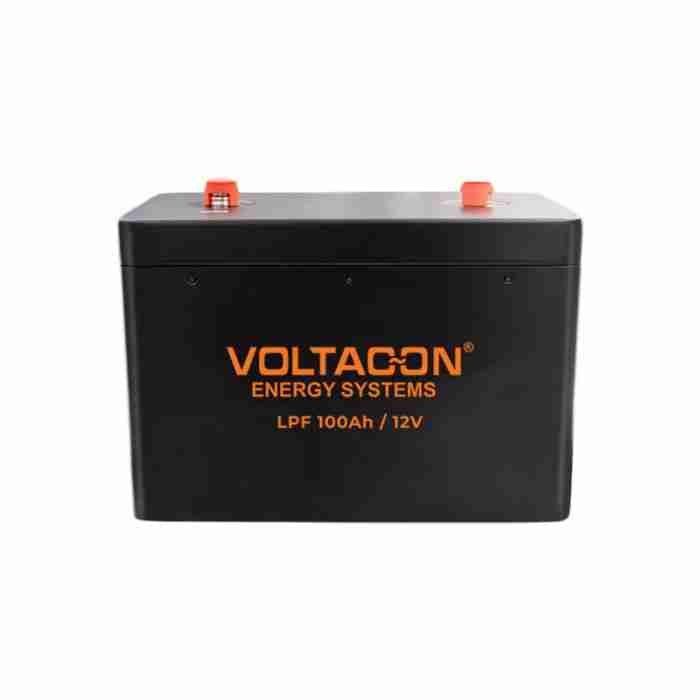
Lithium-ion batteries use a different chemistry to store energy in lightweight cells. For leisure vehicles the most popular type is LiFePO4, short for lithium iron phosphate. LiFePO4 batteries are more stable and safer than many other lithium-ion chemistries, which is why they are widely used in camping vehicles. They cope well with deep discharges, stay at a healthy voltage for longer, and can deliver high currents for inverters and other hungry gadgets.
A few key terms help make sense of the choices:
- Capacity (Ah, amp hours): how much energy the battery can store.
- Depth of discharge (DoD): how much of that capacity you can safely use each cycle.
- Cycle life: how many times you can discharge and recharge before the battery noticeably ages.
- Battery management system (BMS): the electronic “brain” that protects the cells from overcharging, over-discharging, overheating and excessive current.
In the rest of this article we will look at how lithium compares with lead-acid, the real-world pros and cons, practical upgrade tips, and how to choose the lithium battery best makes for your particular style of touring.
How lithium compares to lead-acid leisure batteries
Traditional leisure batteries in caravans and motorhomes are almost always some form of lead-acid. The main types are:
- Flooded lead-acid: the classic “wet” battery with removable caps. Cheap and common, but they need ventilation and occasional maintenance, and they do not like deep discharges.
- AGM (Absorbent Glass Mat): sealed and spill-proof, better vibration resistance, often sold as “leisure” or “dual-purpose” batteries. Popular in campervans and motorhomes.
- Gel: also sealed and spill-proof, more tolerant of deep discharges than flooded, but usually more expensive and fussier about charging voltages.
Compared with these, lithium-ion batteries, especially LiFePO4 batteries, give a lot more usable capacity. A 100 Ah lead-acid battery is usually happy if you only use about 40–50 Ah before recharging. A 100 Ah LiFePO4 battery can typically give 80–90 Ah regularly without harm. So you may get almost double the usable energy for the same rated capacity.
Lithium batteries are usually much lighter and more compact than lead-acid alternatives, and they typically last several times as many cycles. Over the long term this can offset the higher purchase price.
Charging is different too. Lithium likes fast, consistent charging and holds a steady voltage as it discharges, which is great for inverters and sensitive electronics. Lead-acid prefers slower, multi-stage charging and its voltage sags earlier.
You notice these differences most when you camp off-grid a lot, run high-draw appliances like coffee machines or induction hobs, or leave the vehicle in winter storage, where lithium’s low self-discharge really shows its strengths.
| Image | Product | Price |
|---|---|---|
 | HumsiENK 12V 20Ah LiFePO4 Lithium Leisure Battery 256Wh Capacity, BMS 20A with Low-Temperature Protection,10-Year Service Life, for Motorhomes,Campervan,Narrowboat,Solar | |
 | HumsiENK 12V 100Ah LiFePO4 Battery, Lithium Leisure Battery with Bluetooth, Built-in 100A BMS with Low Temp Protection 1280Wh Energy for Motorhomes,Campervan,Narrowboat,Solar | |
 | 4 Packs HumsiENK 12V 100Ah LiFePO4 Lithium Leisure Battery 1280Wh capacity, BMS 100 with low-temperature protection,10-year service life, for Motorhomes,Campervan,Narrowboat,Solar | |
 | 12V 100Ah LiFePO4 Lithium Battery- BCI Group 24, Deep Cycle RV LiFePO4 Battery with Low-Temp Protection, 100A BMS, 1280Wh, Max.15000 Cycles, 10-Year Lifespan for RV, Solar, Trolling Motor, Marine |
Key advantages of lithium batteries for caravans and motorhomes
Lithium batteries really come into their own when you look at how much usable energy you get. With a typical lead-acid leisure battery, you only want to use about 50 per cent of its rated capacity if you want it to last. A similar sized LiFePO4 battery can comfortably give you 80 to 90 per cent of its capacity. In practice that means more lights, more time watching TV, and more days off-grid between charges.
They are also far lighter and more compact. Swapping two heavy lead-acid leisure batteries for a single lithium of similar usable capacity can save many kilos. In a caravan or motorhome, that extra payload can go towards water, bikes or just staying within your legal weight limit. The smaller size also makes fitting batteries under seats or in lockers a lot easier.
Longevity is another big plus. Quality lithium-ion batteries, especially LiFePO4 batteries, can offer several thousand charge cycles. Even though they cost more upfront, they can work out cheaper over the life of the vehicle because you replace them less often.
Lithium’s charging behaviour is convenient too. They accept charge quickly, which suits alternators, DC to DC chargers and solar. Voltage stays more stable as they discharge, so inverters, coffee machines, air fryers and induction hobs run more reliably without tripping out.
Finally, lithium batteries have a very low self discharge rate. You can leave the van parked for weeks or months and come back to a battery that still has plenty of charge, as long as the system has been installed and switched off correctly.
Disadvantages and limitations of lithium in camping vehicles
Lithium does bring some downsides, and it is worth being clear about them before you spend the money.
The obvious one is price. Lithium-ion and LiFePO4 batteries usually cost two to four times more upfront than a decent lead-acid leisure battery. Over their life they can work out cheaper per cycle, but you still need the initial budget, which can be a stretch on a modest van build.
Compatibility is another issue. Older mains chargers, solar regulators and split charge relays were designed around lead-acid voltages and charging profiles. Some will undercharge lithium, others may overcharge or confuse the battery management system. In many caravans and motorhomes you will need at least a lithium capable mains charger and a DC to DC charger from the alternator, plus a suitable solar controller.
Temperature also matters. LiFePO4 batteries do not like being charged when the cells are very cold, typically around freezing or below. A good battery management system with low temperature protection is essential, especially for winter touring or outdoor battery boxes.
Because lithium systems can deliver higher currents, installation quality becomes more important. You need solid mounting, short cable runs where possible, correctly sized cables, fuses and connectors. Poor wiring that a lead-acid system might tolerate can become a real safety risk with lithium.
Finally, not everyone will see a quick benefit. If you mainly stay on campsites with electric hook up, a well looked after lead-acid leisure battery may already cover your needs, so the extra cost of lithium could take many years to justify.
Choosing between lithium-ion and LiFePO4 batteries
Lithium-ion is a broad family of chemistries. LiFePO4 batteries, sometimes written as LFP or lifep04 batteries, are one specific type that has become the favourite for leisure use.
Most lithium-ion batteries used in phones, laptops and some power tools are based on cobalt or nickel chemistries, such as NMC or NCA. These offer very high energy density, so they pack a lot of power into a small space, but they are more sensitive to abuse and heat. In a caravan or motorhome, where batteries sit close to living spaces and may face vibration and wide temperatures, that extra sensitivity is not ideal.
LiFePO4 batteries use lithium iron phosphate. They store slightly less energy per kilo than some other lithium-ion batteries, but they are very stable, much less prone to thermal runaway and typically offer a very long cycle life. That mix of safety, predictable behaviour and longevity is why they are usually recommended for caravans, campervans and motorhomes.
For most touring setups, a quality “drop in” LiFePO4 with an internal battery management system is enough. It replaces a lead-acid leisure battery with minimal changes, provided chargers and wiring are suitable. A custom lithium system, with separate cells, external BMS and more complex controls, makes more sense for big off-grid installations with large inverters and high daily use.
When comparing lithium battery best makes, look for clear safety certifications (such as UN38.3, IEC or UL standards), stated cycle life at a defined depth of discharge, and honest continuous and peak current ratings, not just glossy marketing claims.
Practical considerations for upgrading to lithium
Before you swap to lithium-ion batteries, it helps to run through a few key checks. Confirm your alternator output and whether you need a DC to DC charger, since most standard split charge relays are not suitable for LiFePO4 batteries. Check your mains charger has a lithium profile or at least adjustable voltage, and make sure your solar charge controller can be set for lithium, ideally with temperature sensing.
To size a lithium battery bank, list what you use in a typical day: lights, water pump, fridge, heating fans, TV, laptops and so on. Add up their watts, multiply by hours used, then divide by 12 to get amp hours. Add 20 to 30 percent for bad weather days, then match that figure to your chosen battery capacity.
A good built in battery management system is vital. It protects against overcharge, over discharge and short circuits, balances the internal cells and, for LiFePO4 batteries, should include low temperature charge protection so the pack will not charge when it is too cold.
Because lithium can deliver higher currents, you may need thicker cables, correct fuses close to the battery, and solid mounting to prevent movement. Ventilation is usually simpler than with lead acid, but do not cram batteries into a sealed space. If you are unsure about cable sizing, fusing or inverter connections, using a professional installer is wise.
For a full off grid setup, pair your lithium bank with suitably sized solar panels, a proper lithium compatible DC to DC charger, and an inverter that can handle your peak loads without tripping the battery’s BMS.
How to spot the lithium battery best makes and avoid poor products
When you compare lithium leisure batteries, start with the basics: claimed cycle life, real world reviews, and warranty. For caravans, campervans and motorhomes, a good LiFePO4 battery will often quote 2,000–5,000 cycles at 80 % depth of discharge. Anything much lower, with no clear test conditions, is a red flag. Look for reviews specifically from camping vehicle owners, not just generic solar or boating users, and aim for at least a 5 year warranty from a brand that looks like it will still exist to honour it.
Honest capacity ratings are crucial. A “100 Ah” battery should be able to deliver close to 100 Ah at realistic discharge rates, not only in tiny print at 10 or 20 hours. Quality lithium-ion batteries and LiFePO4 batteries use name brand cells, have a robust battery management system, and clearly state protections such as low temperature cut off and cell balancing.
Well regarded lithium battery best makes often seen in leisure vehicles include Victron, Renogy, Battle Born, Fogstar, Sterling and Relion, plus some reputable dealer own brands. None are the only choice, but they set a useful benchmark.
On spec sheets, check continuous and peak discharge ratings and make sure they match your inverter or DC loads. Confirm certifications like CE, UKCA, UN38.3 and ideally IEC/UL standards.
Be cautious of very cheap unbranded imports, vague specifications and unrealistic claims. Saving a little upfront can mean poor performance, early failure and no support. A mid priced, well supported battery is usually a better long term investment than the absolute bargain option.
Is lithium right for your caravan, campervan or motorhome
So, is lithium right for your caravan, campervan or motorhome?
In simple terms, lithium-ion batteries, especially LiFePO4 batteries, shine if you want more usable power, less weight and longer life. You get a higher usable capacity from the same rated amp hours, far better cycle life, and a battery that holds voltage well under load. That means more time off-grid, happier inverters and fewer worries about running the lights, fridge and gadgets.
The downsides are real though. Upfront cost is higher, there can be installation tweaks or upgrades, and LiFePO4 batteries do not like being charged when very cold unless the battery management system protects them. If you mostly stay on hook up and barely discharge your existing battery, the payback will be slower.
Lithium suits you if:
- You camp off-grid often or for several days at a time
- You run high draw kit like an inverter, coffee machine or induction hob
- Payload and space are tight
- You plan to keep the vehicle for several years
A good lead-acid leisure battery may still be fine if:
- You mainly use serviced campsites with electric hook up
- Your power use is modest, lights, water pump, phone charging
- Your current charging system is basic and you do not want to modify it yet
If you tick several of the “lithium suits you” boxes, start shortlisting the lithium battery best makes and plan an upgrade when your present battery is nearing the end of its life.
With a bit of homework and the right lithium-ion or LiFePO4 setup, you can make your camping vehicle quieter, more comfortable and far more flexible in where, and how long, you choose to stay.
Is a Lithium Battery Worth It for Your Caravan?
Is lithium battery worth it for caravan and motorhome touring? Compare cost, weight, charging and lifespan before choosing your next leisure battery today
LiFePO4 Leisure Battery
Discover how LiFePO4 leisure batteries compare with lithium-ion, from safety and lifespan to efficiency for off-grid, EV and renewable energy use.
Fogstar Drift 100Ah 12V LiFePO4 Leisure Battery
Discover how the Fogstar Drift 100Ah 12V LiFePO4 leisure battery transforms camper, caravan and off-grid power with safe, long-lasting performance.
Lithium Ion Leisure Batteries for Your Leisure Vehicle
Discover the benefits of lithium ion leisure batteries, from long life and high efficiency to lightweight design, smart features and easy maintenance.
Guide to Lithium Leisure Batteries
Discover lithium leisure batteries for motorhomes, caravans and boats, comparing key features, top brands and solar storage, plus care tips.
Why You Need Lithium Leisure Batteries in Your Motorhome
Discover why lithium leisure batteries are essential for motorhomes, delivering lighter weight, more usable power and reliable off-grid freedom.