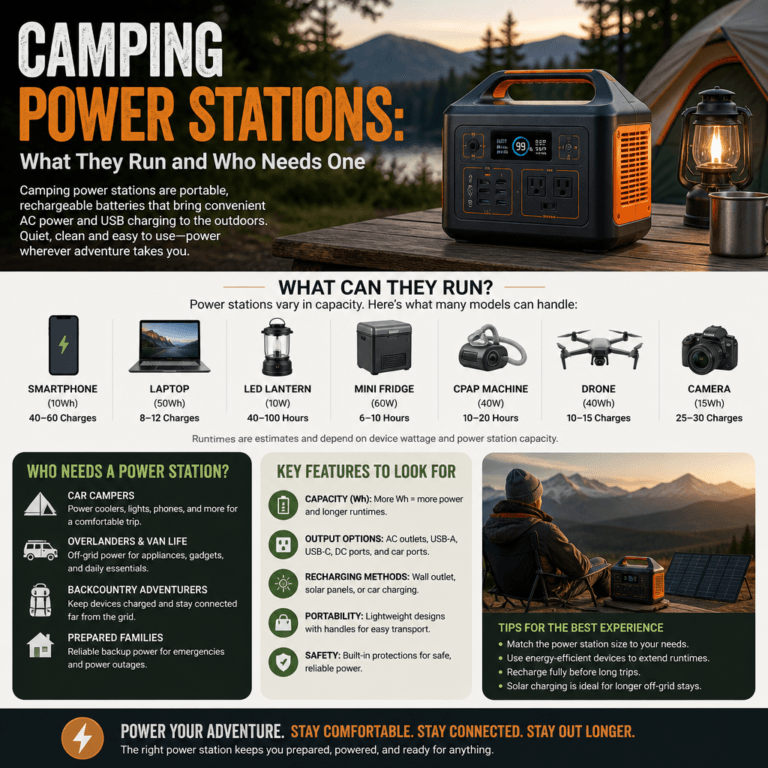
You pull into a perfect wild camping spot, great view, no hookups in sight. Your lights, phone and fridge still work, your laptop charges, and the only sound is the wind. That is the difference a portable power station can make.
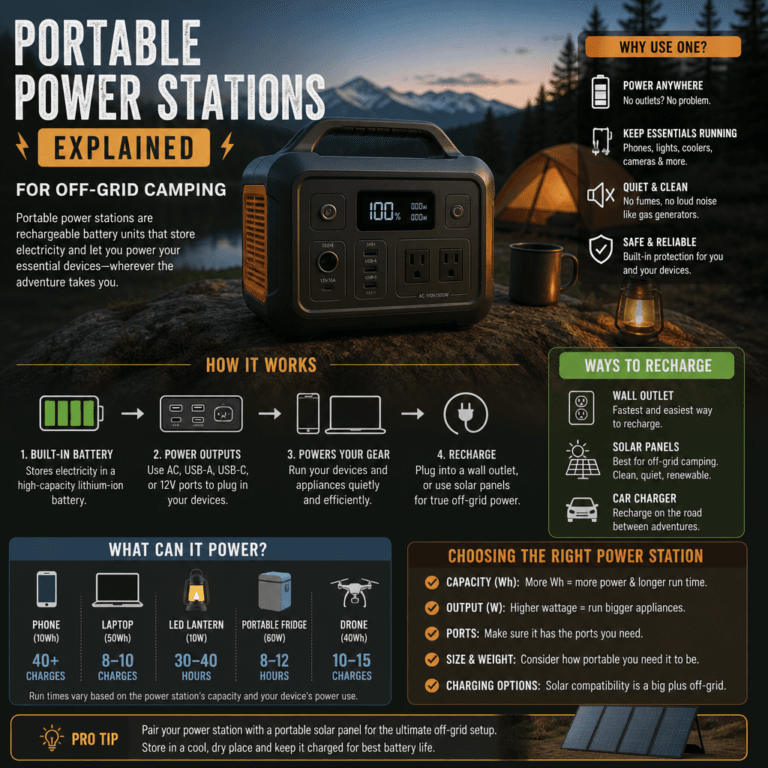
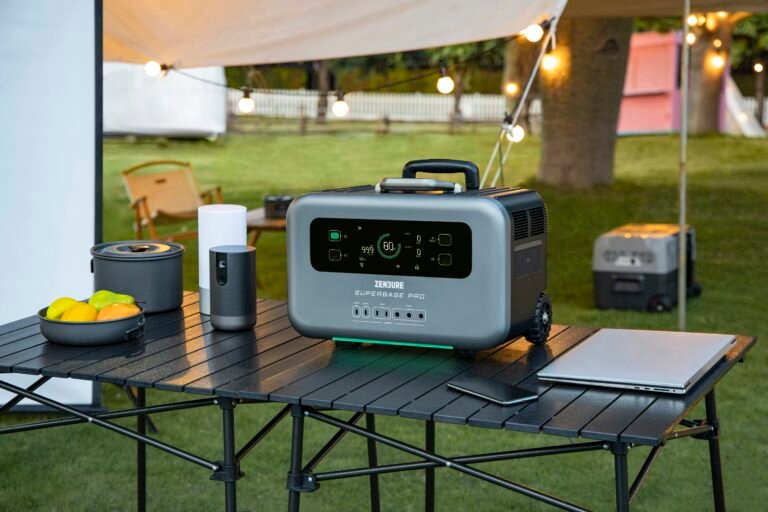
In simple terms, a portable power station for camping is a big rechargeable battery in a box. On the front you get familiar outlets: 12 V sockets like in your dashboard, USB ports for phones and tablets, and normal mains plugs for things like laptops or a small TV. You charge the box from home, from your alternator while driving, or from solar panels, then take that stored energy with you.
For motorhome and campervan owners this really shines in off grid moments: wild camping in a layby or on a beach, muddy festival weekends with no hook up, quick park ups on a long tour, or popping out in winter when many sites are shut.
Compared with a built in leisure battery system or a petrol generator, power stations for camping are quiet, fume free and require almost no installation or maintenance. Generators can be noisy, smelly and banned on many campsites. Traditional second batteries need wiring, fuses and often a specialist to fit them.
A portable unit is simple. Put it in the van, plug in your gear and you are done. You can move it between van, awning and home as needed. It will not replace a full mains hook up or run electric heaters or air conditioning, but it will comfortably cover your essentials: lights, phones, laptops, cameras and many small appliances.
First decisions: how do you actually travel and camp?
Before you dive into brands and shiny features, it helps to be honest about how you actually travel. Your camping style will shape the size and type of power station that makes sense.
If you mostly do short weekend trips and plug into hook ups most nights, you are really just bridging the gaps. Smaller power stations for camping are usually enough here. Look for something light, easy to carry, that charges quickly from mains so you can top it up on site, then use it for phones, lights and a laptop when you are off hook up for a night or two.
If you love long, off grid stays in one spot, capacity becomes king. A bigger unit, with decent solar input and plenty of 12 V and USB outlets, will serve you better. You are trying to replace a campsite hook up for several days, so focus on watt hours, solar panels and the number of devices you can run at once.
If you tour and drive daily, the van itself can help. A power station that can charge from a 12 V socket or a dedicated DC connection lets you top up as you move. You might get away with a smaller battery because you refill it every day on the road.
For cold weather or winter trips, plan more carefully. Batteries give you less in low temperatures, while your lighting and heating needs go up. Build in extra capacity and do not plan to run electric heaters.
Whichever style fits you, the best starting point is simple. Make a list of what you truly want to power, and for how long each day. Everything else follows from that.

AFERIY Portable Power Station 3600W 3840Wh with 3.8-11.5kWh Expandable Capacity, Electric Generator LiFePO4 as Backup Battery, 220V-240V, EPS, UPS, BMS, Solar Generator for Home, Camping, Travel

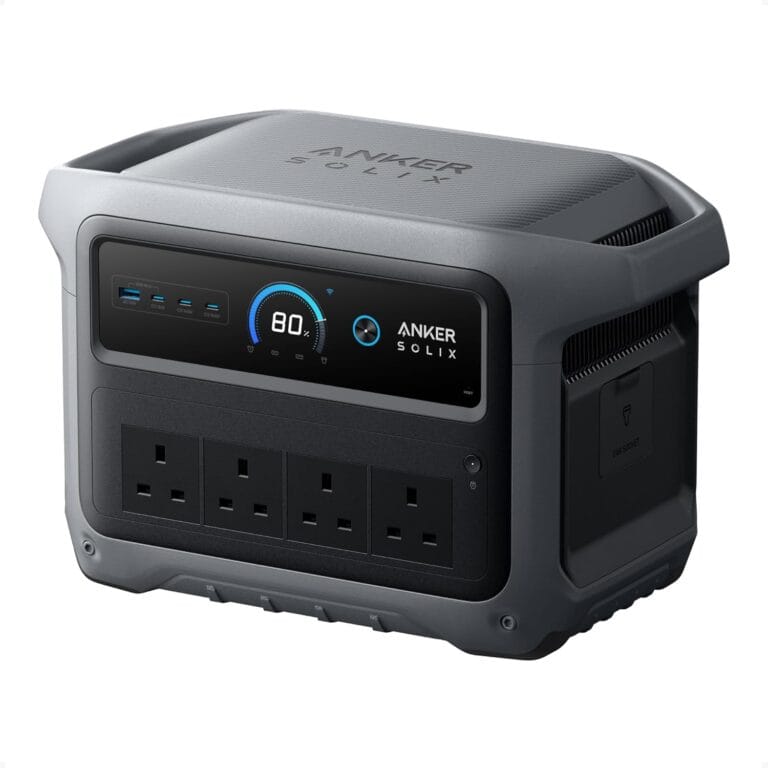
Anker SOLIX C1000 Gen 2 with AC charging cable, 2000W 1024Wh Power Station

Jackery Explorer 2000 v2, 2042Wh 2200W(4400W Surge) Portable Power Station

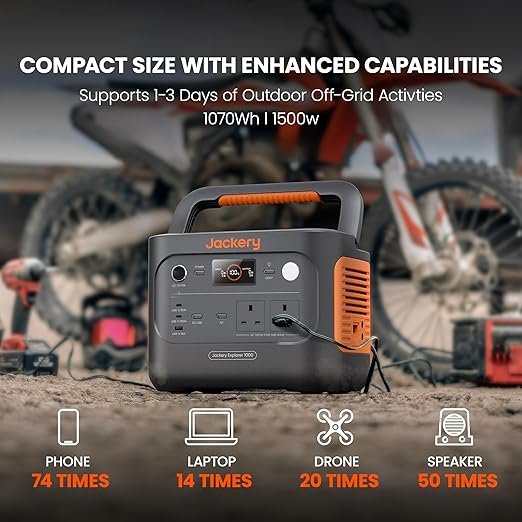
Jackery Explorer 1000 v2, 1500W 1070Wh LiFePO4 Portable Power Station
What you want to power: building a simple off‑grid power plan
Start with that list. Common motorhome and campervan loads include phones, tablets, laptops, cameras, a 12 V fridge or cool box, LED lights, water pump, roof fan, TV, router or MiFi, coffee maker, induction hob and hairdryer. All of these are possible with power stations for camping, but not all at once and not all on a small unit.
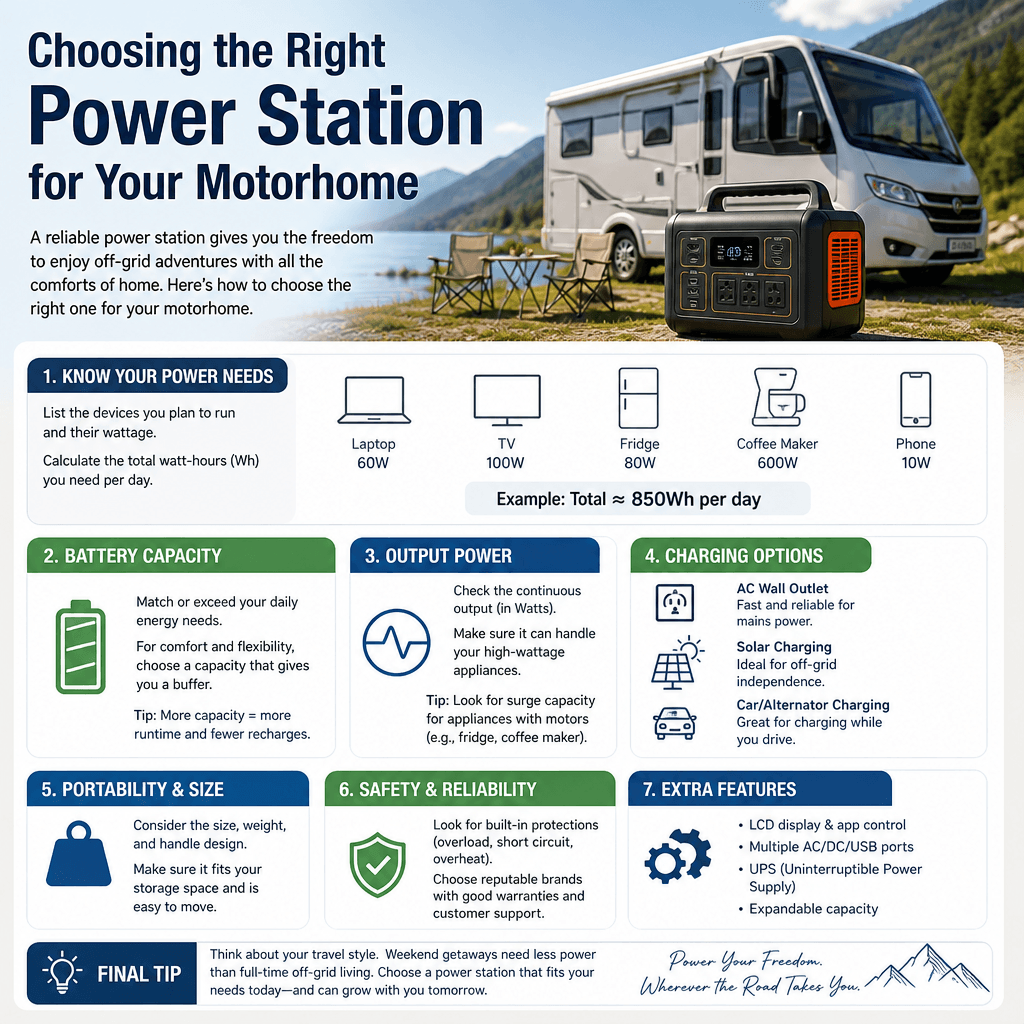
Power usage basics are simple. Watts (W) are how “strong” a device is, like its speed. Watt‑hours (Wh) are how much energy it uses over time, like miles driven. A 200 W device running for 2 hours uses about 400 Wh. Power station capacity is given in Wh, so it is just a battery “tank size”.
Quick example:
- Phone: 10 W for 1 hour: 10 Wh
- Laptop: 60 W for 3 hours: 180 Wh
- LED lights: 15 W for 4 hours: 60 Wh
- Compressor fridge: around 45 W but cycling on and off. Average maybe 15 W over 24 hours: about 360 Wh
Total for a day is roughly 610 Wh. Add a bit of margin and you are looking at a power station of at least 700 to 1,000 Wh if you want a comfortable buffer.
Smaller stations struggle with hungry appliances like electric kettles, fan heaters and most air conditioners. They either cannot supply the peak power or they drain in no time.
Think about two things for each device: peak draw (surge) and how long it runs (continuous load). A simple table on paper or a spreadsheet with device, watts and hours per day will quickly show you what size unit you really need.
Key features to compare when choosing a power station
When you start comparing power stations for camping, the spec sheets can look confusing. Here is what really matters in a van.
Battery capacity is usually given in watt‑hours (Wh). Rough guide: 500 Wh is fine for light use, 1,000–1,500 Wh suits most weekend off‑grid trips, 2,000+ Wh is for heavier use or longer stays. Amp‑hours (Ah) only make sense if you also know the battery voltage, so focus on Wh, it tells you roughly how many watts for how many hours.
Inverter power decides what you can plug into the AC sockets. Look at the continuous rating first, for example 600 W or 2,000 W. Peak or surge watts help fridges or some tools start up. For a campervan, a pure sine wave inverter is strongly preferred, it is kinder to laptops, fridges and other sensitive kit.
Battery chemistry matters. LFP or LiFePO4 batteries usually last much longer, are more stable and cope better with deep discharges, they are ideal for frequent van use. NMC packs are typically lighter and smaller for the same capacity, but may have shorter cycle life.
Check charging options: mains, 12 V from the vehicle, and solar input. Higher solar wattage and a built‑in MPPT controller make life easier off‑grid.
Look at ports: enough AC sockets, a regulated 12 V output, plenty of USB‑A and USB‑C, maybe wireless charging or RV‑specific ports.
Consider noise and portability. Some fans are noticeable in a small van at night, so placement helps. Make sure the weight and handles suit you if you plan to move the unit between van, awning and home.
Smart features like apps and Wi‑Fi are handy for monitoring from bed, but should come after capacity and safety on your priority list.
Brand overview: Bluetti, Jackery, Allpowers, EcoFlow, Anker and DJI
There are dozens of power stations for camping on the market, but a handful of brands come up again and again in van life chats. The names below are not the only good options, they are just common starting points that make it easier to compare features.
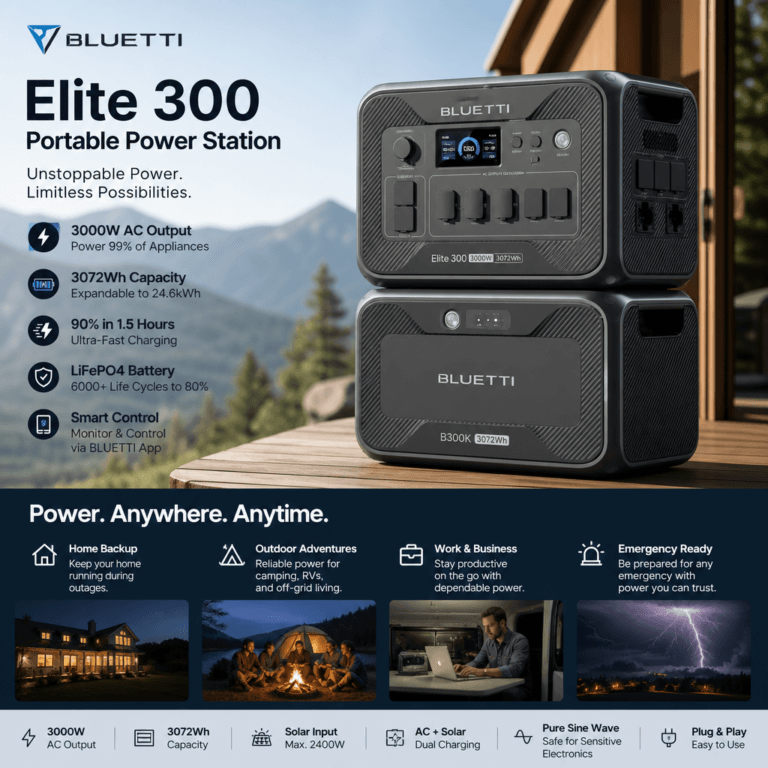
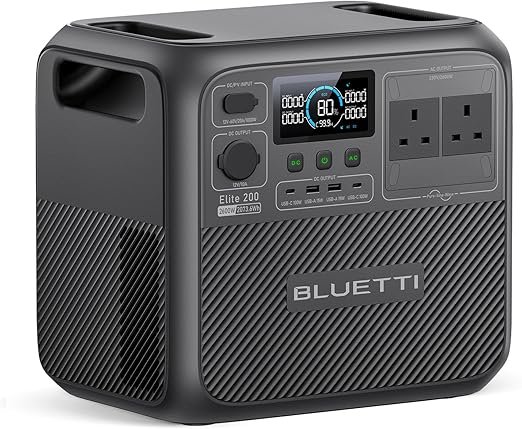
Bluetti focuses heavily on LiFePO4 batteries, which offer long cycle life and good safety. Many Bluetti units accept high solar input and some can be expanded with extra battery packs, which suits larger motorhomes or semi‑permanent off‑grid setups.
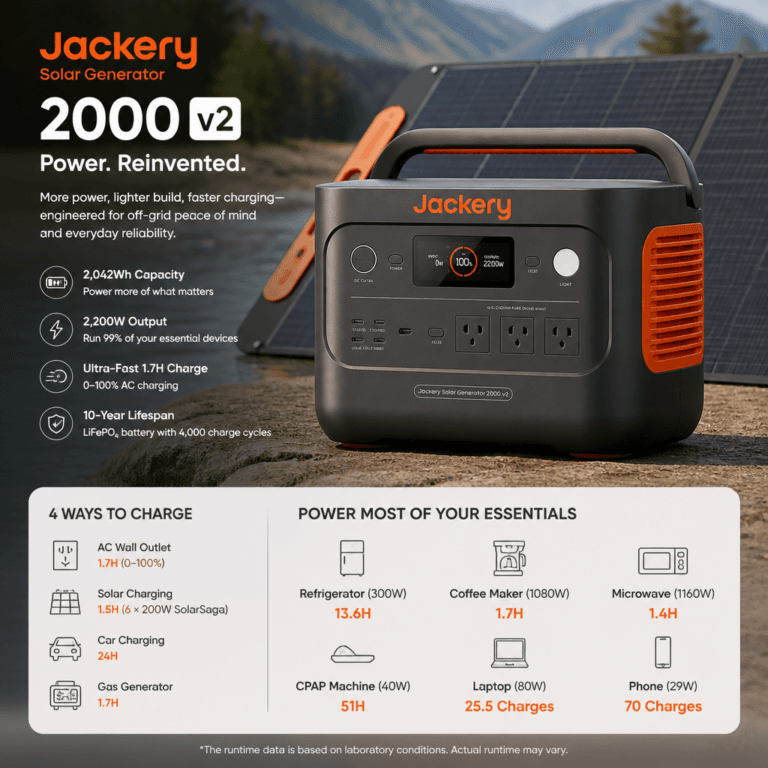
Jackery is well known for simple, user friendly designs. Controls are clear, the range is easy to understand, and they are very popular power stations for camping and first‑time buyers who want something that just works without fiddling.
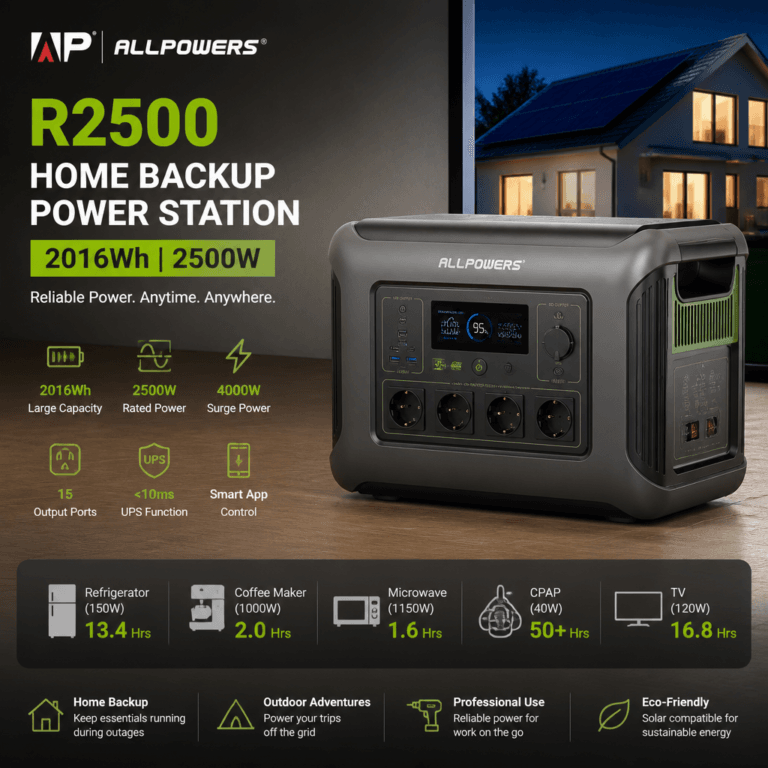
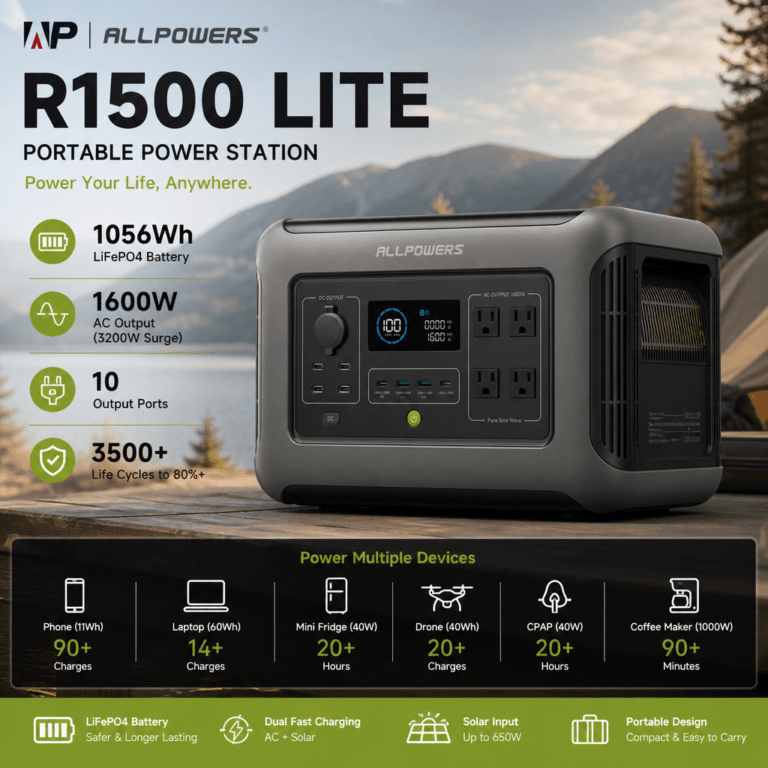
Allpowers often comes in cheaper, with lots of size options. The trade‑off can be build quality, support and long‑term durability, so it is worth digging into independent reviews and warranty details before relying on one as your main supply.
EcoFlow leans into fast charging, powerful inverters and polished apps. Many people use them both for home backup and in a campervan, so they can be a good choice if you want one system for several roles.
Anker brings its reputation from phone chargers and power banks. Its stations tend to be solid mid‑range options, with a focus on reliability and relatively quiet fans.
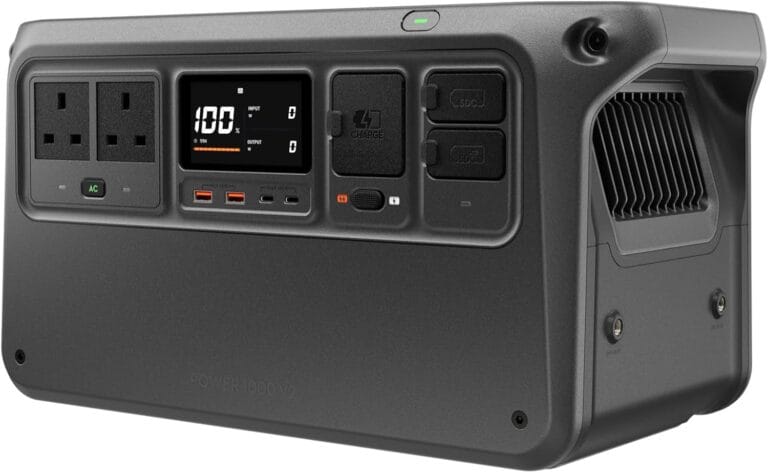
DJI is newer to this space. Their compact stations pair nicely with drones, cameras and laptops, which makes them interesting for content creators travelling in vans.
Whatever badge is on the front, put capacity, safety certifications, warranty and real user feedback ahead of marketing claims.
Charging your power station off‑grid: solar, alternator and campsite hook‑ups
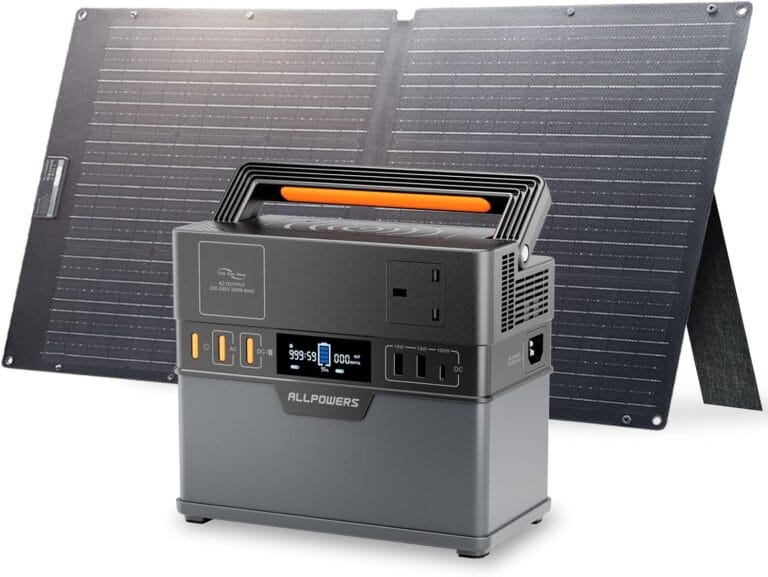
Solar is where power stations for camping really shine. Most units have a dedicated solar input. You plug in a portable panel, the built‑in charger does the rest.
In real UK or European weather, a “100 W” panel usually gives 40–70 W on a decent day, less in winter. As a rough guide, a 200 W array might put 400–700 Wh into your power station on a bright summer day, enough for phones, laptops and a 12 V fridge.
Rigid roof panels suit people who tour a lot. They charge whenever the sun is out, even while driving, with no setup. Foldable suitcase panels are better if you park in shade or move often. You can chase the sun, tilt them to the right angle and pack them away when you leave.
Most modern power stations include an MPPT solar controller. This squeezes more energy from the panels than a basic PWM controller, especially in weak or changing light, and saves you wiring your own.
On the road, you can top up from the alternator. A cigarette lighter socket usually gives only 60–120 W. A dedicated DC charging lead or DC‑DC charger can safely draw more, so you arrive charged after a long drive.
On hook‑up, just plug the power station into mains. It can charge alongside your existing leisure battery and charger, acting as extra portable capacity.
Keep panels out of shade from racks and awnings, allow airflow around the unit while charging, use correctly sized cables and fuses, and avoid very cheap adapters or mismatched solar connectors that can overheat.
Practical van‑life tips for using a power station day to day
Practical day to day use is mostly about where you put the power station and how you live around it.
Pick a spot that is dry, off the floor and well ventilated, with easy access to the sockets. Avoid sealed cupboards. A low shelf near the door or under a seat with a vent works well. Think about cable runs so you are not tripping over leads, and consider a simple security cable or locking box if you often leave the van with the doors open.
You can usually integrate a power station with your existing 12 V system without rewiring. Common options are: running lights or a cool box directly from the 12 V sockets, using adapters to feed a small 12 V distribution block, or keeping the van’s built in 12 V on the leisure battery and using the power station for “extras” like laptops and kitchen gadgets. Keeping circuits separate is simple and safe.
To stretch your watt hours, swap to LED lights, charge phones and laptops in the daytime while solar is working, use 12 V chargers instead of the inverter where you can, and cook with gas instead of electric hobs or kettles.
Look after battery health by avoiding full empties every day, storing the unit partly charged if you are not using it for a while, and keeping it out of extreme heat or freezing corners.
At night, dim or cover bright screens, use eco modes and move a noisy unit a little farther from the bed.
Tidy cabling makes van life calmer. Use short leads, a few Velcro ties and labels.
In a tiny camper, one compact power station for lights, phones and a cool box may be perfect. A larger motorhome might run a big unit plus roof solar as the main supply. Digital nomads often add a second station or larger capacity purely for work gear, keeping “home” and “office” power separate.
Putting it all together: how to choose and feel confident off‑grid
Choosing the right power station for camping in your motorhome or campervan is much easier if you follow a simple process:
- List what you actually use: phones, laptops, lights, fridge, camera gear, TV, router, coffee maker and so on.
- Estimate daily use: note roughly how many hours you run each item, and whether it is every day or just occasionally.
- Turn that into a capacity range: use your best guess of watt‑hours per day, then add a buffer so you are not draining the battery to zero every night.
- Compare features and brands that fit your range: look at ports, inverter size, charging options, battery chemistry and noise, then weigh up Bluetti, Jackery, Allpowers, EcoFlow, Anker, DJI and others.
Even a modest unit can transform life off‑grid, giving quiet, clean power without touching your factory wiring. Start with realistic expectations, accept that you will still cook and heat with gas or diesel, and keep the option to add solar panels or a second station later.
Before you buy, check warranties, after‑sales support, user groups and independent reviews for your shortlisted models. On your first trips, keep a short power diary for a few days. Note what you ran, how long for and how far the battery dropped. You will quickly see whether your setup fits your style or needs a tweak.
The real goal is simple: quiet, reliable power that lets you enjoy wild park‑ups and remote campsites without worrying about sockets. Start sensibly, learn as you go, and you can always build towards a more advanced setup as your travels evolve.