If you have ever tried to boil a kettle on a chilly Devon morning only to trip the power, you already know that electricity on a campsite plays by its own rules.
Reliable power matters whether you are in a tent, caravan or motorhome. It keeps fridges running, phones charged, lights on in the awning and medical or mobility equipment working. On a damp UK campsite it is also a big part of staying safe and comfortable, since the wrong cable or a soggy connection can quickly spoil a trip.
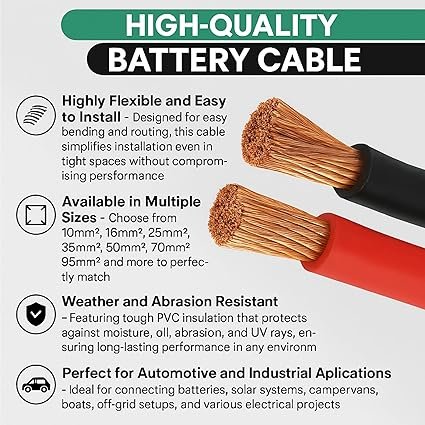
You will hear a few terms again and again. The hookup is the campsite’s electrical outlet, usually a bollard with a blue socket. A mains lead or caravan hook up lead is the heavy orange cable that connects you to that bollard. An extension lead simply takes power a bit further, for example from your van into an awning. A splitter lets one hookup feed two leads. A fly lead is a short converter cable, typically from a blue 16A plug to a standard 13A socket. Battery cable is the red and black wire that connects a 12V leisure battery to your camping electrics.
Most UK sites use 230V, 16A blue CEE connectors and expect outdoor rated kit that is fully uncoiled in use, not overloaded and kept out of standing water.
In the rest of this guide we will look at caravan extension leads, outdoor connection boxes, leisure battery cables, mobile mains units, fly leads and splitter leads. Once you know what each one does, choosing the right camping lead becomes straightforward.
Table of Contents
- Caravan extension leads: safely reaching the campsite hookup
- Links to Related Pages:
- Outdoor electrical lead protector boxes: keeping connections dry and safe
- Leisure battery cables: red and black wire for 12V camping power
- Mobile mains power units: tidy power for tents and awnings
- Fly lead converters: from 16A plug to 13A socket
- Splitting the supply: 16A to 2 x 16A orange splitter leads
- Choosing and using camping leads: safety, care and final tips
- Caravan Hookup Cable Guide for UK Tours
- Caravan Extension Lead
- Outdoor Electrical Lead Protector Box
- Red and Black Leisure Battery Cable Wire
- Mobile Mains Power Unit For Camping
- Fly Lead Converter 16A Plug to 13A Socket
- 16A to 2 x 16A 240V Power Splitter Cable
Caravan extension leads: safely reaching the campsite hookup
A caravan extension lead is the chunky orange cable that links your caravan or motorhome inlet to the campsite hookup bollard. It carries 230V mains power from the post to your van, so it must be designed for permanent outdoor use on UK sites.
Outdoor rated, heavy duty cable is essential. In Britain it has to cope with rain, mud, UV from weak but persistent sunshine, and being trodden on or driven over. Look for flexible rubber or tough PVC sheathing and 16A blue CEE connectors at each end, not domestic 13A plugs.
Typical lengths are 10 m, 15 m and 25 m. Ten metres can suit compact sites, 15 m covers most pitches, and 25 m gives you flexibility for awkward bollard positions. Choose the shortest length that comfortably reaches, with a bit of spare, so you are not leaving loops everywhere.
Key safety features include an IP44 or higher rating for connectors, UV resistant cable, moulded plugs and sockets, and a cable size of at least 1.5 mm², often 2.5 mm² on better leads.
On site, route the lead around the edge of the pitch, avoid paths and shared areas, and keep joints off the ground and away from standing water. Always fully uncoil the lead so it does not overheat on the reel.
For storage, wipe off mud, let it dry, then coil it loosely without tight kinks. Use straps or a cable tidy, and keep it in a ventilated locker or garage at home. Treated well, a good caravan extension lead will last for many seasons.
Outdoor electrical lead protector boxes: keeping connections dry and safe
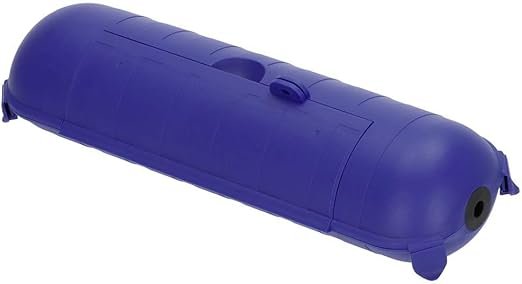
Outdoor electrical lead protector boxes are simple, tough plastic cases that sit around your plug connections. You open the lid, place the joined plugs inside, route the cables through the ends, then close and latch it. A rubber seal and tight catches help keep water and dirt out, so the connection inside stays dry.
On UK campsites, the weak points in your setup are the joins where two cables meet, or where an extension lead plugs into a multi‑socket strip. These plug connections are easy targets for rain, splashes from kids playing, dripping awnings and morning dew. If they sit directly on grass or gravel, they can quickly end up in a puddle.
A good protector box has a continuous waterproof seal around the lid, locking or clip‑down catches, shaped cable entry points that grip the leads, and a clear IP rating such as IP54 or higher. The higher the second number, the better the protection against splashes and jets of water.
Typical uses include covering the join between a caravan extension lead and your tent power strip, or the point where you extend a hookup cable to reach an awning. Place the box on a small platform, a crate, or hang it low on a pole or step so it is off the ground and away from puddles and heavy foot traffic.
It is an extra layer of safety only. Always use outdoor rated cables, connectors and power strips first, then add a protector box to help keep everything cleaner, drier and safer.
Leisure battery cables: red and black wire for 12V camping power
Leisure batteries are the heart of off grid camping. They give you 12V power on non electric pitches, so you can still run lights, a pump, or a cool box without a hookup. To move that power safely around your setup, you use dedicated leisure battery cables.
On most 12V systems you will see two colours of cable: red and black. Red is used for the positive side of the circuit, black for negative. This is called polarity. Getting it right really matters. Reverse the connections and you can blow fuses, damage control units or even ruin a fridge or charger in an instant.
Cable thickness is just as important. Small LED lights can use thin cable, but fridges, air pumps and inverters need much heavier cable to cope with higher current over longer runs. Check the current draw of your kit, measure the distance, then choose a cable size that is rated comfortably above that load to reduce voltage drop and heat.
You have several options for making connections. Ring terminals are neat and secure for battery posts and distribution blocks. Crocodile style clamps are quick and temporary, handy for testing. Fused distribution blocks let you feed several circuits from one battery, each with its own protection.
A few simple safety rules go a long way: always fit a fuse in the positive cable as close to the battery as possible, trim and crimp properly so there are no loose strands, and route cables where they will not be pinched, chafed or crushed.
Mobile mains power units: tidy power for tents and awnings
Mobile mains power units are plug in power hubs designed for use inside tents and awnings. They are ideal for family tent campers, awning users on caravan pitches, and anyone who wants mains power neatly organised without fitting anything permanently to a vehicle.
A typical camping mobile mains unit has a 16A blue hookup inlet on a long outdoor rated cable, built in safety protection with an RCD and one or more MCBs, and several 13A UK sockets, often with switches and sometimes USB charging ports. Some have a hanging hook or stand, and a small indicator light to show power is on.
Using one is simple. You plug the 16A connector into the campsite bollard, fully uncoil the cable, then bring the unit into your tent or awning. The RCD and MCBs help protect you if there is a fault, and the sockets give you a central, tidy place to plug in your kit.
Compared with just running an ordinary outdoor extension lead into the tent, a mobile mains unit is usually safer and more organised. It gives you proper protection and avoids a tangle of multiway adapters on the ground.
Set it up so it is off the floor if you can, for example hung from a frame or placed on a small table, and where everyone can reach the sockets without stretching leads across walkways.
Typical appliances include a cool box or low wattage fridge, phone and tablet chargers, LED lighting, a low wattage kettle or travel hairdryer, and perhaps a small fan or heater, as long as you stay within the campsite and unit ratings.
Fly lead converters: from 16A plug to 13A socket
A fly lead converter with a 16A plug to 13A socket is a short, chunky adapter cable that lets you plug ordinary UK 3‑pin plugs into a campsite hookup. One end has the blue 16A camping plug that fits the bollard. The other end has a single weather protected 13A socket, just like you have at home.
UK campers use these when they want to power standard appliances, or a small extension lead, directly from the hookup without a full mobile mains unit. Common situations include running a cool box and chargers in an awning, or giving a tent on a serviced pitch one or two safe 13A sockets.
It is important to use a camping rated fly lead, designed for outdoor use, with thick orange cable and proper IP rated connectors. Never bodge it with indoor adapters, multiway cubes or “block” extensions, which are not built for damp grass, rain or being trodden on.
You still have to respect load limits. The bollard might supply up to 16A, but your fly lead and any connected extension must also be rated for that, and you must add up the wattage of your appliances so you do not overload anything.
A typical setup is a 16A to 13A fly lead into a short, outdoor rated 13A extension that runs safely into your awning or tent. For storage, coil the fly lead loosely, keep it dry, and choose a bright colour, such as orange or blue, so it is easy to spot in grass or at the bottom of a kit bag.
Splitting the supply: 16A to 2 x 16A orange splitter leads
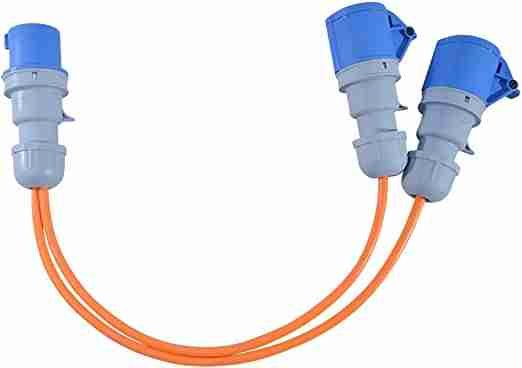
A 16 amp to 2 x 16 amp 240 V orange power splitter is a short hookup lead with one blue 16A plug at one end and two blue 16A sockets at the other. It lets you feed two separate hookup leads from a single campsite bollard, as long as the site allows it and you manage the load correctly.
Typical uses include sharing a single bollard between two small campervans, running one lead to a caravan and another to an awning, or powering a neighbour’s tent on rallies or informal sites. Always check the site rules first. Many UK campsites either ban splitter leads or only permit them on rallies, because they can complicate safety checks, metering and fault finding.
Even when split, the total available current is still 16A. Both legs together must not exceed the bollard rating or the splitter cable rating. If one outfit is running electric heating, hot water and a kettle, the other should keep loads very light. Treat the two sockets as sharing one budget, not as two separate 16A supplies.
These splitters are usually bright orange for visibility around grass and gravel, with chunky, moulded, outdoor rated connectors and a tough, flexible cable. Look for IP rated fittings and strain relief at each end.
To avoid confusion, especially if you are sharing with friends, label each leg of the splitter clearly, for example “van” and “awning” or with pitch numbers. This makes it easier to trace which lead belongs where when it is time to pack up or if a trip switches off.
Choosing and using camping leads: safety, care and final tips
Choosing camping leads is really about matching the right bit of kit to how you camp, then treating it well so it lasts.
Use a caravan extension lead to reach the hookup bollard from your caravan, motorhome or tent. Add an outdoor lead protector box wherever two cables join or a plug sits outside. Turn to leisure battery cables for 12 V setups, especially off grid, and mobile mains power units for tidy, protected 230 V power in tents and awnings. Fly leads let you bridge from a 16 A blue hookup to standard 13 A plugs, while splitter leads share one bollard, where rules allow, between two 16 A connections.
When buying any camping lead, run through a short checklist:
• Length that comfortably reaches, without tight stretches or big coils
• Correct current rating and suitable outdoor connectors
• Good IP rating for outdoor use, ideally splashproof or better
• Flexible, heavy duty cable with a recognised brand or standard
Use your leads safely: always fully uncoil, never overload, keep joins off wet ground and away from traffic, and inspect for cuts, nicks or crushed sections before every trip.
Maintain them with quick visual checks, a wipe with a dry or slightly damp cloth, dry storage loosely coiled, and no tight knots or kinks.
Whether you live on electric hookup, mix mains with 12 V, or go simple with a single leisure battery, the right camping leads make life easier, more comfortable and, most importantly, safer in all UK weather.
Caravan Hookup Cable Guide for UK Tours
Caravan hookup cable guide for UK touring. Learn cable length, amps, safety, storage and what to buy for reliable campsite electric hook-up use.
Caravan Extension Lead
Discover the 10m caravan extension lead EHU hookup, a durable, weatherproof power solution for campervans and motorhomes on every adventure.
Outdoor Electrical Lead Protector Box
Protect outdoor power safely with this waterproof electrical lead protector junction box, ideal for EHU mains leads, camping, caravans and gardens.
Red and Black Leisure Battery Cable Wire
Discover durable red and black leisure battery cable wire, designed for caravans, boats and off-grid setups, ensuring safe, efficient power.
Mobile Mains Power Unit For Camping
Discover an easy, low-cost mobile mains power unit for camping to safely run outdoor electrics from your caravan, motorhome or RV hookup.
Fly Lead Converter 16A Plug to 13A Socket
Discover the Powermaster 341082 16A-13A Fly Lead Converter, a compact, reliable power solution for camping, caravans, generators and on-site work.
16A to 2 x 16A 240V Power Splitter Cable
Discover the 16 AMP to 2x 16 AMP 240V H07RN-F rubber power splitter from Event Distribution, built for durable, safe stage and industrial use.