If you enjoy camping away from noisy hook up sites, your leisure battery is your lifeline. It keeps the lights on, the fridge cold and the water pump running when there is no mains cable in sight.
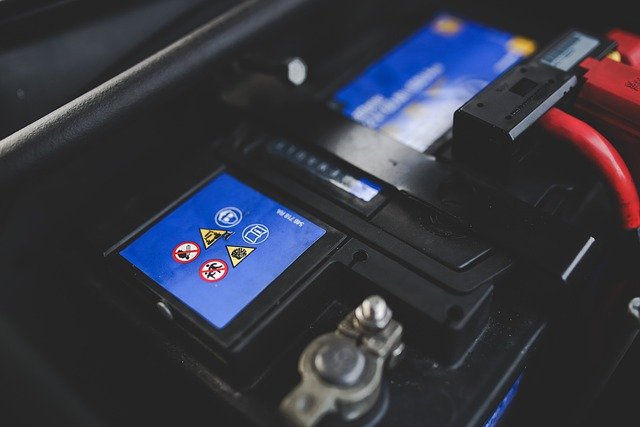
A leisure battery is different from the starter battery under your bonnet. Your starter battery is built to give a short, powerful burst to crank the engine, then it is quickly recharged by the alternator. A leisure battery is designed for the opposite job, it releases a steady flow of energy over many hours to power your living space.
This is why leisure batteries matter so much for off grid comfort and safety. A good setup means you can run lighting, fans, heating controls, a fridge, device chargers and maybe even a small inverter, without worrying that you will flatten the starter battery and be unable to drive away.
You will see a few key terms when you start shopping. Amp hours (Ah) show how much energy a battery can store. Depth of discharge (DoD) is how much of that stored energy you can safely use before recharging. Cycles are how many times a battery can be discharged and recharged before its capacity noticeably drops.
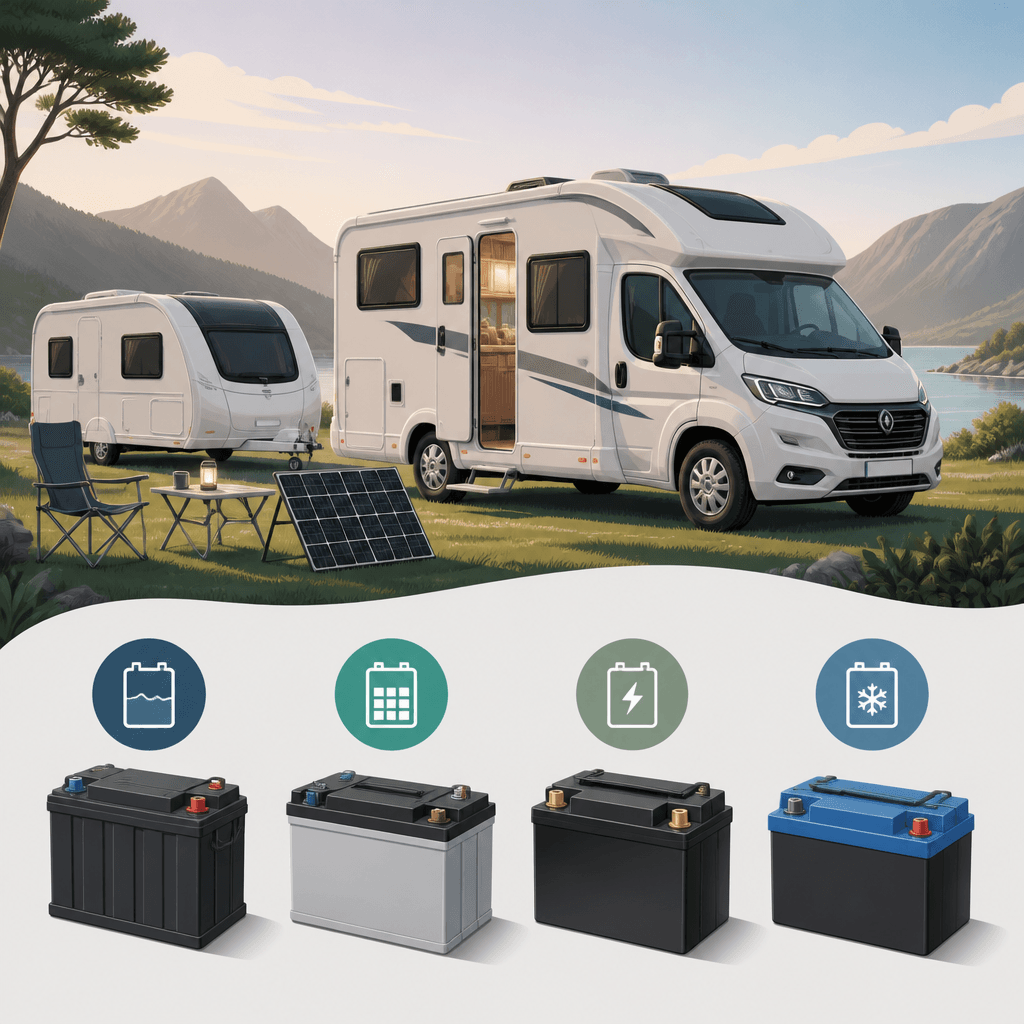
There are several main types of leisure battery: traditional flooded lead acid, sealed AGM, various deep cycle designs, and newer lithium batteries, especially LiFePO4. Each has its own balance of cost, weight, lifespan and performance.
The rest of this guide will help you match these options to how and where you actually camp, so you can choose with confidence.
Table of Contents
- Key Things to Know Before Choosing a Leisure Battery
- Links to Related Pages:
- Traditional Lead Acid Leisure Batteries
- AGM Leisure Batteries, Sealed and Ready for Rough Use
- Deep Cycle Leisure Batteries, Built for Regular Discharge
- Lithium Leisure Batteries, Lighter Weight and High Performance
- LiFePO4 Lithium Leisure Batteries, The Popular Modern Upgrade
- Comparing Battery Types and Choosing What Suits Your Adventures
- Motorhome Batteries: What to Buy
- Motorhome Inverter vs Generator
- What Size Inverter for a Caravan?
- Which Power Inverter for a Motorhome?
- Prevent Dead Battery with Leisure Battery Isolator
- Reliable Leisure Batteries
- Budget Leisure Battery
- Cheapest Leisure Battery For Camping
- Deep Cycle Leisure Battery
- Cheapest 80Ah Deep Cycle Dynamic Leisure Battery
- Yuasa L35-115 12V 115Ah Leisure Battery
Key Things to Know Before Choosing a Leisure Battery
Links to Related Pages:
- Motorhome Batteries: What to Buy
- Motorhome Inverter vs Generator
- What Size Inverter for a Caravan?
- Which Power Inverter for a Motorhome?
- Prevent Dead Battery with Leisure Battery Isolator
- Reliable Leisure Batteries
- Budget Leisure Battery
- Cheapest Leisure Battery For Camping
- Deep Cycle Leisure Battery
- Cheapest 80ah Deep Cycle Leisure Battery From Dynamic
- Yuasa L35-115 12V 115Ah 750A Lead Acid Leisure Battery
Before you even look at battery labels, it helps to know roughly how much power you actually use in a day. Make a quick list of everything you run off 12 volts: lights, fridge, heater fan, water pump, phone and laptop chargers, TV, router. For each one, note how many amps it draws (often on a sticker or in the manual) and how many hours you use it. Amps × hours gives amp hours (Ah). Add them all up and you have your daily Ah use.
Battery capacity is measured in amp hours. A 100 Ah battery could, in theory, deliver 5 amps for 20 hours. In practice you cannot use all of it. This is where depth of discharge comes in, the percentage of the battery that you actually draw. Many lead acid leisure batteries should only be taken down to about 50 percent regularly, so a 100 Ah battery gives around 50 Ah of usable energy. Lithium and LiFePO4 can safely give 80 to 90 percent of their rated capacity.
Think about space and weight. Batteries are heavy and need a secure, accessible home that will not upset your weight distribution. Check dimensions and make sure you can route cables safely.
Consider how you will charge: campsite hook up, alternator while driving, solar panels, or a generator. Some chemistries make more sense if you mostly stay on hook up, others shine with solar and alternator charging.
Whatever you choose, safety matters. Flooded batteries need ventilation. All types need proper fuses close to the battery, sound cable sizing, solid mounting and protection from short circuits and physical damage.
Traditional Lead Acid Leisure Batteries
Traditional flooded lead acid leisure batteries are the “old faithful” option many campers start with. Inside, they use plates of lead sitting in a liquid acid mix called electrolyte. When you draw power, a chemical reaction on those plates produces electricity. Put power back in with a charger and the reaction reverses, ready for the next use.
Their big advantage is cost. They are usually the cheapest leisure batteries on the shelf, easy to find at caravan dealers and motor factors, and most chargers and workshops know how to deal with them.
The downsides matter though. They are heavy for the usable energy you get. You should only use around 40 to 50 percent of their rated amp hours if you want a reasonable life. They also need occasional maintenance, checking and topping up electrolyte on serviceable types, and they do not tolerate being left flat or heavily discharged.
Flooded lead acid suits weekend caravanners mostly on hook up, people who just want a basic backup supply for lights and a pump, and vans that are only used lightly in the season.
To look after one, keep it fully charged when not in use, avoid running it very low, ideally not below about 50 percent, and check fluid levels if the caps can be removed. Use a proper multi stage charger with a lead acid setting so the voltage is high enough to charge fully, but not so high that it overcooks the plates and boils off electrolyte. This will help your battery last as long as possible.
AGM Leisure Batteries, Sealed and Ready for Rough Use
AGM stands for Absorbent Glass Mat. Inside an AGM battery the acid is soaked into fibreglass mats between the lead plates, instead of sloshing around as a liquid like in a traditional flooded battery. This design makes the battery sealed and spill proof, so it can be mounted in more positions and copes better with bumps and vibration.
For campers, the big benefits are practical. AGM batteries are low maintenance, there is no topping up with distilled water, and they generally have lower self discharge, so they hold their charge better in storage. They also tend to handle rough roads and constant movement more calmly than basic leisure batteries. Treated well, an AGM usually offers a slightly deeper safe depth of discharge and a longer life than a budget flooded battery.
There are downsides. AGM batteries cost more, and they really dislike being overcharged or cooked in a hot locker. Consistently high charging voltage, or fitting them next to a heater, will shorten their life quickly.
AGM suits touring motorhomes and campervans that move often, see plenty of vibration and spend some time off grid, but are not running huge inverters every day. They are a good middle ground for moderate wild camping and regular weekend trips.
Charging is important. Use a charger with an AGM setting, as the ideal voltages are slightly different to standard flooded lead acid. Check that your mains charger, solar controller and DC DC charger, if fitted, are AGM compatible, and confirm your alternator charging system is not routinely overvolting the battery.
Deep Cycle Leisure Batteries, Built for Regular Discharge
Deep cycle leisure batteries are built to be worked hard. They are designed to be discharged and recharged regularly, rather than just giving a big burst of power to start an engine. Inside, the plates and separators are thicker and more robust, which helps them cope with repeated cycling without shedding material or losing capacity as quickly.
This is why “deep cycle” is more than a marketing label. A true deep cycle battery is engineered for regular, deeper discharges, for example down to 50 percent, and many hundreds of cycles. Some cheaper “leisure” batteries are closer to starter batteries in construction, so always look for proper cycle life data and recommended depth of discharge in the spec sheet.
The main benefit is durability. Compared with a basic leisure battery, a good deep cycle unit will give you more usable cycles, tolerate being run down further, and recover better when used off grid. They can be flooded lead acid, AGM or gel, the “deep cycle” part simply describes their intended use and internal build, not the chemistry.
Deep cycle batteries suit campers who spend several days off grid at a time, seasonal tourers who like a few nights without hook up, and anyone running a small solar system. For best life, team them with an intelligent charger and an MPPT solar controller that has a suitable profile for your battery type. Avoid routinely taking them below the recommended depth of discharge, keep them fully charged when in storage, and they will usually reward you with years of reliable leisure battery service.
Lithium Leisure Batteries, Lighter Weight and High Performance
Lithium leisure batteries are the next step up from traditional lead acid options. For the same size and capacity they are much lighter, which is a big help for weight‑limited vans and caravans, and they pack in a lot more usable energy. Where a typical lead acid battery should only be taken to around 50 percent depth of discharge, many lithium batteries are comfortable at 80 to 90 percent, so you can run more kit for longer without hurting the battery.
They also charge quickly, which suits alternator charging while driving and modern solar setups, and they usually offer a very long cycle life. Treated properly, a good lithium bank can last several times longer than a standard leisure battery, so over the long term the higher upfront cost can balance out.
There are a few important limitations. Lithium are more expensive leisure batteries to buy and they must have a built in battery management system to protect against overcharging, over discharging and overheating. They also need compatible chargers and, in many cases, a DC to DC charger between the alternator and the battery.
Modern lithium units are generally very safe when correctly installed, since the BMS monitors and controls the cells. For most campers, lithium suits frequent wild camping, heavy off grid use, running inverters and full time van life where weight, fast charging and high usable capacity really matter.
There are several lithium chemistries around, but LiFePO4 is by far the most common and camper friendly, so that is what most dedicated “lithium leisure batteries” actually use.
LiFePO4 Lithium Leisure Batteries, The Popular Modern Upgrade
LiFePO4 stands for lithium iron phosphate. Inside are lots of small cells and a built in battery management system, but what you really notice in a van is that they are light, punchy and very forgiving if treated properly.
For campers, their biggest strengths are long life and stability. A decent LiFePO4 can give several thousand cycles, so it shrugs off regular deep discharges that would quickly age a lead acid or AGM. You can usually use around 80 to 90% of the stated capacity without harming it, so a 100 Ah LiFePO4 gives roughly the same usable energy as a 200 Ah lead acid bank, but at around half the weight.
Compared with lead acid and AGM, LiFePO4 charges faster, holds its charge for months with very low self discharge, and recovers quickly after heavy use. Voltage stays flatter as it discharges, which keeps fridges, fans and inverters happier for longer.
Installation does need more thought. You want a charger with a lithium profile, and in most motorhomes a DC DC charger between alternator and battery is strongly recommended. LiFePO4 should not be charged below freezing, so in cold climates look for batteries with built in heaters or install them in a protected space.
Upfront cost is high, but spread over their long service life and fewer replacements, many regular off grid users find they work out cheaper in the long run. They are ideal for serious touring, running high power inverters and 230 volt appliances, and full time living where reliability and weight really matter.
Comparing Battery Types and Choosing What Suits Your Adventures
Choosing between battery types is really about balancing cost, weight, lifespan and how much of the stored energy you can actually use.
Lead acid is cheapest but heaviest, with the shortest life and shallow usable capacity. AGM is a bit more expensive and still heavy, but sealed, tougher and a little longer lived. “Deep cycle” versions of these improve lifespan and usable capacity if you regularly discharge and recharge. Lithium, especially LiFePO4, costs most upfront but is very light, offers a lot of usable energy and has a long cycle life.
Quick matching guide:
- Weekenders on hook up: basic lead acid or AGM is usually enough.
- Seasonal tourers, a few nights off grid: good deep cycle AGM or quality lead acid.
- Regular wild campers: deep cycle AGM or entry level LiFePO4.
- Full timers and heavy inverter users: LiFePO4 is usually the best fit.
Simple steps to choose:
- List your daily power use and how long you want to stay off grid.
- Note weight limits and space for batteries.
- Check how you charge now, alternator, hook up, solar, and what you plan to add.
- Set a realistic budget, including any needed chargers or DC DC units.
To future proof, leave space for extra batteries, run cables sized for possible inverters and consider adding solar later.
Whatever you pick, mount batteries securely, use correct fusing and cable sizes, keep connections tight and inspect regularly.
The key takeaway: do not chase the fanciest spec. Choose the leisure battery that honestly matches how you camp today and how you are likely to camp tomorrow.
Motorhome Batteries: What to Buy
Choosing motorhome batteries is easier when you know capacity, type and charging needs. Here’s how to pick a reliable setup for touring.
Motorhome Inverter vs Generator
Motorhome inverter vs generator – compare noise, cost, power and camping freedom to choose the right setup for your touring style and budget.
What Size Inverter for a Caravan?
Not sure what size inverter caravan owners need? Learn how to match wattage, battery capacity and appliances for safe, reliable touring power.
Which Power Inverter for a Motorhome?
Not sure which power inverter motorhome setup needs? Learn how to match wattage, battery type and appliance use for safer, easier touring.
Prevent Dead Battery with Leisure Battery Isolator
Protect your leisure battery from drain with our easy-to-install isolator dead switch, extending battery life and ensuring reliable power.
Reliable Leisure Batteries
Discover reliable leisure batteries designed for deep-cycle performance, off-grid power, and long-lasting energy for caravans, boats, and camping.
Budget Leisure Battery
Discover how budget leisure batteries power caravans, campervans and motorhomes, with key features, pros and trade‑offs explained for smart buyers.
Cheapest Leisure Battery For Camping
Discover the cheapest leisure batteries for camping, with reliable, budget-friendly options to keep your lights, fridge and devices powered.
Deep Cycle Leisure Battery
Discover deep cycle leisure batteries: learn how they work, key benefits, how to choose, maintain, and size them for reliable off‑grid power.
Cheapest 80Ah Deep Cycle Dynamic Leisure Battery
Discover the Cheapest 80Ah Deep Cycle Leisure Battery from Dynamic – reliable, long-lasting NCC Class C power for caravans, motorhomes and boats.
Yuasa L35-115 12V 115Ah Leisure Battery
Discover the Yuasa L35-115 12V 115Ah 750A leisure battery, offering reliable deep-cycle power, long life and enhanced safety for boats and caravans.