
10 Best Caravan Battery Chargers for UK Trips
A flat leisure battery has a habit of showing up at the worst possible moment – just as you settle on site, switch on the lights, or realise the motor mover is working harder than expected. That is why choosing from the best caravan battery chargers matters more than it first appears. The right charger keeps your battery healthier, shortens downtime, and makes touring feel a lot less fiddly.
For UK caravan owners, this is rarely about buying the most expensive unit on the shelf. It is about matching the charger to your battery type, your touring habits, and how you actually use your van. A weekend tourer storing the caravan at home needs something slightly different from a seasonal traveller relying on regular hook-up charging, and different again from anyone topping up with solar between trips.
What makes the best caravan battery chargers worth buying?
A good caravan battery charger does more than simply put power back into a battery. Modern smart chargers monitor voltage, adjust charging stages automatically, and help prevent overcharging. That matters because leisure batteries are not cheap, and replacing one early because it has been charged badly is a false economy.
The best models usually include multi-stage charging. In plain terms, they charge hard when the battery is low, then ease back as it fills, and finally maintain the battery safely once it is charged. That helps battery life and removes the worry of guessing when to disconnect it.
Temperature compensation can also be useful, especially if your caravan is stored somewhere cold over winter. Some chargers alter their output to suit ambient conditions, which helps avoid undercharging in low temperatures or stressing the battery when it is warmer.
There is also a convenience factor. If a charger is easy to connect, easy to read, and simple to leave running in maintenance mode, you are far more likely to use it properly.
Related:



The first decision: battery type and charger compatibility
Before comparing features, check what battery you actually have. This is where many buying mistakes happen. Not every charger suits every battery, and the best caravan battery chargers are only the best if they work with your setup.
Most caravans use lead-acid leisure batteries, often flooded, AGM, or gel. Newer vans and upgraded systems may use lithium batteries, usually LiFePO4. A charger designed for standard lead-acid batteries may not charge lithium correctly, and a lithium-focused charger may not be the best fit for older battery types.
If you are not sure, look at the battery label first. The charger should clearly state compatible battery chemistries. If you are planning a battery upgrade soon, it can be worth buying a charger that supports more than one type so you do not end up replacing the charger as well.
Charger size matters more than most people think
A common assumption is that bigger is always better. In reality, charger amperage should suit battery capacity. Too small, and charging takes ages. Too large, and you may be paying for output you do not need.
For many caravan leisure batteries, a charger in the 5A to 15A range is a sensible place to start. A smaller charger can be perfectly adequate for maintenance charging and occasional top-ups. If you regularly recharge after deeper use, or have a larger battery bank, a higher output charger is more practical.
As a rough guide, a 100Ah battery paired with a 10A smart charger is a solid, balanced setup for plenty of caravan owners. It will not feel painfully slow, but it is not excessive either. If you run twin batteries, heavy 12V loads, or want quicker turnaround between trips, stepping up can make sense.
Features that genuinely help on tour and in storage
Some charger features are very useful. Others sound clever but may not matter much for everyday touring. The trick is knowing the difference.
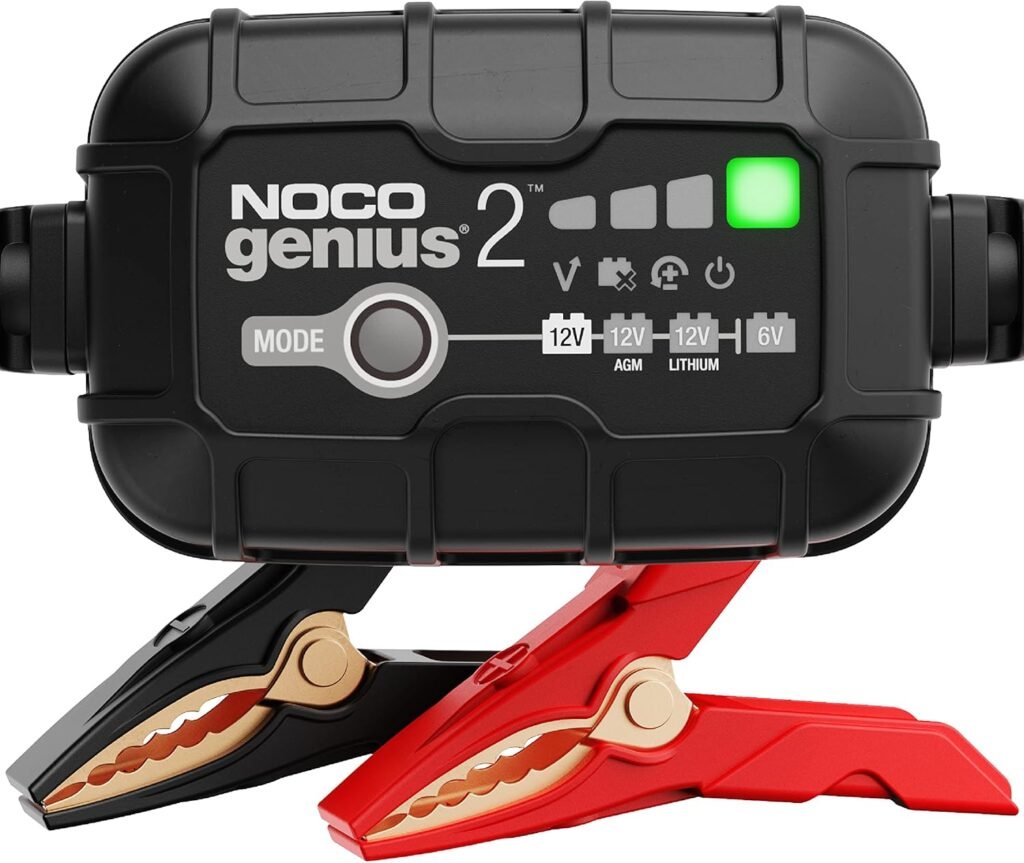
A clear display is worth having. Seeing charging status, battery level, and any fault warnings at a glance saves guesswork. Reverse polarity protection is another feature that earns its keep, especially if you only connect a charger a few times each season and want a bit of extra reassurance.
Desulphation or battery recovery modes can be helpful on older lead-acid batteries, although they are not miracle workers. If a battery is badly worn or damaged, a charger will not bring it back to new condition. Still, for lightly neglected batteries, recovery functions can sometimes extend usable life.
Weather resistance may matter if you charge in a garage, on a driveway, or under a shelter rather than in a dry workshop. Compact size is also handy in caravan ownership, where storage space never seems as generous as it did on paper.
Best caravan battery chargers for different buyers
If you only tour now and then, a compact smart charger with automatic maintenance mode is often the most sensible buy. You can connect it during storage, keep the battery in better condition, and avoid arriving at the caravan to find the power disappointing before the trip has even started.
If you travel regularly and depend heavily on off-grid power, look for a charger with higher amperage and support for your specific battery chemistry. Faster charging, better diagnostics and stronger build quality become more worthwhile when your battery setup sees regular use.
For owners with solar already fitted, a standalone charger still has value. Solar is helpful, but in the UK it is not always dependable enough to handle every charging job, especially across winter or shaded storage. A mains charger gives you certainty when the weather does not cooperate.
If you have upgraded to lithium, buy with extra care. Lithium-compatible caravan battery chargers tend to cost more, but the charging profile is important. This is not the place to cut corners. Done properly, lithium can be a superb touring upgrade. Done badly, it becomes an expensive frustration.
Built-in caravan charger or separate smart charger?
Many caravans already have an onboard charging system, so it is fair to ask whether you need a separate unit at all. Sometimes the onboard charger is perfectly adequate. Sometimes it is dated, basic, or not ideal for the battery type you now use.
A separate smart charger is especially useful if the caravan is stored away from convenient hook-up, or if you remove the battery for home charging. It can also be a better choice for battery maintenance over longer periods, particularly if the existing onboard system lacks the smarter charging stages found on newer units.
If your current setup keeps the battery healthy, there is no need to replace it for the sake of it. But if batteries seem to lose condition quickly, take a closer look at how they are being charged rather than blaming the battery alone.
What to watch for before you buy
Price matters, but value matters more. The cheapest charger can end up costing more if it charges poorly, lacks safety features, or shortens battery life. Equally, paying for specialist functions you will never use does not make much sense either.
Pay attention to cable length and clamp quality. These details are easy to overlook on a product page but can make day-to-day use much easier. A charger that constantly feels awkward to connect soon becomes one of those purchases you regret slightly every time you use it.
It is also worth checking whether the charger is intended for long-term maintenance charging or just shorter charging sessions. For caravan owners who store their van between trips, that distinction matters.
At Caravan Motorhome RV, this is exactly the kind of product where a little guidance saves a lot of trial and error. You do not need the most technical charger on the market. You need one that fits your battery, your budget and your touring routine.
How to choose the best caravan battery chargers with confidence
Start with the battery chemistry, then the battery capacity, then how you use the caravan. That order keeps the decision simple. Once those basics are clear, compare practical features like smart charging stages, maintenance mode, safety protection and ease of use.
If you are mainly charging between occasional weekends away, keep it simple and reliable. If you spend longer periods touring or rely heavily on 12V appliances, give more weight to charging speed and compatibility with larger battery capacity. If you expect to upgrade your power system later, buying a more flexible charger now can be the smarter move.
The best caravan battery chargers are not always the flashiest models. They are the ones that quietly do the job, protect your battery, and let you focus on the part you actually bought the caravan for – getting away, settling in, and enjoying the trip without power worries hanging over it.
A dependable charger is one of those unglamorous buys that earns its place every time you head off with a battery that is ready to work.