
What Size Caravan Battery Do You Need?
One flat battery can spoil a weekend faster than rain on arrival. If you are wondering what size caravan battery to choose, the right answer depends less on the caravan itself and more on how you tour, what you run, and how long you want to stay powered up without stress.
Some owners only need enough battery capacity for lights, a water pump and a mobile phone charger between sites. Others want to run a motor mover, TV, heating controls, USB devices and a few extras while spending longer off-grid. That is why there is no single best size for everyone – but there is a size that makes sense for your setup.
What size caravan battery is right for most people?
For many UK caravan users, a leisure battery in the 100Ah to 110Ah range is a sensible starting point. It offers enough capacity for regular touring needs without becoming unnecessarily heavy or expensive. If your caravan use is mostly on serviced pitches with electric hook-up, that size is often more than enough.
If you go off-grid more often, use more 12V appliances, or want a larger margin before recharging, moving up to 120Ah or 130Ah can be worthwhile. The trade-off is extra weight and, in some battery lockers, a tighter fit. Bigger is not always better if it means straining your payload or buying capacity you rarely use.
At the smaller end, some caravans can manage with around 75Ah to 85Ah, especially if the battery is mainly there for light use and backup. That can suit shorter trips or caravans that spend most of their time on hook-up. Still, many owners prefer a little more headroom because batteries perform best when they are not repeatedly drained too deeply.
Start with how you actually use your caravan
The easiest way to decide what size caravan battery you need is to think about daily power use. A battery is not just a box with a number on it. Its amp-hour rating, usually written as Ah, tells you how much energy it can store. The higher the number, the longer it can power your caravan systems before needing a recharge.
Related:




In practical terms, a caravan with LED lights, a water pump, occasional mobile phone charging and a radio will use far less power than one with a TV, Wi-Fi kit, multiple chargers, fans and regular motor mover use. If your touring style is simple and site-based, you can usually keep things modest. If you enjoy longer stops away from hook-up, extra capacity quickly becomes useful.
It also helps to think in days, not just appliances. Ask yourself how long you want the battery to last before you drive, recharge, or rely on solar. One night on a site is very different from three nights at a rally field or a quiet rural stop with no electric point nearby.
Battery size versus usable power
This is where many buyers get caught out. A 100Ah battery does not always mean you can freely use all 100Ah. With traditional lead-acid, AGM and gel leisure batteries, draining too deeply too often can shorten battery life. In real-world use, many people try not to use much more than around half the stated capacity before recharging.
That means a 100Ah battery may give you roughly 50Ah of comfortable usable power if you want to look after it properly. This is one reason why a battery that seems large enough on paper can still feel disappointing on a cold trip with heavier use.
Lithium batteries are different. They usually allow a much greater proportion of their stored power to be used without the same penalty. A 100Ah lithium battery can often deliver far more usable energy than a 100Ah lead-acid option. They are lighter too, although the purchase price is much higher.
Which battery type affects the size you need?
Battery chemistry matters almost as much as battery size. If you are comparing options, the three most common categories are standard lead-acid leisure batteries, AGM or gel batteries, and lithium.
A conventional lead-acid battery is often the lower-cost choice and suits plenty of caravanners well, especially for lighter use and regular hook-up touring. AGM and gel batteries can offer better durability in some setups, though they still tend to be heavier than lithium and usually cost more than standard wet batteries.
Lithium is attractive if you want strong usable capacity, quicker charging and less weight in the van. For regular off-grid trips, that can make a big difference. The catch is budget. If you only tour a few times a year on serviced pitches, the extra spend may not be the smartest place to put your money.
So when asking what size caravan battery to buy, also ask what battery type fits your touring habits. A smaller lithium battery may outperform a larger lead-acid battery in everyday use.
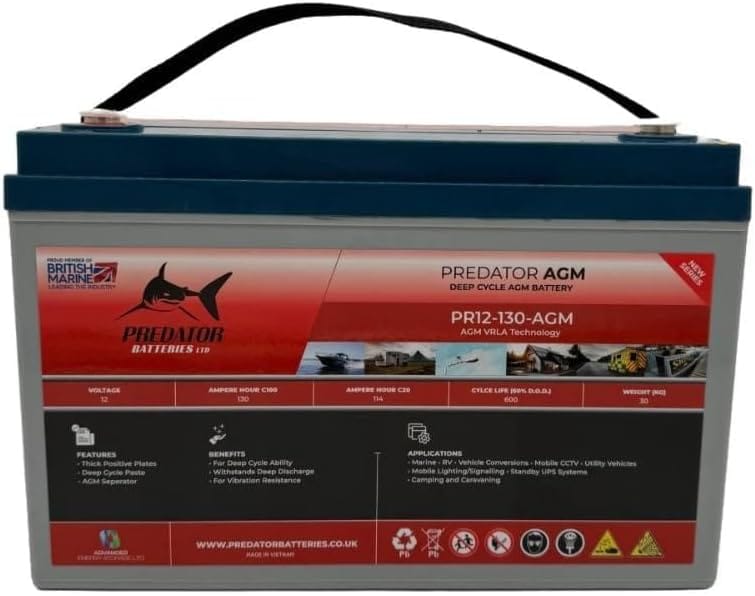
Common caravan battery sizes and who they suit
An 85Ah battery can suit lighter users. Think weekend breaks, site stays with electric hook-up and fairly modest 12V demands. It is often enough for essentials, but there is not much spare capacity if your usage increases.
A 100Ah to 110Ah battery is the most versatile choice for many caravanners. It gives a good balance of capacity, price and availability, and it works well for mixed touring where some trips are on hook-up and some are not.
A 120Ah to 130Ah battery is better for owners who regularly spend time away from mains power or simply want more reserve. It can be a smart upgrade if your current battery feels stretched. Just check the physical dimensions and weight before buying.
Anything above that can suit heavy users, larger energy setups or serious off-grid touring, particularly where solar is also fitted. But once battery size climbs, locker space, payload and charging compatibility become more important.
Do not ignore weight and battery locker size
It is easy to focus on amp-hours and forget the practical side. Caravan batteries are heavy, and larger capacities usually mean more weight. That matters for handling, payload and ease of lifting. If you are replacing an older battery with a much larger one, check your caravan handbook and battery box dimensions first.
Terminal layout matters too. A battery may have the right capacity but still be awkward if the posts are in the wrong place for your cables. This is one of those small details that can save a lot of hassle on fitting day.
Charging setup makes a difference
A well-sized battery can still underperform if your charging system is poor. If your caravan charger is basic, your car charging circuit is weak, or your solar setup is limited, a larger battery will simply take longer to refill. That is not necessarily a problem, but it changes what is practical.
For owners using solar panels, battery size and solar input should work together. A larger battery bank paired with decent solar can be excellent for off-grid touring. A large battery with very little recharge coming in can still leave you short after a day or two.
If you use a motor mover regularly, it is also worth choosing a battery with enough reserve and suitable discharge performance. Movers put a heavier load on the battery than lights or USB sockets, so this should not be treated as an afterthought.
A simple way to choose the right size
If your touring is mostly on electric hook-up and your power use is basic, aim around 85Ah to 100Ah. If you mix site stays with occasional off-grid nights, 100Ah to 110Ah is a comfortable all-round choice. If you spend a lot of time off-grid, use more onboard kit, or want longer run time between charges, look at 120Ah and above, or consider lithium if the budget allows.
This is usually a better approach than buying the biggest battery you can find. The best battery is the one that suits your caravan, your power use and your budget without wasting space or payload.
For many buyers, Caravan Motorhome RV is all about making choices like this easier. You do not need the most expensive setup on the market. You need one that keeps your trips comfortable, reliable and ready for the next stop.
A caravan battery should give you confidence, not another thing to worry about before setting off. Choose with your real usage in mind, leave a little safety margin, and your next holiday is far more likely to stay powered exactly as planned.