Best Awning Lights Caravan Buyers Should Pick
You notice awning lighting most when it is not doing its job. A dim strip that barely reaches the step, a harsh white lamp that ruins the mood, or a battery-powered light that gives up halfway through supper can make an otherwise easy evening feel fiddly. If you are searching for the best awning lights caravan owners should actually buy, the trick is not finding the brightest option. It is choosing the right type of light for how you tour.
For some caravanners, that means a clean, practical light over the door and step. For others, it means turning the awning into a proper outdoor room for meals, card games and late chats with friends on site. The best choice depends on your power setup, the size of your awning, how often you tour off-grid, and whether you want simple utility, a bit of atmosphere, or both.
What makes the best awning lights caravan users will appreciate?
Good awning lighting should do three things well. It should make the area safer, make the space more usable, and be easy to live with on the road. If a light looks impressive in the product photos but is awkward to mount, pulls too much power, or throws glare straight into your eyes, it will not feel like a smart buy after a few trips.
Brightness matters, but it is only one part of the decision. A softer warm white light often feels better under an awning than a very cold blue-white output, especially if you are sitting outside in the evening. On the other hand, if your priority is seeing clearly while sorting cables, footwear and steps, a brighter cool white light can be more practical.
Weather resistance is another big one. Caravan awning lights are there to cope with British touring, which means damp evenings, gusty pitches and the occasional downpour that arrives just as the kettle boils. Anything going outside regularly should feel built for that reality, not just for fair-weather weekends.
The main types of caravan awning light
The easiest way to narrow your options is to think in terms of how the light is powered and where it sits.
Related:




Integrated LED awning lights
These are usually fitted to the caravan itself, often above the door or fixed along the side. They are a strong choice if you want a tidy, permanent solution that works at the touch of a switch. They tend to be reliable, neat and ideal for lighting the entrance area.
The trade-off is flexibility. A fixed light may cover the doorway brilliantly but leave the far side of the awning in shadow. If you spend a lot of time sitting out, you may still want a second lighting layer inside the awning.
LED strip lights
LED strip lights are popular for good reason. They are compact, energy-efficient and easy to place along the awning rail, canopy frame or interior edge of the awning. If you want broad, even coverage rather than a single bright spot, they are often one of the best-value options.
Some strips are basic and practical, while others come with dimming, remote control or colour settings. Those extra features can be useful, but not everyone needs them. For regular touring, simple warm white strips often offer the best balance of comfort, visibility and easy setup.
Battery-powered and rechargeable lights
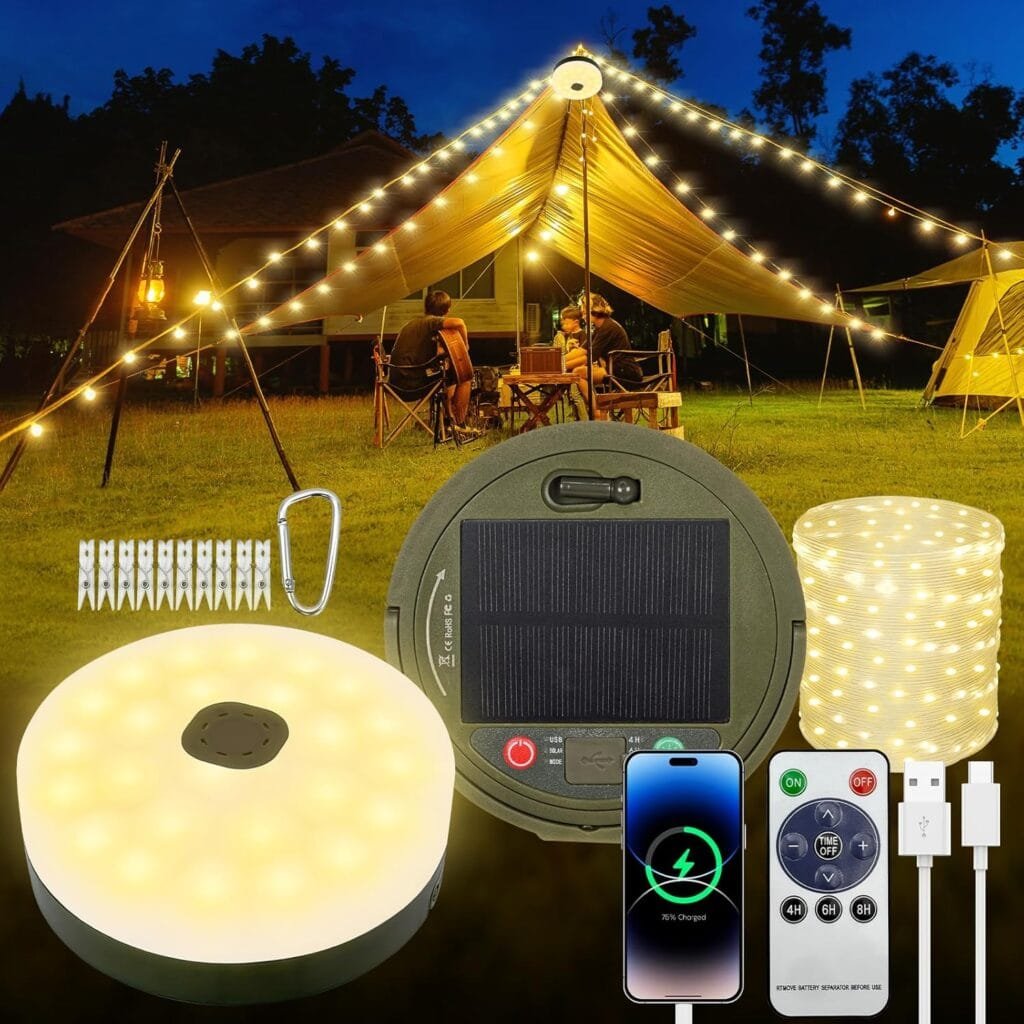
These work well if you want flexibility or do not want to wire anything in. They are handy for occasional trips, weekend stopovers, or adding light where you need it without committing to a full installation. Rechargeable models can be especially useful for campervan and caravan owners who like quick, low-hassle setup.
Their weakness is runtime. Some last well, others do not, and claimed battery life can look more generous on the box than it feels on site. If you tour for several nights without mains hook-up, battery management matters.
Solar awning lights
Solar lights appeal to off-grid tourers and anyone trying to keep power draw down. On paper, they are a convenient option for summer touring, and some are perfectly decent as background lighting.
In the UK, though, solar can be hit and miss outside bright conditions. They can work nicely in July, then feel underpowered on a dull spring or autumn trip. That does not make them a bad choice, but it does mean they are usually better as a supplementary light than your only source.
Choosing the right brightness and colour
A common mistake is assuming more lumens automatically means a better awning light. In practice, too much brightness can make the space feel clinical and unpleasant, especially in a smaller awning or on a quiet site where softer lighting is more comfortable.
Warm white tends to suit relaxing outside. It feels friendlier, gives a cosier look in the evening and is often the better fit if your awning is used as living space. Cool white is stronger for task lighting, such as sorting outdoor kit, checking the ground near the step, or packing away after dark.
Dimmable lighting gives you the most flexibility. That is often worth paying for if you use your awning for more than one purpose. Bright for setup, softer once dinner is on the table – that kind of control makes a difference.
Power use matters more than many buyers expect
Lighting is usually low-drain compared with bigger touring equipment, but power use still matters if you spend time off-grid. LED lighting is the sensible choice for most caravan owners because it gives strong light output without putting unnecessary demand on your leisure battery.
If you mainly stay on serviced pitches, power consumption is less of a concern and convenience may be the bigger factor. If you prefer CL sites, rallies or longer off-grid breaks, efficient lighting becomes much more important. In that case, it is worth checking actual wattage rather than relying on vague phrases like low energy.
Installation – simple is often better
The best awning lights caravan buyers choose are not always the most feature-packed. Often they are the ones that are easiest to fit, easiest to remove when needed, and easiest to trust in bad weather.
Permanent lights can look smarter and feel more integrated, but they may require drilling, wiring or professional fitting depending on the model. That is fine if you want a long-term solution, but it is not always ideal for first-time buyers or anyone who wants to keep things straightforward.
Clip-on, adhesive or rail-mounted lights are easier for many people to manage. They can also be moved or upgraded with less fuss later on. The downside is that very cheap fittings may not hold up well after repeated trips, especially if they are being packed away often.
Features worth paying for – and ones you may not need
A remote control can be useful if your light is fixed in an awkward spot, but it is hardly essential. Colour-changing modes sound fun, yet plenty of caravan owners use them once and then leave the light on warm white forever. USB charging is handy on portable lights, especially if you already keep charging kit in the van.
Two features tend to be more genuinely useful than flashy extras. The first is dimming, because it changes how versatile the light feels. The second is water resistance you can trust, because outdoor touring gear has to cope with real weather rather than ideal conditions.
If you travel with children, dogs or anyone likely to be up and down in the evening, decent step and entrance lighting deserves priority over decorative effects. Safety first, atmosphere second is not the most glamorous buying advice, but it is usually the right one.
Matching your awning light to your touring style
If you mostly take short summer breaks on electric hook-up, a mains-friendly LED strip or integrated awning light is likely to suit you well. You will probably value ease, brightness and a tidy setup more than ultra-low power draw.
If you tour regularly in spring and autumn, or spend longer evenings under the awning, warmer and dimmable lighting becomes more appealing. It helps the space feel usable rather than just illuminated.
If off-grid touring is your thing, focus on efficient LED options, rechargeable backup lighting and realistic battery performance. Solar can help, but it should not be the only plan if dependable lighting matters to you.
And if you are new to caravanning, there is no need to overbuy. One reliable main awning light plus a simple secondary light inside the awning often works better than a complicated setup with lots of gadgets.
A smarter way to buy
The caravan market is full of lighting options that look similar at first glance, so it helps to think in terms of use rather than marketing claims. Ask yourself where you need the light to fall, how long you need it to run, and whether you want to create working light, relaxing light, or a mix of the two.
That is usually the quickest route to finding a product you will still be happy with after a full season of touring. For many buyers, the sweet spot is a weather-resistant LED light or strip with a warm white output, sensible brightness and easy fitting. It is not the flashiest option, but it is often the one that gets used every single trip.
At Caravan Motorhome RV, that is the sort of practical thinking that makes product discovery easier. A good awning light should earn its space, improve your pitch in minutes and make those quieter evenings outside feel that bit more comfortable.