
Caravan Hookup Cable Guide for UK Tours
You only need one soggy pitch, one awkwardly placed bollard or one cable that is two metres too short to realise that electric hook-up is not something to guess. A good caravan hookup cable guide helps you buy once, stay safe and avoid the small frustrations that can spoil an otherwise easy touring break.
For many UK caravan and motorhome owners, the cable ends up being treated as a basic accessory – until it is the reason the kettle will not run, the battery charger will not kick in or the awning side of the pitch becomes a trip hazard. The right lead is not complicated, but there are a few details worth getting right before you buy.
What a caravan hook-up cable actually does
A hook-up cable connects your caravan, motorhome or campervan to a campsite electric hook-up point. In most UK touring parks, that means a blue industrial-style connection designed for outdoor use. It carries mains power from the site supply to your vehicle so you can run sockets, battery charging systems and selected appliances.
That sounds simple, and it is, but not all cables are equal. Length, build quality, weather resistance and connector quality all affect how easy the cable is to use on real pitches. A cheap lead may work at first, yet feel stiff in cold weather, coil badly, or wear faster at the ends where the strain is highest.
Caravan hookup cable guide: the key things to check
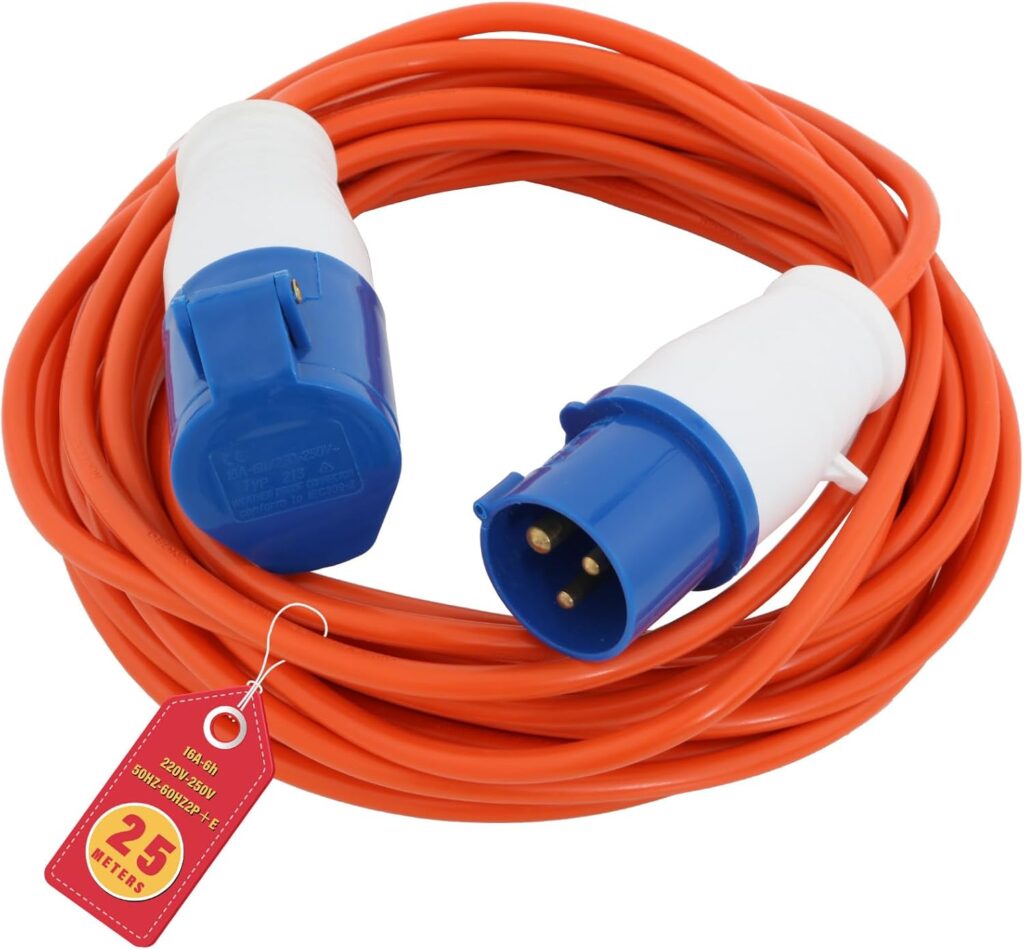
The first thing to look at is amperage. For UK caravans and motorhomes, a 16 amp hook-up cable with the standard blue CEE-style connectors is the normal choice. If you are shopping for a main site lead, 16 amp is what most owners need.
Next comes cable length. A 25-metre cable is the common pick because it gives you enough reach for a wide range of campsite layouts without being absurdly bulky. Some pitches place the bollard close to the van, while others leave you stretching across a gravel bay or around the rear corner. Too short, and you are stuck. Too long, and it takes up more locker space and creates more cable to manage.
Related:


Cable thickness matters too. A proper outdoor-rated flexible cable is what you want, not something that looks like it belongs on a domestic extension reel. Touring gear gets dragged across wet grass, packed away damp, trodden on and used in changing temperatures. Durability is not a luxury here.
The plugs themselves are just as important as the cable. Look for solid, well-fitted connectors with a good grip and decent strain relief. If the ends feel flimsy in your hand before the first trip, they are unlikely to inspire confidence after a season of use.
How long should your caravan hook-up cable be?
For most people, 25 metres is the safest all-round answer. It is long enough for the majority of UK campsite pitches and saves that sinking feeling when the hook-up post is further away than expected.
There are trade-offs, though. A shorter cable can be lighter, quicker to coil and easier to store in a small locker. If you mainly use the same site or regularly stay on tidy serviced pitches where the bollard is nearby, you might feel a shorter lead is enough. The problem is that touring rarely stays predictable for long.
That is why many experienced owners stick with 25 metres as the standard and manage the extra length carefully when they do not need all of it. It gives flexibility without requiring a second cable for ordinary trips.
Safety matters more than convenience
Mains electricity on a campsite is not the place for improvisation. A proper caravan hook-up lead should be designed for outdoor use and used as intended. That means no damaged insulation, no loose connectors and no DIY fixes with tape because it will do for one weekend.
You should also avoid using a standard household extension lead in place of a dedicated hook-up cable. It is not built for the same environment or connection style, and it introduces unnecessary risk. Touring kit needs to cope with damp conditions, movement and outdoor wear.
When setting up, uncoil the cable properly rather than leaving it in a tight loop. This keeps things tidier and helps avoid overheating issues associated with coiled electrical cable under load. It also makes it easier to route the lead sensibly so people are less likely to trip over it.
If your cable shows cuts, flattened sections, exposed wires or signs of overheating around the plugs, replace it. A new cable costs far less than dealing with electrical faults, damaged appliances or a spoiled holiday.
Choosing between budget and premium cables
There is a genuine middle ground here. You do not always need the most expensive hook-up cable on the market, but the very cheapest options can be false economy. If you tour only once or twice a year on short summer breaks, a decent-value cable from a trusted seller may be perfectly adequate.
If you tour often, travel in colder months or simply want gear that feels reliable every time you unpack it, spending a little more usually pays off. Better cables tend to have more durable outer sheathing, stronger connectors and a more flexible feel when coiling and storing them.
This is one of those caravan accessories where quality is less about luxury and more about fewer annoyances. The cable either works neatly and safely, or it becomes another fiddly piece of kit that needs replacing too soon.
Storage and handling on the road
A hook-up cable is not glamorous, but how you store it makes a difference. If you force it into a locker wet and tangled after every trip, it will soon become unpleasant to use. Coil it neatly, keep the ends clean and store it somewhere dry once you are home.
Many owners prefer to keep the cable separate from cleaner items because it often comes back muddy or damp. That alone can save hassle when packing up. A simple storage bag or dedicated locker space helps stop the lead snagging on everything else.
It is also worth checking the cable before each trip rather than discovering damage on site. A quick glance at the insulation and connectors takes seconds and can save a lot of head-scratching on arrival.
Do you need an adaptor as well?
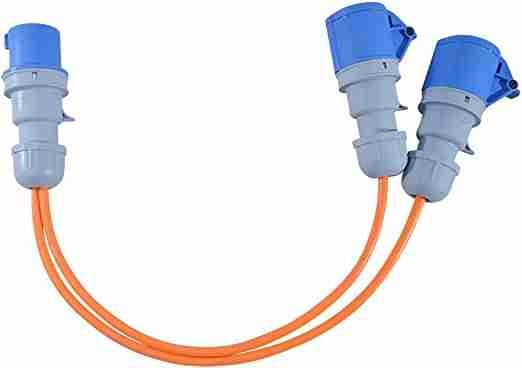
Sometimes, yes. Depending on where you travel and what your vehicle setup includes, you may need an adaptor for certain site connections or home-use situations. That said, your main campsite lead should still be a proper 16 amp hook-up cable.
Adaptors can be useful extras, but they are not a substitute for the correct main cable. If you are buying from scratch, get the core lead right first and treat adaptors as add-ons for specific scenarios. That keeps your setup simpler and avoids spending money on bits you may rarely use.
Common buying mistakes to avoid
The biggest mistake is choosing by price alone. A bargain lead can be tempting, especially when you are also buying levelling ramps, aquarolls, petrol kit and half a dozen other touring essentials. But this is one item where poor quality shows up quickly.
Another common error is underestimating length. It feels sensible to save space with a shorter cable until you pull onto a pitch and realise sensible is not the same as useful. Buying the standard 25-metre length gives most owners the easiest life.
The last mistake is forgetting that wear and tear is normal. Hook-up cables are working gear. If yours is ageing, stiff, cracked or unreliable, replacing it is simply part of keeping your touring setup safe and ready to go.
A practical buying view for UK touring
If you want the straightforward answer, most UK caravan and motorhome owners should look for a 25-metre, 16 amp caravan hook-up cable with blue CEE connectors, solid build quality and outdoor-rated flexible cable. That covers the needs of most campsite stays without making the buying process harder than it needs to be.
If you tour heavily, buy the best quality you can sensibly afford. If you are just starting out, avoid the bargain-basement end and choose something dependable from a specialist touring retailer. Caravan Motorhome RV focuses on exactly this sort of practical gear choice – products that make setup easier and help you enjoy your time away with fewer avoidable problems.
A hook-up cable will never be the most exciting thing in your locker, but on a wet Friday arrival when everything else depends on getting power safely and quickly, it becomes one of the smartest buys you can make.