
Best TV for Motorhome Buyers in the UK
After a long day on the road, a good motorhome TV can make the evening feel properly settled. Whether you are parked on a coastal site in Cornwall or tucked into a quiet stop in the Highlands, choosing the best TV for motorhome use is less about buying the biggest screen and more about finding one that works with limited space, variable power and life on the move.
A television that feels perfect in a sitting room can be a poor fit in a motorhome. Weight matters. Power draw matters. Viewing angles matter when two people are watching from a side bench rather than a sofa directly in front of the screen. Add in patchy signal, limited cupboard space and the occasional bumpy road, and the right choice becomes much more specific.
What makes the best TV for motorhome use?
The short answer is balance. You want a TV that is compact enough to fit comfortably, efficient enough not to drain your setup, and flexible enough to cope with campsite living.
For most UK motorhome owners, screen size is the first decision. Bigger is not always better. In a compact van conversion, a 19 to 22-inch TV often feels just right. In a larger coachbuilt motorhome with a dedicated lounge area, 24 inches can work well. Go too large and the TV starts to dominate the space, becomes awkward to mount and can be more vulnerable in transit.
Resolution matters, but not in the same way it does at home. Full HD is usually plenty at these screen sizes. A 4K panel may sound attractive, but on a smaller screen viewed from a short distance, the gain can be modest. If choosing between a flashy resolution and better power efficiency, the lower-drain option is often the smarter buy.
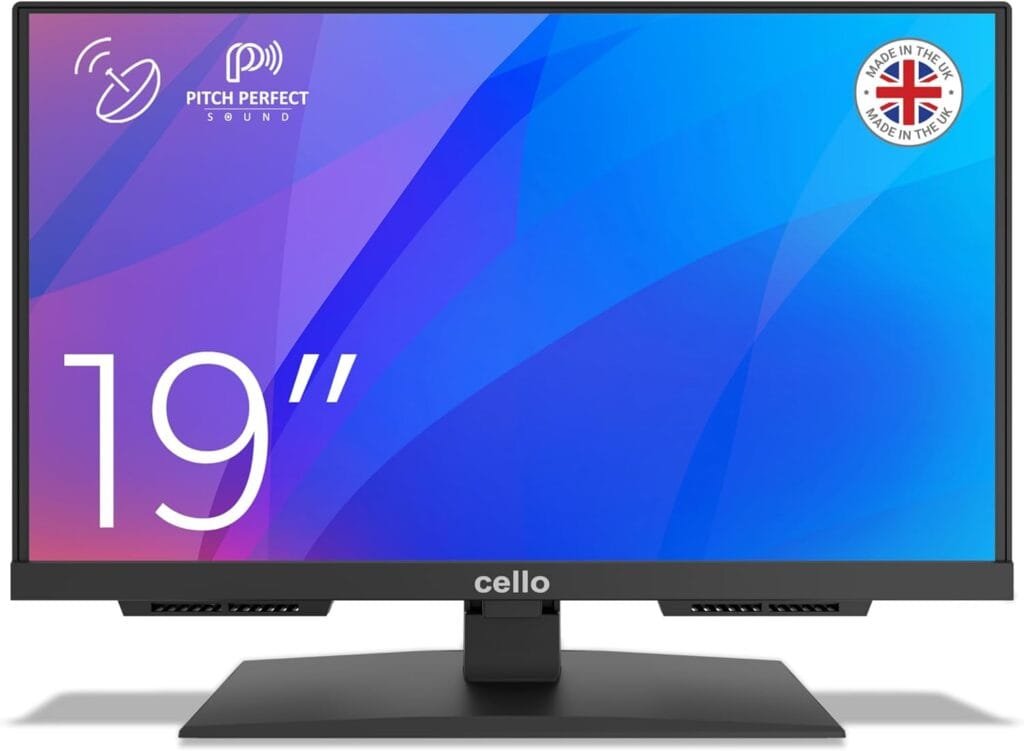
Voltage is another key point. Many motorhome owners prefer a 12V TV because it can run directly from the leisure battery system. That gives you more flexibility for off-grid nights and avoids relying on an inverter. A standard mains TV can still be used, but it may need a hook-up or inverter setup, and that introduces extra energy loss and another thing to manage.
12V or 240V – which is better?
This is where it depends on how you travel. If you mostly stay on serviced sites with electric hook-up, a 240V TV can do the job perfectly well. You may find more choice, and in some cases a better screen for the money. If your touring style includes a lot of aires, farm stops, rallies or wild-style overnighting where power use needs watching, a 12V set is usually the safer bet.
A proper 12V motorhome TV is built with mobile use in mind. It is generally more energy-conscious and often easier to integrate into a leisure vehicle. Some models also come with features that suit touring better, such as built-in DVD players, compact remotes and mounting options designed for tighter spaces.
The trade-off is price. Specialist 12V TVs often cost more than a household set of similar size. That can feel frustrating, but the extra cost often reflects lower power demand and suitability for travel rather than pure picture quality.
The features worth paying for
A lot of TV listings throw every feature into the headline, but only a few really matter in a motorhome.
Related:




A wide viewing angle is one of them. In a motorhome, you are rarely seated straight on. You might be watching from a swivel cab seat, a dinette bench or across the galley. A screen that washes out when viewed from the side gets annoying quickly.
Low power consumption should be high on your list, especially if you spend time away from hook-up. Even a small difference in watts can matter over several evenings. If you also run lighting, water pump charging, device charging and maybe a small fan, every bit of efficiency helps.
Multiple input options are useful too. HDMI lets you connect a streaming stick, laptop or games console. USB playback can be handy if you download content before a trip. Some buyers still like a built-in DVD player, and there is a good case for it in a motorhome. It is simple, reliable and does not depend on mobile signal or campsite Wi-Fi.
Smart features sound attractive, but they are not always essential. A smart TV can be handy if you regularly use streaming apps, but many campsite connections struggle with consistent speeds. In practice, some owners are better off with a standard TV plus a separate device they can update or replace more easily.
Best TV for motorhome layouts and spaces
The best choice often comes down to where the TV will live.
Front lounge motorhomes
If your main seating area is at the front, a TV on a side wall bracket usually works best. In this setup, a lightweight 22 to 24-inch screen is a popular choice. You want enough size for comfortable viewing without making the area feel cramped.
Rear lounge layouts
Rear lounges can be excellent for TV viewing because they often give more flexibility with seating angles. A bracket with extension and tilt helps here, especially if the TV needs to be tucked away when not in use.
Campervans and compact conversions
Space is tighter, so restraint pays off. A 16 to 19-inch TV is often plenty, particularly if the distance from seat to screen is short. Oversizing in a compact van can make the whole area feel cluttered.
Family motorhomes
If children use the TV for rainy-day downtime or evening films, a slightly larger screen may be worthwhile. Even then, make sure it can be secured properly. A family trip includes more movement, more gear and more chances for things to get knocked.
Don’t overlook the mounting setup
A brilliant TV with a poor bracket can become a nuisance fast. Motorhomes move, vibrate and corner. Your setup needs to stay secure while travelling and still be easy to watch once parked.
A locking TV bracket is usually the best option. It keeps the screen stable on the road and avoids the worry of movement damaging the unit or surrounding furniture. Tilt and swivel functions are worth having because they let you fine-tune the viewing angle without forcing everyone into one seat.
Before you buy, measure properly. Check wall space, cupboard clearance and whether doors can still open with the TV folded away. It sounds obvious, but plenty of buyers focus on screen size and forget the bracket depth.
Signal, streaming and realistic expectations
A TV is only as useful as the content you can actually watch. In the UK, reception can vary dramatically from one site to the next. A good built-in Freeview tuner is helpful, but it may still struggle in weaker areas without a decent aerial.
If live television matters to you, think about the whole setup rather than the screen alone. Your aerial, cabling and location all affect performance. Some people assume a new TV will fix poor reception when the real issue is the aerial system.
Streaming is similar. Smart features are convenient, but campsite Wi-Fi is often shared by dozens of other users. Mobile data can work well in some places and be useless in others. Downloaded content remains one of the easiest ways to guarantee a relaxed evening.
How to choose without overbuying
The safest approach is to buy for the way you actually travel, not the way product descriptions suggest you travel. If you mostly watch the news, a few dramas and the occasional film, you probably do not need a premium spec screen. If you rely heavily on off-grid power, energy use should outrank fancy extras.
It also helps to think in terms of inconvenience. What will annoy you most after a few trips? A screen that is too small? A TV that drains the battery? A poor bracket? No streaming option? The best buy is usually the one that removes the biggest source of friction from your evenings away.
For many UK owners, the sweet spot is a compact 12V Full HD TV with good viewing angles, HDMI input, USB playback and a secure bracket. It is not the most glamorous setup, but it covers the essentials well and tends to suit real-world touring.
At Caravan Motorhome RV, that is the kind of practical balance worth looking for – gear that fits the vehicle, the holiday style and the budget without making the choice harder than it needs to be.
Final checks before you buy
Make sure the dimensions include the stand if one is attached, although many motorhome users remove it for wall mounting. Check the voltage compatibility, tuner type and power consumption, and confirm whether the mount is included or sold separately. If sound matters to you, look at speaker placement too, because compact TVs can vary quite a bit in audio quality.
A well-chosen TV should feel easy to live with. It should switch on without fuss, sit neatly in place, use sensible power and give you a reliable way to unwind after a day out. That is really what the best motorhome accessories do – they make the trip feel more comfortable without taking over the space.