There is something special about making a proper cup of tea or a simple pasta supper in your own van, with the doors open and a view you did not have yesterday. A thought through motorhome kitchen turns those little moments into everyday reality, not a stressful juggling act with one pan and nowhere to chop an onion.
Getting your kitchen right really pays off. You eat better, spend less on takeaways and service stations, and you can pull up almost anywhere and know you can feed everyone without hunting for a restaurant. It also gives you flexibility, from quick reheats on a travel day to full “Sunday roast at the campsite” efforts when you feel like it.
Of course, a caravan or motorhome is not a house. Space is tight, cupboards are shallow, and everything adds weight that affects payload and fuel economy. Power is different too. You might be on gas, 12 volt, mains hook up, or a mix of all three, and that shapes which appliances actually make sense.
That is why the aim is not to recreate your home kitchen. It is to choose multi use, compact and durable kit that earns its place on board. One pan that stacks neatly, one knife that really cuts, containers that stop food and gear rattling about.
In this article we will look at core cooking gear, plates and utensils, smart storage ideas, power and appliances, plus safety basics and a few clever extras. By the end, you will have a clear picture of what you really need for easy cooking on the road.
First Things First: Planning Your Motorhome Kitchen Space
Before you buy a single shiny new gadget, take a good look at the kitchen you already have. Stand in the space and think about how you move, where you naturally reach for things and what currently annoys you. Note what is built in, hob, grill, oven, microwave, fridge, and how well they actually work for your style of trips.
Next, grab a tape measure. Measure cupboard heights, depths and widths, drawer sizes, fridge shelves and the bit of worktop you actually cook on. It is surprisingly easy to fall for a “space saving” pan set, then find it does not fit in any locker. Knowing your numbers keeps you focused and saves returns.
Weight is just as important as size. Check your vehicle’s maximum weight and usable payload. Every cast iron pot and glass dish eats into that allowance. Choosing lighter gear means a more comfortable drive, better fuel economy and less stress about running close to your limits.
Think about what you really cook on tour. Are you mostly reheating ready meals and doing simple breakfasts, or do you enjoy proper one pot dinners and baking? Your typical menu should guide what you carry. There is no point hauling a full set of roasting tins if you live on pasta and salads.
Finally, look at your power options. Do you mostly use gas, stay on sites with electric hook up, or spend time off grid on 12 volt and battery? Check the ratings of your hookup, inverter and batteries. This will help you choose appliances that you can actually run, without tripping breakers or draining your batteries by bedtime.

2 Pcs Silicone Drain Protector with Sucker, Sink Strainer Protector, Shower Drain Covers Hair Catcher, Strainer Plug Trap Filter for Bathroom, Bathtub, Kitchen

Camping Plates, Unbreakable Dinner Sets for 6, 18 Pcs Plastic Picnic Set for Party, Home & Picnic, Lightweight Microwave & Dishwasher Safe Camping Cutlery(Black)

Prasacco 4 Pack Kitchen Towel Hooks Self Adhesive Tea Towel Holders Tea Towel Hooks Tea Towel Clips Towel Holders for Kitchen Bathroom Home Campervan Motorhome

simplywire – Sink Tidy/Caddy – Dark Grey & White
Core Cooking Gear: Pots, Pans and Everyday Tools
Core cooking gear is where a small, smart selection really beats a crowded cupboard.
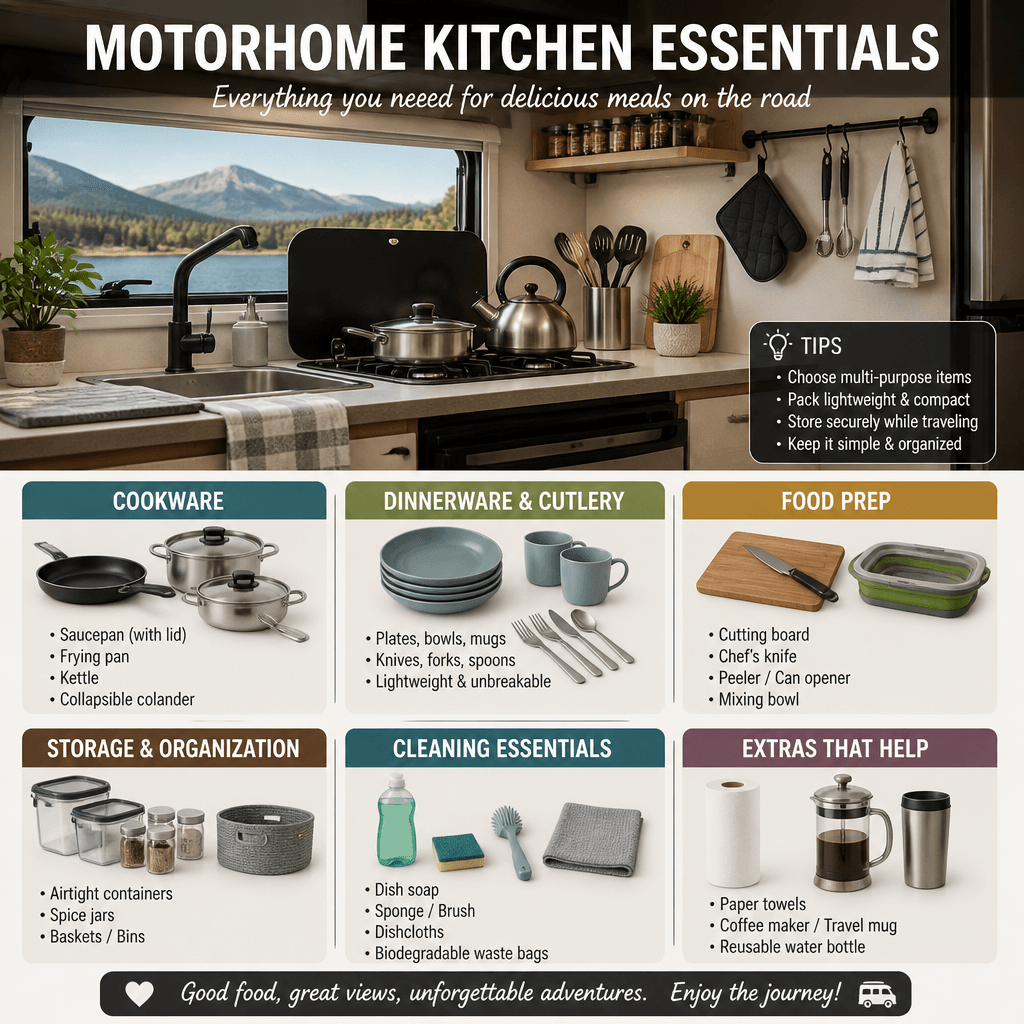
Start with a nesting pan set with detachable handles. The pans stack neatly, the handles tuck into a drawer, and you can move a pan from hob to table safely. Check that the bases suit your hob, many sets are fine for gas, some also work on induction.
Lightweight non stick or enamel cookware is ideal in a motorhome, it heats quickly and saves payload. Aim for a simple base set: one medium lidded saucepan for pasta, rice and one pot meals, one small saucepan for sauces or heating milk, and one deep frying pan or sauté pan for stir fries, pancakes and frying. Most everyday cooking is covered with those three.
Add a heatproof kettle or whistling kettle that matches your hob type. A stovetop kettle is very efficient on gas, while induction users should check for a compatible base.
For tools, keep it lean but capable. You will want a decent chopping board, a sharp all purpose knife, spatula, tongs, a ladle and a wooden spoon. That small line up handles most prep and serving jobs.
A compact colander or collapsible strainer earns its place for draining pasta, rinsing salad and steaming vegetables. Collapsible versions slip into slim spaces.
To protect your kit on the move, use silicone trivets and pan protectors between stacked pans. They stop rattles, prevent scratches and keep cupboards quieter while you roll along.
Plates, Cups and Cutlery: Eating Without the Clutter
Plates, cups and cutlery quickly eat up space, so it pays to be choosy.
Melamine is popular because it is light, tough and inexpensive, but it can stain and is not ideal for very hot foods straight from the oven. Bamboo and other plant based composites feel nicer and more “homey”, though some can chip and are not always dishwasher friendly. Enamel over steel is very durable and works indoors and out, but it can be noisy and feels colder to eat from. There are also lightweight camping sets made from hardened plastic or polycarbonate that balance toughness with a more “normal” feel.
Aim for realistic numbers. For two people, four place settings is usually enough, two in daily rotation plus one spare each. For a family of four, six settings works well. Include dinner plates, side plates and a couple of nesting bowls that can double as mixing bowls and serving dishes.
For cutlery, a basic stainless steel set for your headcount plus one spare is fine. Add two sharp prep knives, a small paring knife and a bread knife with a sheath or blade guard.
Insulated travel mugs keep drinks hot on chilly mornings and reduce spills on bumpy roads. Unbreakable tumblers or “wine” glasses mean you can relax outside without worrying about broken glass.
To keep everything in one piece, use plate and cup racks or anti rattle storage systems inside cupboards. Foam or rubber separators, plus non slip mats, stop clinking and chipping while you are on the move.
Smart Storage Solutions: Keeping It All Tidy and Quiet
Smart Storage Solutions: Keeping It All Tidy and Quiet
In a moving home, storage is as much about safety and sanity as it is about neatness. Good organisation stops tins becoming missiles, reduces rattling and makes it far easier to cook when you arrive tired and hungry.
Start with the basics: line cupboards and drawers with non slip mats so plates, pans and jars stay put on the road. For food, use clear, stackable containers for pasta, rice, cereal and snacks. You can see exactly what you have at a glance, things stay fresher, and you avoid half open packets spilling everywhere.
Space is precious, so pick items that pack flat. Collapsible bowls, buckets and washing up bowls take up very little room when not in use, but are invaluable on site for washing up, laundry or carrying water.
Look upwards too. Hanging storage, such as lightweight fabric pockets, hooks on walls or under shelves, and over door organisers, are brilliant for tea towels, spices, foil and small gadgets. Magnetic strips can hold metal utensils or knives, provided they are mounted securely and out of reach of children.
Inside drawers and cupboards, use dividers and small baskets to keep utensils, breakfast bits or baking supplies grouped together. It stops the “everything drawer” chaos and makes it easier to put things back where they belong.
Finally, label containers and baskets. A few simple stickers mean everyone knows where tea, coffee, snacks and tools live, which keeps the motorhome kitchen calm, even with a full crew on board.
Power and Appliances: What You Really Need and What Is Nice to Have
Power in a motorhome kitchen comes from three places: gas, 12 volt battery and mains hook up. Gas usually runs the hob and often the oven and grill. It is efficient for cooking and works perfectly off grid. Your 12 volt system happily powers lights, water pump and the fridge controls, but it really does not like hungry appliances. Mains hook up, usually 6 to 16 amps depending on the site, is what safely runs most electric kitchen gadgets.
Most motorhomes have a fridge, hob and maybe a grill or oven built in. Check what you already have and how you cook before adding more. If you rarely bake, a full size oven style air fryer may be wasted space. If you mostly use the hob, a simple lidded frying pan might be more useful than a toaster.
Where hook up is available, consider low wattage versions of the basics: kettle, toaster or a compact air fryer. They take longer than home models, but are kinder to campsite electrics. Handy “nice to haves” include a stick blender for soups and smoothies, a mini food processor for chopping, panini toaster and a coffee maker that suits your power setup, moka pot on gas or low wattage pod machine on mains.
Be cautious with anything over about 1,000 watts, particularly hair dryer style elements in kettles and big air fryers. These can trip site posts or drain batteries quickly off grid. Aim for appliances that earn their place by doing more than one job and matching how you actually like to cook on the road.
Safety, Cleaning and Practical Extras You Should Not Skip
Safety might not be as exciting as new gadgets, but it is the bit that really matters in a moving kitchen.
Start with protection you hope never to use: a working smoke alarm and carbon monoxide detector, both tested regularly, plus a small fire extinguisher or fire blanket close to the galley but not right above the hob. Learn how to use them before you need them.
Anything heavy or sharp must be stored so it cannot become a missile on the move. Use sheaths or blade guards for knives, keep them in a drawer with a latch, and stow cast iron pans, glass jars and appliances low down, packed tight.
For everyday cleaning, a small caddy with microfibre cloths, eco friendly multi surface spray and washing up liquid will deal with most mess. Add compostable bin liners and a small lidded bin that can live under the sink or by the door. Off grid, double bag rubbish if it will be stored for a while and avoid leaving food waste outside where wildlife can reach it.
Heat resistant mats and trivets protect worktops and tables, and hob guards or pan guards are worth it if you have children or curious pets milling about.
A few simple spares save trips being cut short: gas lighter or long matches, spare fuses, a couple of hose washers and, if relevant, a spare gas regulator.
Finally, build in safe habits. Turn off the gas at the bottle when advised, keep vents unblocked, crack a window when cooking and never leave pans or kettles unattended on the hob.
Putting It All Together: Packing a Kitchen That Works for You
Once you know what you would like in your motorhome kitchen, pull it together with a simple checklist. List cookware, plates, utensils, food storage, cleaning kit and safety items, then pack in stages. Take a short trip and note what you actually use. Anything that never leaves the cupboard can probably be left at home next time.
Start with the bare essentials, a basic pan set, knives, a chopping board, a few plates and mugs, one sharp knife, a colander, cleaning gear and your safety kit. Add gadgets or “nice to haves” only if you miss them on real journeys. This keeps clutter down and helps you stay within weight limits.
Think about where things live. Everyday items should be in the easiest cupboards and drawers to reach from the hob and sink. Rarely used bits, spare crockery or bulk food can go in higher lockers or under seat storage. The less you dig for things, the more enjoyable cooking becomes.
Every rig is different, so treat all of this as a toolkit, not rules. A tiny campervan might rely on one hob and a single box of kitchen gear. A larger motorhome may have space for an oven, extra pans and a coffee machine. Shape your setup around the way you actually travel and eat.
The clear takeaway: a thoughtful, streamlined kitchen that suits your style makes life on the road calmer, meals easier and leaves you with more time to enjoy the journey.
Best Campervan Coffee Maker Choices
Find the best campervan coffee maker for your setup, from low-power travel kettles to espresso machines, with practical tips for touring in the UK on tour.
How to Choose Campervan Kettle
Learn how to choose campervan kettle options that suit your space, power setup and travel style, with practical tips for safer, easier touring.
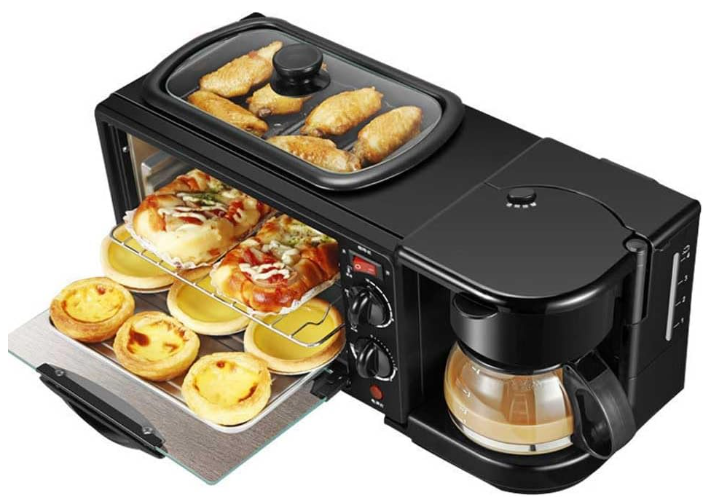
3 In 1 Cooker, Oven, Coffee Maker, Non-Stick Griddle, 4-Slice Toaster
This appliance is ideal when you are away camping and on EHU. It’s the best and most compact unit of this kind we have seen so far. Very versatile and can cover breakfast, lunch, dinner and supper in one! Suitable for caravans, motorhomes and campervans. It might also suit those with good off-grid battery and solar systems that could run this as well.
Frying Pan Divided Into Sections Non Stick
Discover how a 5-section non-stick frying pan and 28 cm multi-section griddle transform breakfast with faster, healthier and effortless cooking.
Camping Bread Toaster Using Gas Rings
Discover how to use a camping bread toaster on gas rings for perfectly crunchy, golden toast and gourmet breakfasts in the great outdoors.
Sandwich Waffle Panini Toaster Oteck 3 in 1 Grill Snack Maker
Discover the Breville 3‑in‑1 Ultimate Snack Maker: a compact, versatile toastie, grill and waffle maker for quick, delicious homemade snacks.