Top 5 Low-Wattage Kitchen Gadgets for Caravan Life That Won’t Trip Your Electric
You plug in the kettle, start breakfast, and suddenly the power cuts out across your pitch. It is one of the most annoying little caravan life moments, especially when the appliance worked perfectly well at home. On a campsite, though, home kitchen gadgets can be a bit too hungry for the electric hookup.
If you tour in a caravan, campervan or motorhome, this is where low-wattage appliances make life much easier. They let you cook, boil and reheat food without constantly worrying about tripping the bollard or having to choose between making toast and charging the battery. When power is limited, the right gadget is not a luxury, it is part of a smoother touring setup.
The reason is simple. Campsite electric supplies are not the same as a full household kitchen circuit. You only have a certain amount of power available, and once your appliances ask for more than the hookup can provide, the breaker cuts out. That is why choosing lower-power cooking gear is such a smart move for anyone who wants easy meals without electrical drama. Motorhome Kitchen Essentials
It also helps to understand amps and watts in plain English. Watts tell you how much power an appliance uses. Amps tell you how much current it is pulling from the hookup. The two are linked by one handy rule of thumb:
- Amps = Watts ÷ Volts
In the UK, mains voltage is roughly 230V. So if an appliance uses 920W, it will draw about 4 amps. If it uses 2300W, it will draw about 10 amps, which can be enough to use up most of a campsite supply on its own.
Once you know that, choosing caravan-friendly kitchen gadgets becomes much easier.
Why Standard Household Appliances Fail on a Campsite

Moon and Stars Print Toaster Cover 4 Slice Small Appliance Cover with Top Hook Washable Dustproof Kitchen Appliance Cover Protection Bread Machine Dust Cover

WeeKett 2 Slice Toaster, Variable Browning Control, Wide Slot for Bagels

Travel Kettle 400ml 4-Temp 45-100°C, 8H Keep Warm, 8Min Fast Boil,Green

KitchenPerfected 1000w 0.9Ltr Corded Lightweight Travel Kettle with 2 Cups – Cream – E1201WI
This is where caravan electrics catch a lot of people out. Many UK campsites provide a 10A or 16A hookup, which is perfectly usable for everyday touring, but only if you keep an eye on what is running at the same time.
At home, most kitchen appliances are designed with very few limits in mind. A standard kettle might use 2500W to 3000W, and a typical air fryer can easily sit in the 2000W range too. On a 10A hookup, that kind of appliance can swallow most, or even nearly all, of your available supply on its own.
The problem is that your caravan is rarely using power for just one thing. Even before you start cooking, there may already be background loads ticking away. The battery charger may be topping up your leisure battery, the fridge could be on electric, and the water heater might be warming up. If you have a fan heater running on a cool morning, you are even closer to the limit before the kettle goes on.
That is why appliances that behave perfectly well in a house suddenly become trouble in a caravan, campervan or motorhome. It is not that the gadget is faulty, it is simply drawing too much power for the setup around it.
The good news is that low-power cooking gear is not a second-best option. In many cases, it is the smarter choice. It lets you cook more confidently, makes it less likely you will trip the bollard, and gives you a setup that actually suits caravan life.
Low-Wattage Air Fryers: The Ultimate Caravan Upgrade
A low wattage air fryer for caravan use is one of the smartest upgrades you can make if you want easy meals without hammering your hookup. Instead of relying on a full oven, which can be slower and throw out plenty of heat, a compact air fryer gives you quick cooking with a much more manageable power draw.
For most caravan, campervan and motorhome setups, it is worth focusing on models under 1000W. That keeps the amp draw far more campsite-friendly, especially on 10A hookups where every bit of spare capacity helps. Compact units made for small kitchens are often the best fit because they take up less cupboard space and are easier to lift in and out.
The practical benefits are hard to ignore:
- faster cooking than a typical oven
- less heat building up inside the van
- easier cleaning after meals
- lower power demand than many full-size air fryers
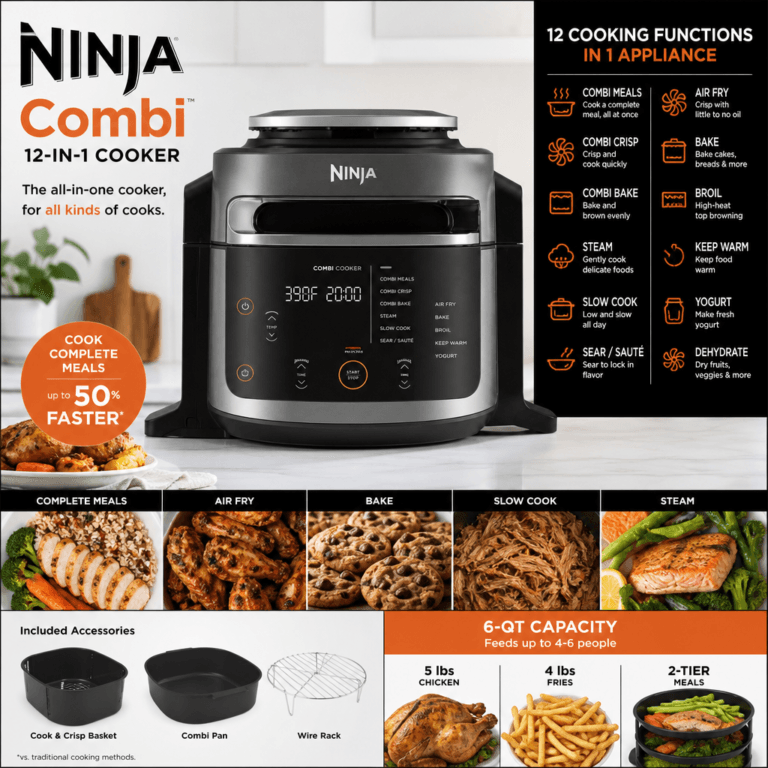
If you want to save even more space, it is worth looking at multi-cookers or low-amp fryer combos. These can replace several separate gadgets, which means less clutter on the worktop and less kit to pack away before moving on. If you are comparing space-saving options, have a look at our Ninja Combi 12-in-1 article for another handy all-in-one cooking setup.
Before buying, check a few basics carefully:
- wattage, ideally below 1000W
- basket size, so it actually suits your meals
- ventilation clearance around the unit
- how safely it can be stored when travelling
Get those details right, and an air fryer can quickly become one of the best small appliances for motorhomes and caravans alike.
Can You Run a Slow Cooker on a Leisure Battery?
Yes, because they generally draw only 100W to 200W, but you need to check your inverter capacity, battery size and how long you plan to run it.
That relatively low power draw is exactly why slow cookers are so appealing in a caravan, campervan or motorhome. Compared with fast-heating appliances like kettles, grills and standard hotplates, a slow cooker asks for far less power at any one time. If you are on a low-amp hookup or trying to cook off-grid, that can make it feel like a very sensible option.
There are a few checks worth making before you plug one in:
- make sure your inverter can handle the cooker’s wattage comfortably
- a pure sine wave inverter is the safest choice for reliable appliance use
- check the actual wattage on the slow cooker, not just the product description
- look at your leisure battery amp-hour rating and current state of charge
It is also worth remembering that low wattage does not mean no drain. A slow cooker may only draw 150W, but if it runs for 4 to 6 hours, that energy use adds up. As a simple example, a 150W slow cooker running for 4 hours uses 600Wh. On a 12V system, that is a noticeable chunk of battery capacity once inverter losses are included.
So, can you run a slow cooker on a leisure battery? Often yes, for shorter cooks, reheating or a lunchtime meal, especially if you have a healthy battery bank and decent charging support. An all-day stew is more demanding and needs a more realistic look at your setup.
Used sensibly, a slow cooker is still one of the best small appliances for motorhomes, especially for travellers who want easy, low-fuss meals without hammering their power supply.
Compact Low-Amp Kettles
A compact kettle is often the easiest way to stop breakfast from knocking out your hookup. In many caravans, the worst offender is not the toaster or microwave, it is a standard household kettle. A lot of domestic models pull 2500W to 3000W, which can eat up most of a 10A campsite supply on their own before you have even thought about the fridge, charger or water heater.
That is why caravan-friendly kettles make so much sense. Look for models in the 800W to 1000W range. They are a far safer and more practical fit for limited hookups, and they still do the job perfectly well for tea, coffee or washing up water. If you are trying to build a sensible touring setup, this is one of the smartest changes you can make.
There is a trade-off, of course. A low-amp kettle will usually take a bit longer to boil than the powerful one you use at home. But that extra minute or two is a small price to pay when it is far less likely to trip the electric and leave you hunting for the bollard reset.
When shopping, a few features are especially handy for caravan life:
- auto shut-off for safety
- smaller capacity, so you only heat what you need
- a cordless base for easier pouring in a tight kitchen
- a secure lid that stays shut while travelling
It is also worth getting into the habit of boiling only the water you actually need. That cuts boiling time, saves power and makes the kettle even more efficient.
For everyday use, a low-amp kettle is one of the simplest swaps with the biggest day-to-day benefit.
Portable 12V Compact Fridges and Coolboxes
If you want a bit more chilled storage without depending entirely on a mains appliance, a portable 12V fridge or coolbox is a very handy addition to caravan life. They are especially useful when your built-in fridge is already full, or when you want to keep certain items close at hand outside.
There are two main types to look at. Compressor models usually cool far better, especially in warm weather, and they are generally the more efficient choice if you tour regularly or travel in summer. Basic thermoelectric coolboxes are often cheaper to buy, but they do not chill as effectively when the temperature outside climbs. For occasional trips they can still be useful, but they are not always the best fit for serious off-grid use.
In practical terms, these units work well for keeping drinks under the awning, storing picnic food, carrying bait, or handling overflow groceries for longer stays. Some can run from 12V while you are driving, then switch over to mains when you arrive on site, which makes them a flexible option for touring setups.
Before buying, it is worth checking a few everyday details:
- noise level, especially if it may sit close to your bed
- capacity, so you do not waste space on a unit that is too large
- cable length, particularly if you want to use it outside
- battery protection mode, which helps prevent flattening your leisure battery
- whether it really suits your travel style and power setup
If you are comparing power options for touring and off-grid stays, it is also worth browsing the site’s Appliances or Batteries & Solar sections for a wider look at compatible kit.
Mini Electric Skillets and Hotplates
Mini electric skillets and low-power hotplates are a smart fit for caravan life because they give you simple, flexible cooking without asking much from your hookup. If you want an easy breakfast, a quick lunch or a no-fuss evening meal, they are ideal for one-pan jobs that do not need the main oven or your gas hob.
They are especially handy for frying bacon or eggs, simmering a pasta sauce, heating soup or cooking a quick stir fry. That makes them useful both as everyday cookers and as backup options when you want to save gas or avoid using several appliances at once. For space-conscious travellers, that flexibility matters.
When shopping, look for compact models with modest wattage, stable feet and an easy-clean non-stick cooking surface. Lower wattage units are usually much better suited to campsite hookups, especially if your charger, fridge or water heater is already drawing power in the background. A small skillet or hotplate will not replace every kitchen appliance, but it can cover a surprising number of meals.
One of the biggest benefits is being able to cook under the awning in good weather. Keeping heat, steam and cooking smells out of the van can make a real difference in summer, especially in smaller campervans and motorhomes. It also frees up indoor space when more than one person is moving around.
Just be sensible with safety. Use them only on a firm, level surface with good ventilation, keep cables out of the way and never use them in wet conditions. For many tourers, they earn their place as both a practical backup cooker and a regular go-to gadget.
FAQ and Wrap-Up: Caravan Power Made Simple
How do you calculate appliance amps in a caravan?
The simplest way is to use this rule:
Watts ÷ Volts = Amps
In the UK, mains electric on a campsite is usually around 230V. So if you want to know how much of your hookup an appliance will use, divide its wattage by 230.
A quick example:
- 920W air fryer ÷ 230V = 4 amps
- 1000W kettle ÷ 230V = 4.35 amps
- 2000W kettle ÷ 230V = 8.7 amps
That makes it much easier to see why a standard kitchen appliance can cause trouble on a 10A pitch, especially when your battery charger, fridge or water heater are already running in the background.
What happens if you trip the electricity on a campsite?
Usually, the bollard breaker or site electric supply cuts out to protect the hookup. In most cases, your van will suddenly lose mains power and you will need to reduce the load before switching it back on. Some bollards have a reset switch you can access yourself, while others may be locked or managed by the site office.
If it happens:
- Switch off the appliance that likely caused it
- Turn off any other non-essential electrical items
- Check the bollard for a reset
- Contact the site office if the breaker is inaccessible or keeps tripping
The big takeaway from this guide is simple: lower wattage gadgets make caravan cooking easier, safer and much less stressful. You do not need to give up convenience to stay within your power limits. You just need appliances that suit how caravans, campervans and motorhomes actually use electricity.
Build your kit list around your hookup rating, battery setup and cooking habits, and you will enjoy far fewer power cut surprises.
We also have a good article here on the Best 12V Appliances for Campervan Life.