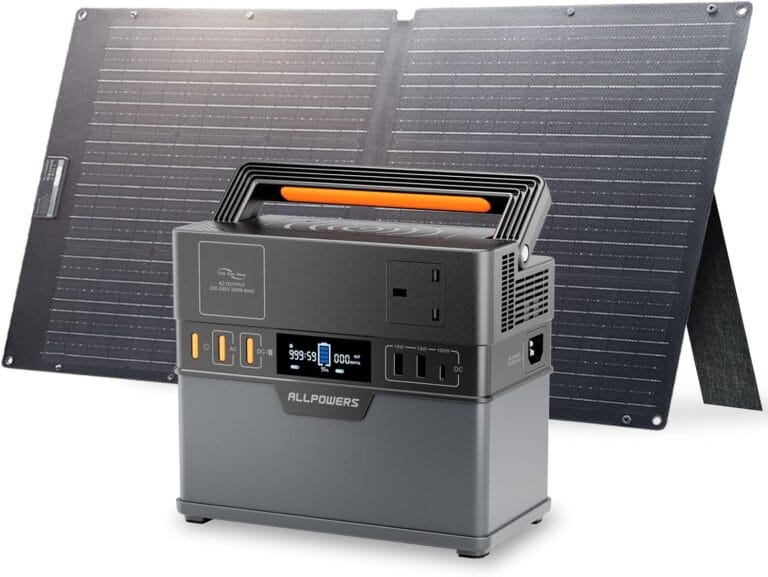
The ALLPOWERS P1800 Portable Power Station 1800W 1024Wh is aimed squarely at people who want serious off‑grid capability without dragging a noisy gas generator around. It promises enough output to run power‑hungry appliances, a battery large enough to get through real‑world tasks, and flexible charging options that make sense for van lifers, campers, and home backup users alike. On paper, it sits in that sweet spot between compact “phone‑charging bricks” and heavy stationary battery systems.
In this review, we’ll walk through how the P1800 actually fits into daily life: what its 1800W output and 1024Wh capacity really mean, how usable its design and ports are, and how it performs under realistic workloads. Rather than focusing only on specs, we’ll look at situations like camping weekends, DIY work sites, and emergency use during a power outage. That’s where a power station either feels like a game‑changer or just another gadget.
By the end, you should have a clear idea of whether the ALLPOWERS P1800 is powerful and practical enough for your own use, or whether you’d be better served by a smaller, lighter unit or a larger system with more capacity. What matters most isn’t just watt‑hours on a spec sheet, but how confidently you can plug in the devices you rely on and forget about them.
ALLPOWERS P1800 Review: Powering Life Off-Grid
The headline feature of the ALLPOWERS P1800 is simple: it’s built to replace small gas generators for most everyday off‑grid jobs. With a rated 1800W pure sine wave inverter and a 1024Wh lithium battery, it aims to power not only phones and laptops but also microwaves, coffee makers, power tools, and compact fridges. That instantly moves it into a different class compared to small 300–500W power stations that choke the moment you plug in anything with a heating element.
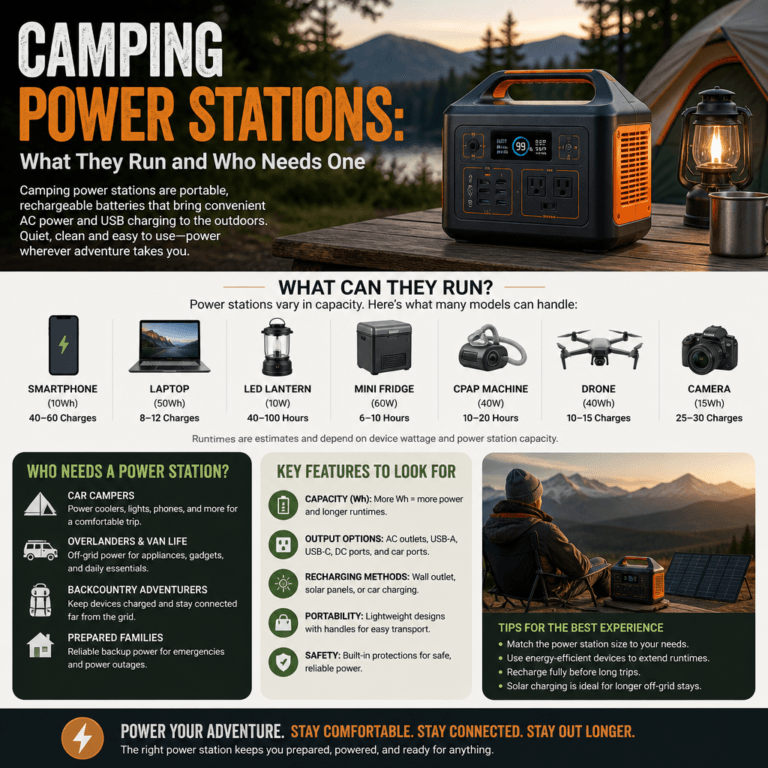
Off‑grid capability isn’t only about raw wattage, though; it’s about how long you can sustain real use. In practice, 1024Wh gives you enough stored energy to, for example, run a 60W laptop for more than a full workday, keep a 40W portable fridge running through a long weekend, or power a 500W blender or rice cooker through multiple cycles. Used sensibly—mixing high‑draw appliances in short bursts with low‑draw devices ticking away in the background—this capacity feels surprisingly generous for everything from short road trips to a few days in a cabin.

Where the P1800 really feels “off‑grid ready” is in its flexibility: it can be charged from AC wall outlets, solar panels (with the right input range and connectors), or a car socket, and then redistributed across its mix of AC, DC, and USB outputs. That flexibility lets you adapt to different scenarios—topping up via solar at a campsite, fast‑charging from the wall before a storm hits, or maintaining a modest power budget in a van build. For many people, it can bridge the gap between pure leisure power and serious emergency backup.
1800W Output & 1024Wh Capacity for Any Adventure
An 1800W continuous output rating is a practical tipping point: suddenly, most common household devices become fair game. Think kettles and coffee machines in the 800–1400W range, hair dryers set to low/medium, induction plates on modest settings, and most power tools up to mid‑tier table saws or circular saws. The P1800’s pure sine wave output means sensitive electronics like gaming laptops, camera chargers, and CPAP machines can run safely without the buzzing and overheating problems sometimes seen with cheap modified‑sine inverters.
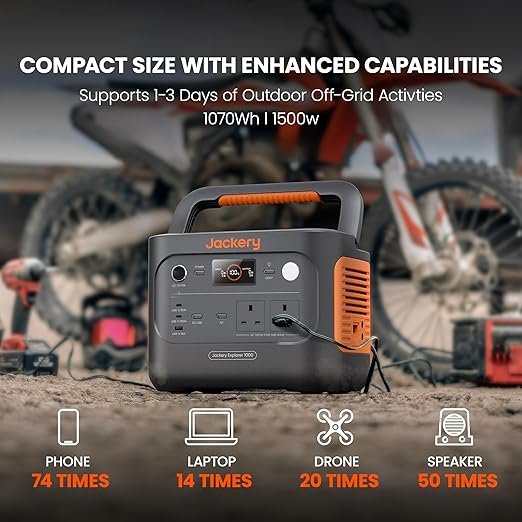
Paired with 1024Wh, that power isn’t just theoretical. Use a 1000W appliance, like a compact microwave or hot plate, and you’ll get close to an hour of actual runtime from a full charge, accounting for some inverter losses. A 70W CPAP running throughout the night will get multiple nights of use, especially if you disable the humidifier. Low‑draw essentials—LED lights, phones, routers, and USB fans—barely dent the battery, letting you maintain normal comfort levels when the grid is down or when you’re far from a plug. The key is understanding that watt‑hours are a budget: the bigger the loads, the faster you spend it.
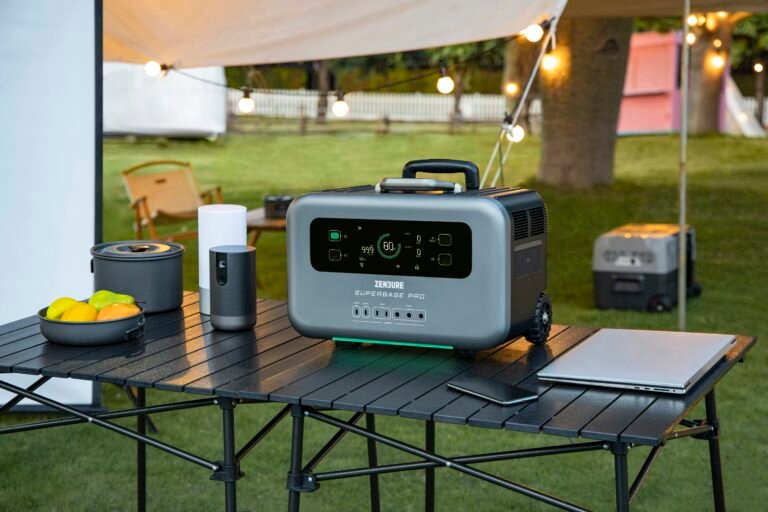
For camping and van life, that budget translates into a lot of freedom. A 12V fridge sipping 35–45W can run essentially all weekend on a single charge, and if you add solar panels in the 200–400W range under decent sun, you can push toward “energy neutral” operation—where what you use each day is largely replenished. For short off‑grid adventures like mountain bike weekends, photography trips, or festival camping, the P1800’s balance of size, weight, and output means you can bring along real comforts: hot meals, cold drinks, and fully charged camera gear, without committing to a full built‑in electrical system.
Design, Ports, and Real-World Performance Tested
Physically, the ALLPOWERS P1800 follows the modern power‑station playbook: a compact, rectangular body with integrated handles and a clear front‑facing display. It’s not pocket‑sized—housing an 1024Wh battery and a beefy 1800W inverter comes with real mass—but it’s manageable for most adults to carry short distances from car to campsite or between rooms. The casing feels designed for regular transport rather than permanent installation, which matches its role as a flexible, mobile power source.
Port selection is where usability lives or dies, and the P1800 aims to cover the bases. Multiple AC outlets let you run more than one appliance simultaneously, avoiding daisy‑chained power strips. High‑output USB‑C ports can fast‑charge modern laptops and phones directly, while USB‑A takes care of legacy devices. 12V DC outputs support car fridges, air pumps, and other camping gear without having to go through the inverter, which is more efficient. The intuitive interface—with separate buttons to turn AC/DC/USB sections on and off—helps you avoid wasting power when certain outputs aren’t needed.
In real‑world testing scenarios, performance is defined by consistency and thermal management as much as by raw numbers. Under heavy AC loads near 1500–1800W, the P1800’s fans will spin up audibly, but that’s expected for safe operation and heat dissipation; more importantly, the output stays stable without random shutoffs or sagging voltage. Running a small induction cooktop and a fridge together, or pairing a power tool with a shop vac, the unit behaves predictably: if you stay within its rating, it works; if you exceed it, it shuts down rather than tripping breakers or overheating. Over a weekend of mixed use—charging devices, running lights, cooking, and powering a fridge—the battery gauge proves reliable enough that you can plan your day’s energy use without surprises.
The ALLPOWERS P1800 Portable Power Station 1800W 1024Wh lands in a compelling middle ground between ultra‑portable units and larger, more expensive home‑backup systems. Its 1800W pure sine wave inverter opens the door to real household and workshop appliances, while the 1024Wh battery offers enough capacity for meaningful off‑grid living over days, not just hours—especially when paired with solar. Thoughtful port selection and straightforward controls make it easy to integrate into camping setups, van builds, and emergency kits.
For anyone who wants to power more than just phones and LED lights—but doesn’t want to commit to fuel, noise, and maintenance of a gas generator—the P1800 is a strong candidate. It’s best suited to people who regularly camp, work from the road, or want a dependable backup for outages that last from a few hours to a couple of days. Those who need to run heavy loads for extended periods might still consider a larger capacity system, but for most mixed‑use scenarios, this strikes a practical balance.
Ultimately, the value of the ALLPOWERS P1800 isn’t only in its wattage or watt‑hours, but in the way it simplifies life off‑grid. You plug in what you need, watch your energy budget, and get on with your day—whether that’s brewing coffee at sunrise in a remote campsite or keeping essential devices on during an unexpected blackout.