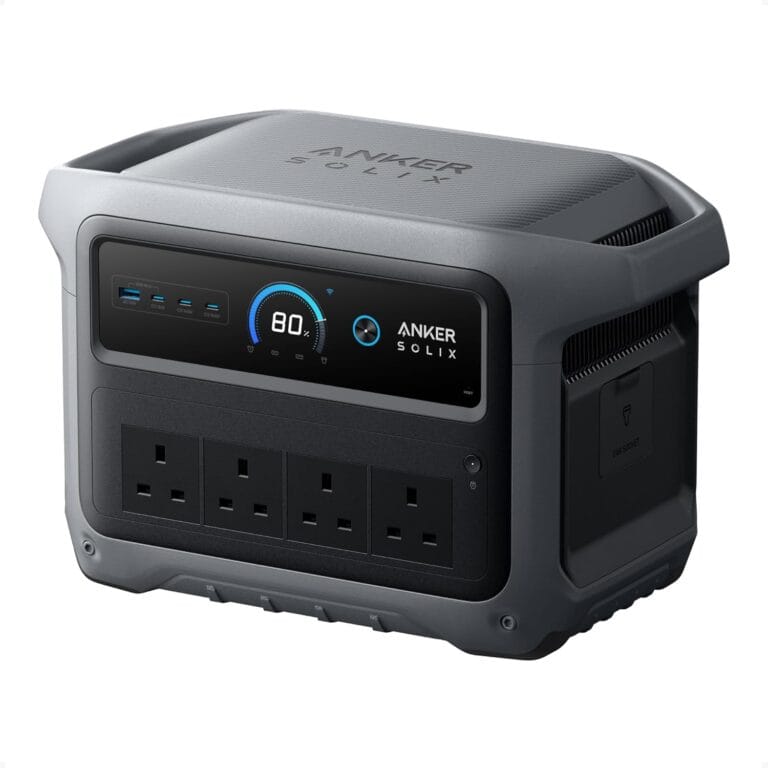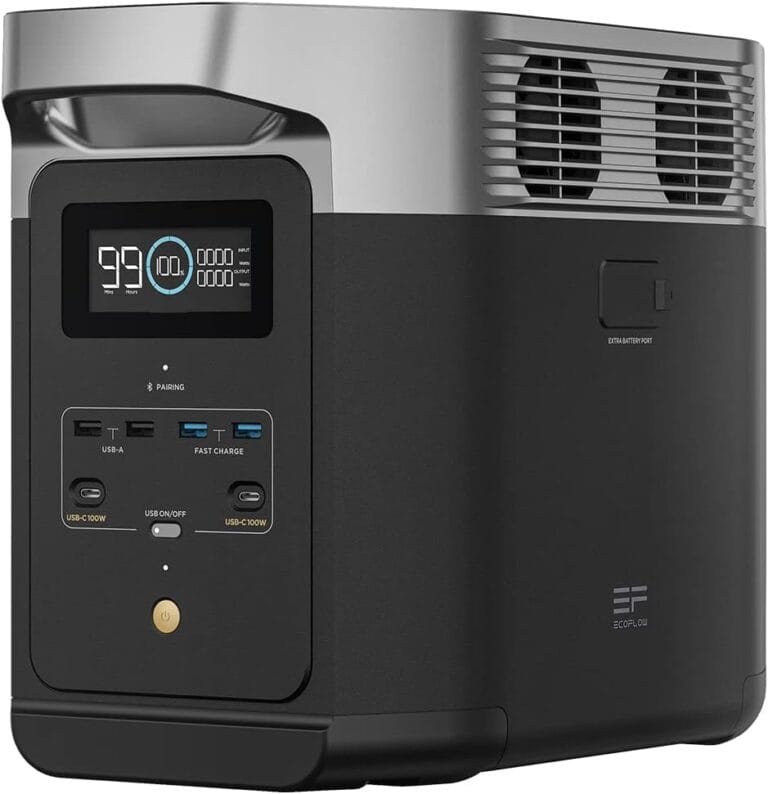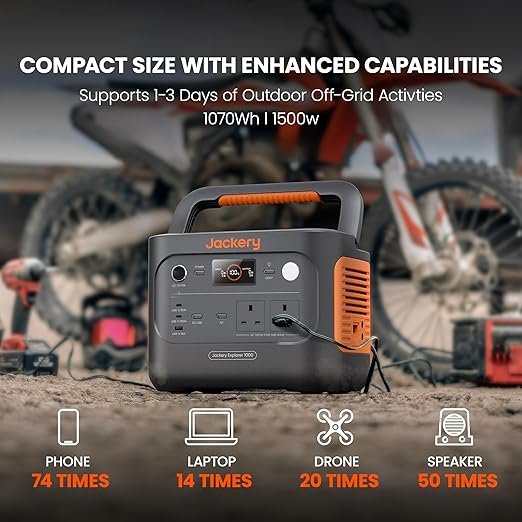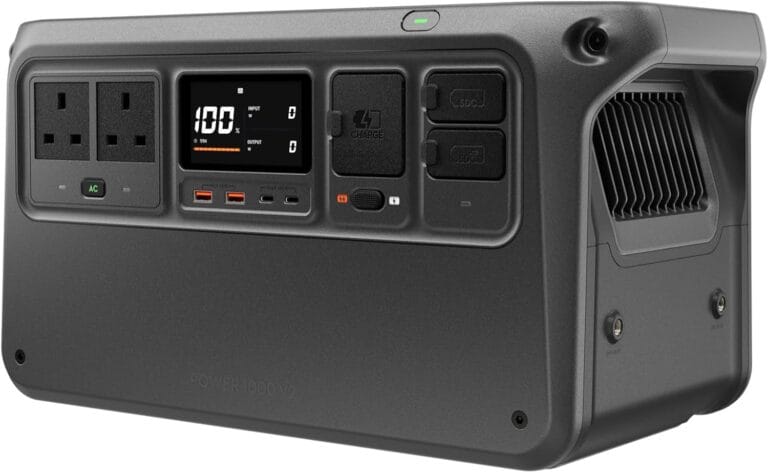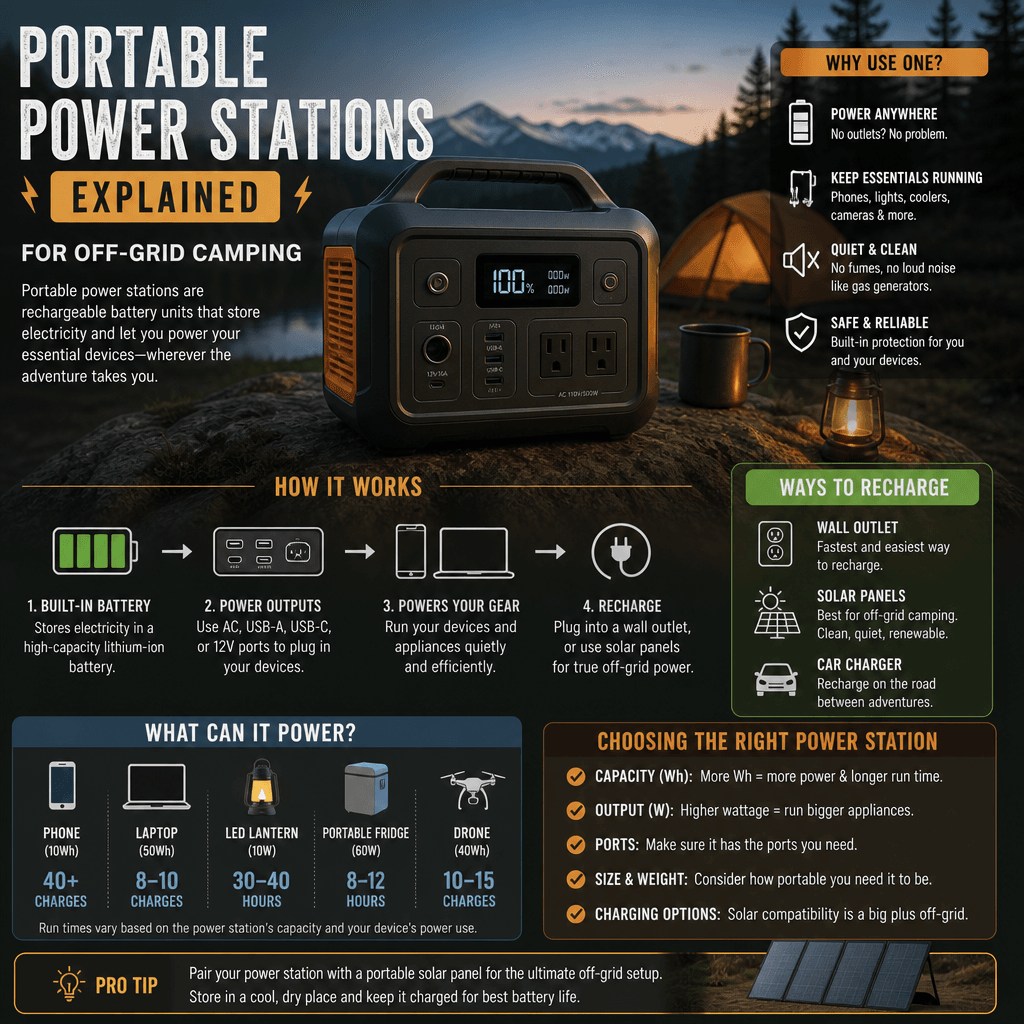
A portable power station is a rechargeable battery pack with built-in sockets and charging ports that lets you run and charge devices when you’re off-grid. If you’ve ever pulled onto a windy pitch in Snowdonia, opened the van door, and realised your phone is low, the lights need sorting, and the cool box wants power at the exact same moment, this is the bit of kit that makes the whole trip feel easier.
What a portable power station actually is
A portable power station is not a generator in the old-school sense. There’s no petrol, no diesel, no pull cord, and no engine noise rattling across the campsite. It’s basically a large rechargeable battery in a box, with the useful parts already built in so you can plug things in directly.
That matters because “battery” sounds simpler than a lot of product pages make it seem. You charge the unit at home, in the van, or from solar panels. Then, when you’re parked up away from an electric hook-up, it gives you usable power through plug sockets, USB ports, and 12V connections.
Think of it like a power bank that grew up. A little phone power bank handles one device for a day. A portable power station does the same job on a much bigger scale, enough for camping lights, laptops, camera batteries, a TV for an evening, or a compressor cool box if you size it properly.
Why off-grid campers use one
Off-grid camping gets romanticised a bit. In practice, it often means juggling chargers, rationing device use, and deciding whether a cold cool box is worth flattening something else. A portable power station solves that in a way that feels simple rather than technical.
For most camping trips, a portable power station is the simplest way to get usable electricity without turning your pitch into a building site. You don’t need fuel cans. You don’t need to listen to an engine. You don’t need to rework your whole caravan or motorhome electrics just to keep everyday kit running.
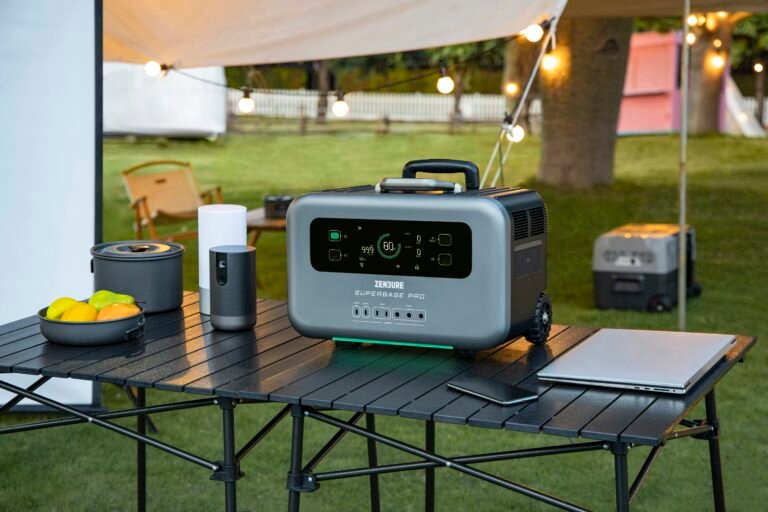
That’s why so many caravan, campervan, motorhome, and RV owners use one as a flexible extra. It gives you quiet power, no fumes, and far less faff than a generator. You can move it from the van to the awning, use it in the car on the way, then bring it indoors at home between trips.
Typical jobs it can handle on a campsite
Most of the time, a portable power station shines with the boring but genuinely useful stuff. Charging phones, tablets, cameras, sat navs, torches, headlamps, and LED strip lights is easy work. If your camping routine includes editing photos on a laptop, keeping a drone battery topped up, running a small Wi-Fi router, or using a CPAP machine overnight, this is exactly the kind of use case it’s built for.
Plenty of units will also handle a small TV for an evening, electric blankets for a short burst before bed, and some compressor cool boxes or camping fridges. That’s where off-grid camping starts to feel less like roughing it and more like choosing your own pitch without giving up every comfort.
What it usually cannot handle
Here’s the catch: a plug socket on the front does not mean “household power without limits”. High-draw appliances are where people get caught out.
Kettles, fan heaters, hairdryers, microwaves, induction hobs, and some air fryers can either drain the battery absurdly fast or exceed the unit’s output limit altogether. Even if a larger station can technically run one of those for a short spell, it may still be a poor use of stored power. Boiling a kettle from battery power sounds clever until half your charge disappears for two mugs of tea.
How a portable power station works
Inside the box, a few parts do very specific jobs. Once you understand those parts, the jargon stops being annoying.
The battery stores the energy. That’s the actual reserve you’re carrying with you, a bit like water in a tank.
The inverter converts the battery’s stored power into the sort of electricity that comes out of a normal UK plug socket. Batteries store direct current, or DC. Your three-pin mains devices usually expect alternating current, or AC. The inverter handles that swap in the background.
The charge controller manages incoming power when you recharge the unit. Whether you plug into mains, a 12V socket, or solar panels, this part controls how the battery fills safely.
Then you’ve got the ports. These are the usable connections on the outside: UK AC sockets, USB ports, 12V sockets, and sometimes a wireless charging pad on top. That’s the practical bit you notice every day.
Battery capacity: what wh means
Wh means watt-hours. In plain English, that’s the amount of energy the unit can store. It’s the size of the tank.
A 300Wh portable power station stores less energy than a 1000Wh one, so it will usually run fewer things or run the same things for less time. Bigger number, bigger reserve. Simple enough.
But bigger capacity always comes with trade-offs. More watt-hours usually means more weight, a larger case, and a higher price. That’s why the biggest box on the shelf isn’t automatically the right one. If you mostly charge phones, lights, and a tablet over a weekend, dragging around a huge unit makes no sense.
Output power: what watts mean
Watts tell you how much power the station can deliver at one time. Capacity tells you how long. Output tells you what it can run.
If a power station has a 500W continuous output, it can run devices drawing up to 500 watts at that moment. If your appliance wants 900W, it either won’t start or the power station will shut the socket down to protect itself.
You’ll also see surge or peak watts. That’s the short burst some devices need at startup, especially anything with a motor or compressor. A cool box compressor may briefly spike above its normal running power. The station needs enough surge headroom to handle that moment.
Ports and connections you’ll actually use
For camping in the UK, the most useful ports are usually the least glamorous ones. A proper AC socket is handy for laptop chargers, TVs, camera chargers, and medical kit. USB-C Power Delivery matters more than many people realise, because it can fast-charge newer phones, tablets, and some laptops directly without needing a plug adapter.
USB-A is still useful for older cables, LED lights, and smaller gadgets. A 12V car-style socket is handy for inflators, cool boxes, and kit designed for vehicle use. Some stations also include smaller DC barrel outputs, though honestly those are only useful if your gear specifically needs them.
Wireless charging pads on top look neat and can be convenient, but they’re nowhere near the deciding factor. A good handle and the right ports beat gimmicks every time.
Portable power station vs generator vs leisure battery
This is where a lot of confusion starts. All three can give you electricity away from home, but they do it in very different ways.
Portable power station vs petrol or diesel generator
A fuel generator makes electricity by burning fuel through an engine. That means noise, fumes, maintenance, and fuel storage. It also means you usually need to keep it outside and well away from enclosed spaces.
A portable power station is silent apart from maybe a cooling fan. No fumes. No engine servicing. No carrying petrol in the boot. On most campsites, that alone makes it the more practical choice.
Generators still have a place. If you need high output for long periods and you’re nowhere near a campsite, fuel can be easier to top up than battery capacity. Some work sites and serious off-grid setups still rely on them for that reason. But for normal camping, especially anywhere near other people, battery power is simply a better fit.
Portable power station vs built-in leisure battery
A leisure battery is part of your vehicle’s electrical system. It’s wired into the van, caravan, or motorhome to support lights, pumps, control panels, and other onboard functions. It usually works with the rest of your setup, such as chargers, split charging, or solar already fitted to the roof.
A portable power station is self-contained. You don’t need to install it. You can lift it out, take it into the awning, use it in another vehicle, or bring it indoors during a power cut at home.
That makes it less of a direct replacement and more of a flexible extra. If your van already has a decent leisure battery setup, a portable unit can still make sense as backup power, overflow capacity, or a separate source for personal devices and outdoor gear.
Portable power station vs solar generator
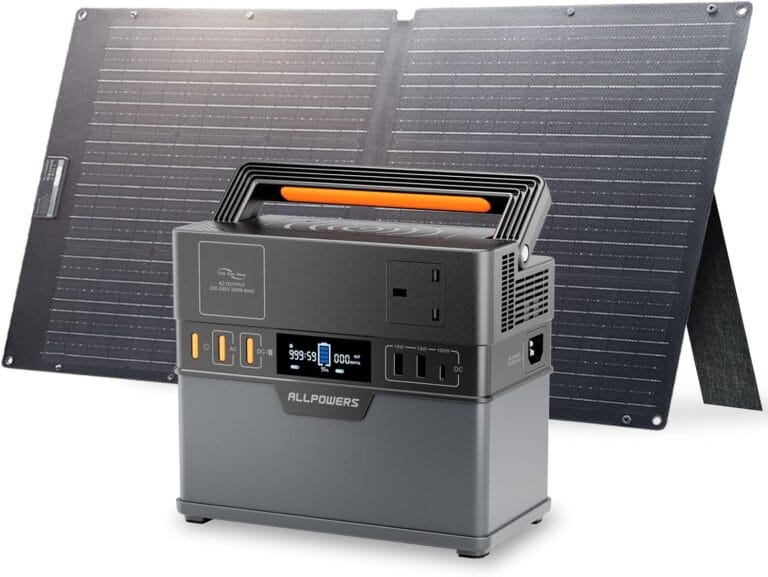
“Solar generator” sounds like a different machine, but usually it isn’t. In most camping and outdoor use, a solar generator is simply a portable power station paired with solar panels.
The panels collect energy from sunlight. The power station stores it and gives you usable outputs. That’s all the term usually means.
So if you see “solar generator” on a product page, don’t assume there’s some secret extra technology involved. It’s normally just a battery station plus compatible solar input.
The key numbers to check before you buy
Specs can get noisy fast, but only a handful of numbers really matter for camping. Once you know what those numbers mean, it gets much easier to ignore the marketing fluff.
Capacity: how much power storage you need
Small units, roughly 200Wh to 300Wh, suit short weekends where your main jobs are charging phones, running lights, topping up cameras, and maybe keeping a tablet or small speaker alive. These are easy to carry and usually enough if your needs are modest.
Mid-size units, around 500Wh to 1000Wh, are where things get more interesting for campervan and caravan use. This range can support laptop charging, longer device use, some cool boxes, a TV for the evening, and a better margin for multi-day trips.
Larger units, 1000Wh and up, suit longer off-grid stays or more demanding habits. If you want to support a compressor fridge, regular laptop use, multiple devices, and a few comfort items over several days, this is often the territory to look at.
Continuous output and surge rating
Check the station’s continuous AC output against the appliance you actually want to run. If your cool box pulls 45W while running, that sounds easy enough. But if the compressor briefly spikes much higher at startup, the surge rating matters too.
That’s why matching only on the normal wattage can lead to annoying surprises. For anything with a motor, compressor, or heating element, output deserves a close look.
Battery chemistry: LiFePO4 vs lithium-ion
Battery chemistry affects lifespan, weight, price, and how the unit behaves over time. The two labels you’ll see most often are lithium-ion and LiFePO4, which stands for lithium iron phosphate.
Traditional lithium-ion packs tend to be lighter and sometimes smaller for the same storage, but LiFePO4 has become a strong choice for camping. It generally lasts longer over repeated charge cycles, tends to be more stable, and handles regular use well.
The trade-off is that LiFePO4 units can be heavier and sometimes pricier upfront. Still, for something you expect to charge and use often, especially over several seasons, it’s usually the better long-term bet.
Weight, size and carry design
Capacity sounds great until you have to lift the thing out of a locker at 9pm in the rain. Weight matters more than product pages admit.
A compact 250Wh unit may feel almost grab-and-go. A 1000Wh model can be a proper two-handed lift. Once you move into larger capacities, the handle design, shape, and where it fits in your boot or van storage become genuinely important.
A power station only feels portable if you’ll actually move it without dreading it.
Charging speed
Charging speed tells you how fast you can refill the station from mains, 12V, or solar. Fast mains charging is great before a trip or during a stop at a serviced pitch. But the catch is you still need a realistic recharge plan while you’re away.
Charging from a 12V vehicle socket is usually much slower than mains. Solar input can be excellent in the right conditions, but panel size, weather, and season change everything. A headline claim about “fast charging” is only useful if it matches how you actually travel.
How to work out what size portable power station you need
This is the part people often overcomplicate. It doesn’t need to feel like homework.
Step 1: list what you want to power
Start with the actual items you care about on your next trip. Phone. Lights. Laptop. Cool box. Camera batteries. Water pump backup. CPAP machine. Electric blanket for twenty minutes before bed. Keep it real.
Most overspending happens because the shopping starts with product specs instead of your own routine.
Step 2: check the wattage
Look at labels on plugs, chargers, power bricks, manuals, or the appliance itself. You’re looking for watts, shown as W.
Some gear doesn’t draw the same amount all the time. Laptops vary depending on what you’re doing. Cool boxes and fridges cycle on and off. So treat the label as a guide, not a perfect promise.
Step 3: estimate daily use
Now think in hours per day. A phone charge is not the same as running a laptop for six hours while it rains outside. A TV for ninety minutes in the evening is a very different load from a cool box working all day.
Multiply watts by hours to get watt-hours. A 10W light used for 5 hours needs about 50Wh. A 50W cool box running for the equivalent of 8 active hours over a day needs around 400Wh.
That sounds technical, but it’s really just adding up your likely use. Like planning food for a trip, you don’t need perfection. You just need a sensible estimate.
Step 4: allow for losses and real-world use
You won’t get every last watt-hour out of a portable power station in neat, perfect fashion. Some energy is lost when the inverter converts battery power into AC, and some is lost in the charging process too.
Think of it like pouring water from a bottle into a cup while walking across a field. You still get most of it, but not every drop lands exactly where you want. So if your rough daily total comes to 500Wh, choosing a 500Wh unit is often too tight. Giving yourself breathing room makes camping much less annoying.
Real camping examples by trip style
Abstract numbers are useful, but real trip patterns tell the story better.
Weekend caravan pitch without electric hook-up
For a two-night caravan break without hook-up, a modest station can go a long way if your main loads are sensible. Charging two phones, running LED lights in the evening, topping up a tablet, and watching a bit of TV is well within reach for many smaller or mid-size units.
If you add a cool box or want backup for a water pump, that pushes you upward in size. Still, this is the kind of trip where a portable power station often feels most rewarding, because it removes the little compromises that make a short break feel fiddly.
Campervan touring trip with daily driving
Daily driving changes the maths completely. If you can top the station up from the van while moving between stops, a mid-size unit often stretches much further than the raw capacity suggests.
That means you don’t always need a huge battery to live comfortably on the road. If your pattern is drive, park, cook, charge a few devices, then move on again the next morning, regular top-ups do a lot of the work for you.
Longer off-grid motorhome stay
A longer off-grid stay needs more planning, especially if you want to support a fridge, regular charging, and some home comforts without hook-up. In this setup, a larger portable power station paired with solar makes much more sense.
Weather becomes part of the power plan. A bright July day can feel generous. Three grey days in a row can change your habits fast. That usually means being selective about what runs from battery, when you recharge, and which devices are actually worth the energy.
Tent camping with a few comforts
Even though vehicle-based camping is the main focus here, smaller portable power stations also work brilliantly for tent trips. If your setup is mainly lights, phones, camera batteries, and maybe a small fan, a compact unit is often plenty.
The same rule still applies though: buy for the gear you’ll really use, not the fantasy campsite kitchen.
How to recharge a portable power station on the road
A portable power station is only as useful as your plan for topping it up. Luckily, the options are straightforward.
Charging from mains before you leave
Start every trip with a full battery. It sounds obvious, but it’s still the easiest win.
Even if you plan to recharge from solar or the vehicle later, leaving home at 100 percent gives you flexibility from the start. If the weather turns, the drive is shorter than expected, or you stop somewhere without easy charging, you’ve already banked the easiest power you’ll get.
Charging from your vehicle’s 12V socket
Charging from a 12V socket while driving is convenient, especially on touring trips. The downside is speed. It’s usually much slower than mains charging, so think of it as a steady top-up rather than a quick refill.
Be sensible here. Charging while the engine is running is one thing. Drawing from the vehicle without the engine running is another, and that’s how starter battery trouble begins. If your portable power station has a dedicated vehicle charging mode or clear guidance from the manufacturer, follow it.
Charging with solar panels
Solar is appealing because it feels free once you’ve got the panels. Pair a folding panel with your power station and, on a decent sunny day, you can put a useful amount of energy back in.
The trick is panel placement. Brochures make it look like you toss a panel somewhere vaguely outside and magic happens. Real life is fussier. Angle matters. Shade matters. Cloud cover matters. A panel half in shadow can perform far worse than you’d expect.
On a summer pitch with good sun, solar can genuinely extend your stay. On a grey autumn break under trees, it may barely tickle the battery.
Can you charge and use it at the same time?
Often, yes. This is usually called pass-through charging.
It means the unit can accept incoming power while also supplying power to your devices. That’s useful if you’re charging from solar during the day while running a cool box or topping up smaller gadgets.
Not every unit handles this equally well, though. Some manage it smoothly. Some get warmer, noisier, or less efficient. If this matters for your setup, it’s worth checking the model’s behaviour rather than assuming all stations do it the same way.
What can you realistically run, and for how long?
This is the question behind most searches, and the honest answer is less glamorous than product ads suggest.
Low-power devices that are easy wins
Phones, LED lanterns, tablets, cameras, e-readers, head torches, and small routers are the simple wins. These use relatively little power and are exactly what portable power stations handle best.
If your goal is staying charged, lit, and connected for a weekend, even a fairly modest unit can feel generous.
Medium-demand gear to check more carefully
Laptops, portable fridges, compressor cool boxes, TVs, small fans, and CPAP machines need a bit more thought. These are all common camping uses, but runtime varies a lot depending on settings and conditions.
A cool box doesn’t pull full power every second, because the compressor cycles on and off. A CPAP machine may draw more or less depending on humidifier use. A laptop used for streaming films behaves differently from one used for light admin. So “can it run it?” is only half the question. “For how long in your conditions?” is the better one.
High-power appliances that catch people out
Kettles, toasters, electric heaters, hairdryers, and similar appliances are classic battery killers. The issue isn’t only whether the socket can start them. It’s whether using precious stored power that way makes any sense.
Usually, it doesn’t. If your whole off-grid setup depends on battery efficiency, using hundreds or thousands of watts to create heat for a few minutes is a fast way to empty the tank.
Safety, storage and campsite common sense
Portable power stations are generally straightforward, but a few habits make a real difference.
Using a power station safely indoors and in awnings
Unlike fuel generators, a portable power station is usually safe to use inside a caravan, campervan, motorhome, tent, or awning because it doesn’t produce exhaust fumes. That’s one of its biggest advantages.
Still, it needs a bit of common sense. Keep vents clear, don’t wrap it in blankets or bury it in bags, and keep it away from direct rain or standing water. Electronics like dry, stable conditions. No surprise there.
Temperature, moisture and rough handling
Extreme cold can reduce battery performance. Extreme heat can stress the battery and the electronics. Rain, damp storage, and repeated knocks won’t do it any favours either.
For camping, that means avoiding obvious abuse. Don’t leave it baking on the dashboard all day. Don’t store it wet in a locker. Don’t drop it onto gravel and expect the casing to shrug it off forever.
Caring for the battery between camping trips
Between trips, don’t leave the unit completely flat for months. Batteries prefer a bit of charge left in them.
Top it up occasionally, store it somewhere cool and dry, and give it a check before your next trip rather than discovering a dead unit on departure morning. A little care here adds up over the years.
Common myths and misunderstandings
Portable power stations are simple once you strip away the marketing, but a few myths keep popping up.
“Bigger is always better”
Bigger is only better if you’ll use the extra capacity. Otherwise, it’s just more money, more weight, and more storage hassle.
For lots of camping setups, a sensibly sized mid-range unit is the sweet spot. Easy to move, enough for the actual jobs, and not ridiculous to recharge.
“Solar panels will keep it full all day”
Sometimes. Sometimes not even close.
Solar depends on panel size, season, weather, angle, and shade. If you picture endless free power while parked under trees in March, disappointment is coming. Solar is useful, often very useful, but it is not effortless.
“It replaces every part of your van’s electrical system”
Not usually. A portable power station can do a lot, but it doesn’t automatically replace a properly planned leisure battery system, built-in charging, fixed lighting circuits, or dedicated 12V infrastructure.
In many setups, it works best as a flexible add-on. That’s not a weakness. It’s the point.
“If it has a plug socket, it will run anything”
This one catches people because the AC socket looks familiar. Familiar doesn’t mean unlimited.
The socket only delivers what the inverter and battery are rated for. If the appliance needs more than the unit can supply, the fact that the plug fits means nothing.
The best setup for different kinds of campers
Once you understand the basics, picking the right style of setup gets much easier.
If you mainly do short weekend trips
Prioritise portability, simple charging, and enough capacity for your everyday kit. Phones, lights, camera batteries, maybe a tablet or TV for the evening, plus one comfort item if you really want it.
For this kind of camping, ease matters more than bragging rights. A unit that’s quick to grab, quick to charge, and easy to stash is usually the better buy.
If you stay off-grid for several days
Look harder at total capacity, solar input, and how well the unit supports your biggest regular load, often a fridge or cool box. Multi-day trips expose weak planning fast.
A larger battery with a realistic way to recharge on the road or through solar makes a big difference here. So does being honest about what you actually need every day.
If you already have a caravan or motorhome electrical setup
A portable power station can still earn its place. It can act as backup power, extra capacity for longer stays, or a separate supply for personal electronics so your main leisure system is left to handle the van’s built-in jobs.
That separation can be surprisingly handy. Your onboard battery keeps the essentials going, while the portable unit handles everything else.
Questions campers often ask about portable power stations
Is a portable power station worth it for camping?
Yes, if your camping involves regular charging, a few electric comforts, or nights away from hook-up. The convenience is the whole point: quiet operation, no fumes, easy setup, and enough usable power for the gear most trips actually depend on.
Can you run a camping fridge or cool box from one?
Yes, some units can. The deciding factors are the fridge or cool box wattage, how often the compressor cycles, your temperature settings, and the weather around it. A shaded compressor cool box in mild weather is a very different load from one battling a hot awning in July.
Do campsites allow portable power stations?
Generally, yes. Battery units are far more acceptable than fuel generators because they’re quiet and fume-free. Still, site rules always matter, especially if you’re charging from unusual setups or placing solar panels around your pitch.
How long does a portable power station last?
Per charge, runtime depends on the battery size and what you’re running from it. Over its whole life, battery lifespan is usually measured in charge cycles. In simple terms, that means how many times you can charge and discharge it before the battery capacity drops noticeably. LiFePO4 models usually last longer here than older lithium-ion designs.
What should you try first?
Before looking at the biggest, flashiest unit, make a list of the three things you actually want to power on your next trip. Then size your portable power station around that list. Get that part right, and everything else becomes much easier.