You only notice how much power matters when the kettle will not boil, the battery is fading and the nearest hook-up is nowhere in sight. That is where the motorhome inverter vs generator question becomes very real. For UK touring, the right choice depends less on what sounds best on paper and more on how you actually camp, what you want to run, and how much noise, fuel and kit you are happy to deal with.
For many motorhome owners, this is not an either-or decision in the strictest sense. An inverter and a generator do different jobs, and the better option depends on whether you want quiet everyday convenience or occasional heavy-duty backup. If you mainly want to charge laptops, run a television, power a coffee machine or keep small appliances going from your leisure battery bank, an inverter often feels like the neater, more modern solution. If you need long runtimes away from hook-up or want to power high-demand appliances for longer periods, a generator still has a place.
Motorhome inverter vs generator – what is the actual difference?
An inverter converts 12V battery power into 230V mains-style electricity so you can use standard household appliances in your motorhome. It does not create electricity on its own. It simply draws from your batteries, which then need recharging from solar, the alternator, hook-up or another charging source.
A generator creates electricity directly, usually by running on petrol, diesel or LPG. Instead of draining your battery bank first, it produces power while fuel lasts. That makes it useful for longer off-grid stays, but it also brings noise, fumes, storage issues and extra maintenance.

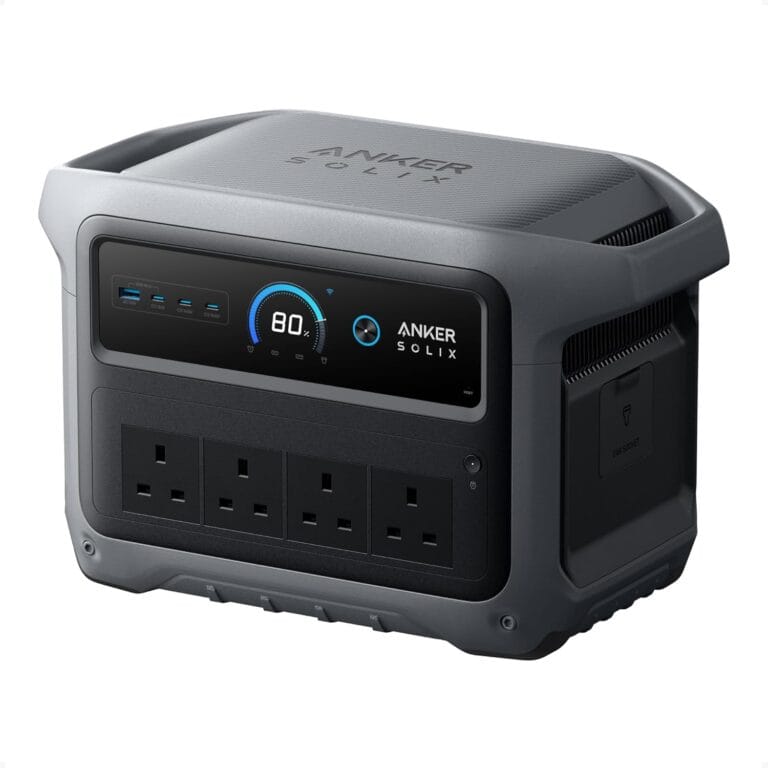
Compact 12V pure sine wave inverter ideal for running sensitive caravan appliances from your leisure battery. Delivers reliable 240V AC on hook-up–free pitches, with remote control and UPS-style backup for seamless power.
Power Output: 1000W continuous, 2000W peak for startup surges
Voltage Compatibility: 12V DC to 240V AC with UK sockets
Usage Convenience: Remote controller and UPS function for off-grid touring
This difference matters because many buyers focus only on wattage. In real touring life, convenience often matters just as much. An inverter is instant and quiet. A generator is more independent, but far less subtle.
When an inverter makes more sense
If your ideal trip involves aires, club sites, farm stays or quiet off-grid pitches where peace matters, an inverter usually suits the lifestyle better. You press a button and your appliance works, with no fuel can, no pull cord and no engine noise disturbing the afternoon.
That convenience is especially attractive for couples and families using moderate power loads. Charging phones, powering a laptop, running a TV, topping up e-bike batteries in a managed way, or using low-wattage kitchen gadgets can all be realistic with the right inverter and battery setup. A pure sine wave inverter is usually the safer bet for sensitive electronics and modern appliances, even if it costs more than a modified sine wave unit.
There is also a strong space-saving argument. In a motorhome, every locker matters. An inverter installation can be compact and neatly integrated into your electrical system, whereas a portable generator needs somewhere secure and ventilated for transport, plus fuel storage if applicable.
The catch is battery capacity. An inverter is only as useful as the battery bank behind it. A hairdryer, toaster or microwave can flatten modest leisure batteries surprisingly quickly. Many people buy an inverter first, then realise they also need upgraded batteries, better charging, heavier cabling and possibly solar to make the system properly useful.
When a generator is still the better option
Generators remain attractive for owners who spend long periods away from hook-up and want less dependence on battery storage. If you wild camp for several days, attend events, or need reliable power in all weather, a generator can provide reassurance that an inverter alone cannot.
This is especially true if your power use is high. Running energy-hungry appliances for extended periods through batteries is expensive once you factor in the size of battery bank required. In that situation, a generator can be the cheaper route to occasional heavy use, even if it feels less elegant.
Generators can also help where solar is less reliable. UK weather is not famous for consistency, and winter touring can leave solar panels struggling to replace what you use each day. A generator offers predictable backup when short days and cloud cover work against you.
But there are obvious compromises. Noise is the biggest one. Even quieter inverter generators still make themselves known, and many campsites restrict or ban their use. If you enjoy peaceful pitches or close-knit site layouts, a generator can quickly become unpopular. That does not make it a bad choice, but it does mean it suits some touring styles much better than others.

Quiet, caravan-friendly 3500W inverter generator with app monitoring for easy power management on and off-grid. Ideal for 12V leisure batteries, air-con and high‑demand appliances while keeping noise and fuel use low on site.
Power Output: 3500W peak, suitable for kettles and air-con
Caravan Use: Stable power protects sensitive onboard electronics
Smart Control: App monitoring simplifies load, fuel and runtime management
Running costs, upkeep and hidden expense
On the price tag alone, the comparison can look misleading. A basic generator might seem like the cheaper route to mains-style power, while a quality inverter setup can become expensive once batteries and installation are included.
Yet ownership cost is wider than the initial purchase. A generator needs fuel, servicing and occasional maintenance. It may require oil changes, careful storage and security measures, because portable generators can be attractive to thieves. An inverter itself has fewer moving parts and much less day-to-day upkeep.
That said, battery-backed inverter systems are not maintenance-free in financial terms. If your setup encourages heavier off-grid use, you may end up investing in lithium batteries, solar panels, battery monitoring and a stronger charger. For many motorhome owners, the inverter is only one piece of a larger upgrade.
So the cheaper option depends on your pattern of use. If you only need occasional backup power a few times a year, a generator may offer better value. If you use onboard power regularly and want it to feel effortless on every trip, investing in a good inverter setup often pays off in convenience.
Noise, etiquette and campsite reality
This is where the motorhome inverter vs generator choice often gets settled. On paper, a generator can look very practical. On site, it can be another story.
A generator may be acceptable on some rallies, stopovers and remote locations, but many campsite users prefer a quieter atmosphere. If you tour in busy parks, scenic rural sites or places where people sit outside to relax, generator noise can feel out of step with the experience. Some sites set strict hours. Others ban them completely.
An inverter wins this round easily. It is the more neighbour-friendly option and far easier to use without planning around other people. For owners who value low-fuss touring, that matters more than headline power output.
Which appliances are realistic?
This is where buyers can save themselves a lot of frustration. An inverter can run many everyday items, but not every appliance is sensible from battery power. Televisions, laptops, chargers and low-to-moderate kitchen gadgets are often manageable with the right setup. Kettles, heaters, hairdryers and full-size microwaves are a different story. They can be run in some systems, but only with substantial battery capacity and cabling.
A generator handles heavy loads more comfortably for longer periods, which is why some owners keep one for backup even after fitting an inverter. If your must-have appliance list includes several high-draw items, it is worth being realistic before spending money.
A simple way to think about it is this: an inverter is excellent for convenience power, while a generator is better for sustained brute force. Not always, but often enough to be a useful rule of thumb.
The best choice for different touring styles
If you mainly stay on serviced sites and only want power between hook-ups, an inverter is usually the more sensible buy. It adds flexibility without changing how you travel.
If you enjoy off-grid weekends and use modest electrical kit, an inverter paired with decent batteries and some solar is often the sweet spot. It keeps things quiet, simple and comfortable.
If you tour for longer periods without hook-up, rely on heavier appliances or travel through seasons when solar output is weak, a generator may still earn its place. It is less refined, but more forgiving when energy demand rises.
And if you want the most capable setup, some owners use both. An inverter covers daily convenience, while a generator stays in reserve for battery charging or occasional high-demand use. It is not the cheapest route, but it can be the most flexible.
What to check before you buy
Before choosing either option, check your real power use rather than your wish list. Look at appliance wattage, how long you use each item, your current battery capacity and how you recharge between stops. Also think about payload, storage space and where you actually camp.
For many UK motorhome owners, the smart purchase is the one that suits normal trips, not extreme scenarios. It is easy to overbuy for the rare weekend when everything is switched on at once. A practical, reliable setup that fits your usual touring habits will nearly always feel like the better investment.
If you are still unsure, lean towards the quieter system unless your power demands clearly say otherwise. The best touring gear tends to be the kit that makes life easier without making itself a nuisance, and that is usually the setup you will be happiest to pack for the next holiday.