Trying to squeeze a caravan onto a pitch while other campers watch is enough to test anyone’s patience. The best reversing camera caravan setup takes much of that stress away, giving you a clearer view behind the van, more confidence when manoeuvring and a much better chance of getting parked neatly first time.
For many caravan owners, a reversing camera quickly moves from nice extra to essential bit of kit. It helps when backing onto a driveway, lining up on a campsite, checking for low obstacles and keeping an eye on what is happening behind the caravan on the road. That matters whether you tour a few weekends a year or spend months travelling around the UK.
What makes the best reversing camera caravan setup?
The right choice is not always the most expensive one. What matters is how well the system suits the way you tow, where you store your caravan and how much convenience you want from installation and everyday use.
A good caravan reversing camera needs a stable signal, a clear image and a screen that is easy to glance at without distraction. It should also cope well with British weather. Rain, road spray, dull winter light and dark campsite arrivals can all expose weak cameras very quickly.

Solar-powered magnetic reversing camera that’s ideal for caravans and motorhomes, giving you a quick-fit rear view without drilling or hardwiring. Wireless 1‑minute installation makes it perfect for swapping between tow car, caravan and trailer on-site.
Rapid Setup: 1-minute wireless install, no tools or drilling
Pitch Friendly: Solar powered, no 12V wiring to hook up
Touring Flexibility: Magnetic mount moves easily between vehicles
For most buyers, picture quality is one of the first things they look at, but it is only part of the story. A crisp screen is useful, yet it will not help much if the wireless connection drops out or the camera struggles in poor light. Reliability is what turns a camera from gadget into genuinely useful touring equipment.
Wired or wireless for the best reversing camera caravan?
This is where most buying decisions are made. Wired systems tend to offer the most dependable connection. If you regularly tow longer caravans or want the steadiest image possible, wired can be the safer bet. The downside is installation. Running cables neatly through a caravan and tow car can take more effort, and for some owners that means professional fitting.
Wireless systems are popular because they are simpler and tidier to install. For many UK caravan users, a decent digital wireless system is the sweet spot between convenience and performance. It avoids a lot of cable routing and can still deliver a stable image, especially on modern kits designed for larger leisure vehicles.
The trade-off is that not every wireless camera performs equally well. Cheap models can suffer from lag, interference or weak signal strength. That is particularly frustrating when you are already dealing with a tight campsite entrance or reversing in the rain. If you want wireless, it is worth choosing a system designed specifically for caravans rather than a basic car camera repurposed for the job.
The features that actually matter
When comparing options, it helps to ignore flashy claims and focus on the features that improve real-world use. Night vision is one of them. Many arrivals and departures happen in poor light, especially outside summer, so a camera that stays usable in the evening is far more valuable than one that only looks good in daylight.
A wide viewing angle also helps, but there is a balance to strike. Too narrow and you miss obstacles at the edges. Too wide and the image can become distorted, making distances harder to judge. Something in the middle often works best for caravans, where you need a broad enough view without turning every object into a tiny speck on the screen.
Screen size matters too. A larger monitor can be easier to read, but it should still fit sensibly in the tow vehicle without blocking your view. For many drivers, a compact dashboard monitor gives the best mix of visibility and practicality. If the display is too small, though, you may find yourself squinting at the crucial moment.
Build quality is another big one. A caravan camera lives outdoors, exposed to vibration, spray and changing temperatures. Look for a weather-resistant housing and fittings that feel solid rather than flimsy. If you tour often, stronger construction is usually worth paying for.
Best reversing camera caravan buyers should look for in daily use
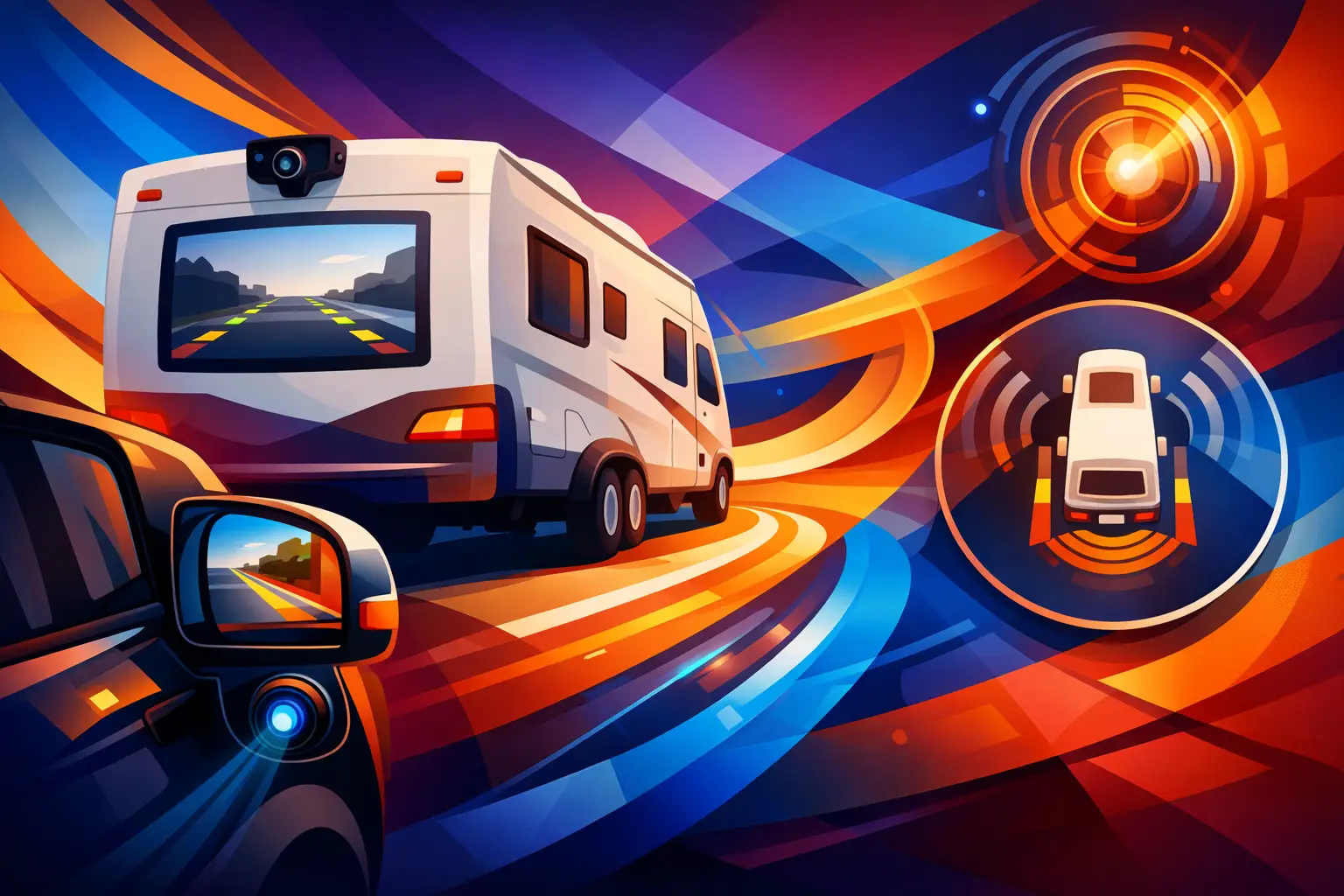
The best reversing camera caravan systems do more than show the space directly behind you. Some can be left on while driving, acting as a rear observation camera. That can be handy on dual carriageways and motorways, where seeing traffic behind the caravan gives extra awareness before lane changes.
This feature is especially useful if your tow car’s rear view is badly limited once the caravan is attached. Still, not every driver wants or needs constant rear observation. If your main priority is help with reversing onto pitches and driveways, a simpler system may be enough.
Another point to check is power supply. Some cameras connect into the caravan’s road lights, while others use a dedicated power source. Ease of setup varies quite a lot here. If you want a straightforward fit and minimal fuss each time you hitch up, pay attention to how the system is powered and whether it works automatically when reverse is selected.
Choosing for your touring style
A weekend tourer does not always need the same setup as someone who spends long stretches on the road. If you mainly use club sites with roomy pitches and travel in daylight, a mid-range wireless camera may do everything you need. It keeps reversing simple without turning the buying process into a technical project.
If you have a larger twin-axle caravan, reverse into awkward storage spaces or tow long distances in mixed conditions, it may be worth stepping up to a stronger system with better range and build quality. The extra spend can make daily use easier and save a lot of frustration over time.
Beginners often benefit most from a camera because caravan reversing is one of the least enjoyable parts of early ownership. A clear view behind the van can make the whole experience feel less intimidating. More experienced tourers may already reverse well with mirrors and a spotter, but many still appreciate the added visibility and convenience.
Common buying mistakes to avoid
One of the biggest mistakes is buying purely on price. Bargain cameras can look tempting, but poor image quality and unreliable signal quickly wipe out any savings. If you only trust the system half the time, you will stop using it.
Another mistake is choosing a camera meant for a car rather than a caravan. Car-based systems are not always designed for the extra length, different mounting positions or tougher outdoor exposure involved with towing. A purpose-built caravan system usually gives better results.
It is also easy to overlook installation. Some buyers focus so much on screen resolution and features that they forget to ask whether the camera can be mounted neatly on their specific caravan. Number plate mounting, high-level rear mounting and bracket options all affect usability.
Finally, do not assume a camera replaces careful manoeuvring. It is there to support safer reversing, not to do the thinking for you. Mirrors, awareness of your surroundings and, when possible, help from a second person still matter.
Is a caravan reversing camera worth it?
For most caravan owners, yes. The value is not just about avoiding bumps, although that is a major benefit. It is also about reducing stress. Reversing a caravan can be one of the more awkward parts of touring, especially after a long drive when you simply want to get settled and put the kettle on.
A good camera helps protect your caravan, your tow car and anything behind you. It can also make solo touring easier if you do not always have someone available to guide you. That extra independence is a real plus for many couples and solo travellers.
If budget is tight, it still makes sense to buy carefully rather than rush into the cheapest option. A reliable mid-range model often offers better long-term value than a low-cost camera that needs replacing after one season.
How to narrow down the right option
Start by thinking about your caravan size, how often you tow and whether you want the camera for reversing only or for rear observation while driving as well. Then consider installation. If you want the simplest route, a well-reviewed wireless kit designed for caravans is usually the easiest place to start.
Next, check image clarity, low-light performance, weather resistance and monitor size. These are the details that make the biggest difference once the novelty wears off and the camera becomes part of your normal touring setup. A system that works cleanly on a wet evening in Cumbria is worth more than one that only impresses on a sunny sales page.
At Caravan Motorhome RV, the aim is to make that product search quicker and easier for touring owners who want useful gear without wasting hours comparing unsuitable options. A good reversing camera is exactly the kind of upgrade that can make every trip feel more relaxed from the moment you arrive.
If you are choosing the best reversing camera caravan owners can rely on, think less about gimmicks and more about confidence. The right system should help you reverse with less guesswork, travel with more awareness and start each stop on a calmer note.