A clear, star-filled winter night can be one of camping’s best rewards, but the temperature drop after sunset is no small thing for a cat or dog. Even pets with thick coats can become uncomfortable when they are lying still for hours on a cold tent floor, in a drafty camper van, or beside a chilled RV wall. Short-haired pets, seniors, smaller animals and pets accustomed to indoor life may feel the cold especially quickly.
A 5V USB pet heating pad offers a simple way to bring gentle, targeted warmth to your companion’s sleeping space. Used in a suitable pet bed, crate or insulated nook, it can help take the chill out of bedtime without requiring a bulky household heater or a complicated campsite power setup. Many models can run from an appropriate USB power source, making them particularly useful for campers who need portable comfort.
Still, a heating pad is an extra layer of care, not a substitute for the essentials. Your pet needs a dry, weather-protected shelter, insulating bedding, fresh water, enough food and regular check-ins throughout the night. They should also always be able to move away from the warm spot if they choose. With sensible preparation and close attention to your pet’s behavior, gentle warmth can make cold-season camping feel much more welcoming for every member of the crew.
Why a USB Pet Heating Pad Makes Sense at Camp

A compact 5V USB heating pad for keeping cats and small dogs cosy in a caravan, motorhome or campervan during cooler evenings. Its dual-sensor safety design adds reassurance when used in a covered pet bed or travelling crate.
FEATURES:
USB Power: Runs from a 5V USB supply
Dual Sensors: Built-in safety monitoring for pets
Pet Comfort: Provides gentle warmth for resting pets
PROS:
Suitable for compact pet sleeping areas
USB power suits compatible onboard supplies
Dual sensors offer added safety reassurance
CONS:
Requires a suitable 5V USB power source
Size and heat settings not specified
A 5V USB pet heating pad fits naturally into a camping setup because it uses the same kind of low-voltage power many campers already carry. Depending on the model and its rated power needs, it can run from a suitable USB power bank, a built-in vehicle USB port or a certified USB adapter plugged into a 12V vehicle socket. That makes it easier to create a gently warmed sleeping spot without needing a mains hookup at the campsite.
This can be especially useful after sunset, when a tent, camper van or RV can cool down surprisingly quickly. A small pad placed correctly in a pet bed or crate adds warmth right where a cat or dog rests, rather than trying to heat the entire sleeping space. For pets sleeping near doors, windows or vehicle floors, that focused warmth can be particularly welcome alongside insulated bedding.
Portability is another major advantage. USB heating pads are generally compact, light and simple to pack, unlike bulky electric blankets or space heaters that demand more room and much more power. A power bank and a small pad can take up very little space in a camping tote, yet provide a practical comfort boost on chilly nights. Just make sure your chosen power source can safely supply the pad’s required output for the intended run time.
Understanding 5V Power and 12V USB Plug-In Options
A USB pet heating pad is designed to run on 5V power, the same low-voltage standard used by many phone chargers and power banks. That does not mean it can plug straight into every outlet you find on a camping trip. The round socket in a car, truck or camper is usually a 12V vehicle socket, so it needs a proper USB adapter to step the power down and deliver a stable 5V USB output.
Before leaving home, check the pad’s label or manual for its voltage, wattage and required current. For example, a pad rated at 5V and 2A needs a power source capable of supplying at least 2A, or 10 watts. Also check whether it uses USB-A, USB-C or another connector, then make sure your power bank, charging port or vehicle adapter matches.
Choose a reputable power bank or a certified 12V USB adapter with enough output for the pad’s rated wattage. A weak or poorly made adapter may not run the pad reliably and can become warm itself. It is also wise to test the complete setup at home before a trip.
Most importantly, never connect a 5V USB heating pad directly to a 12V vehicle socket. Always use a suitable USB converter or adapter between the vehicle outlet and the pad.
Dual-Sensor Safety: Extra Peace of Mind for Sleeping Pets
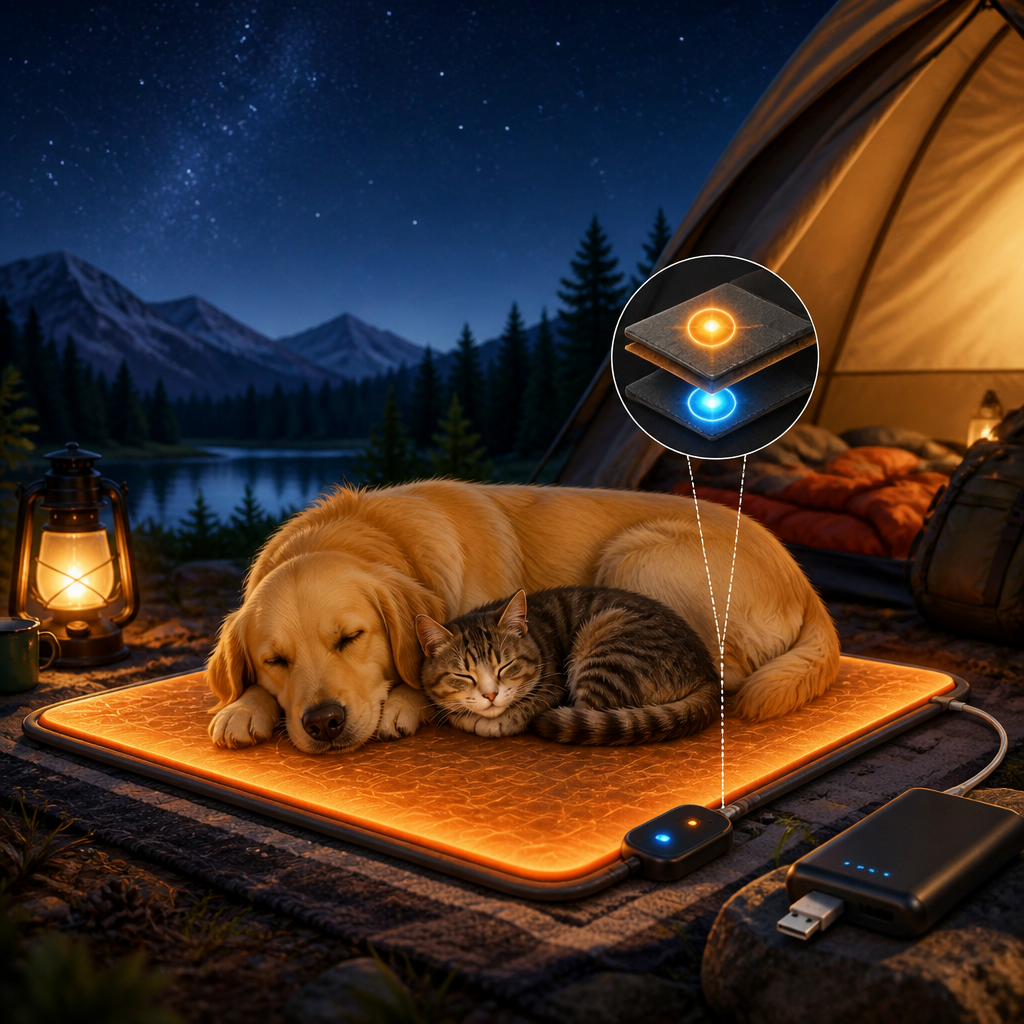
A good camping heating pad should provide gentle, steady warmth, not turn a pet bed into a hot spot. That is where dual-sensor safety features can be especially reassuring. These systems are designed to monitor the pad’s temperature from more than one point, helping it respond if warmth starts building beyond its intended range.
This matters overnight, when a dog curls tightly into a ball or a cat settles in one small spot for hours. A pet’s body can hold heat against the pad, while bedding and insulation can reduce airflow. Temperature sensors can help regulate the output as conditions change, whether your pet shifts position, the tent cools sharply after midnight or the camper warms up in the morning sun.
Look for a pad with stated overheat protection, clear operating instructions and safety information from the manufacturer. A durable, chew-resistant cord is also a valuable feature, particularly for curious puppies, kittens or pets that tend to investigate gear with their teeth. Check the cable and connector before each trip, and stop using the pad if either appears damaged.
Even with dual sensors and automatic protection, your pet should never be trapped on the heated surface. Set up the bed so they can comfortably move onto an unheated section whenever they choose. Their ability to adjust their own comfort is one of the best safety features of all.
Set Up a Warm, Safe Bed for Cats and Dogs
Start with a flat, dry surface inside the tent, camper, crate or pet bed. Follow the heating pad manufacturer’s placement instructions closely, especially if the model is designed to sit beneath a bed cushion rather than directly under your pet. An insulated sleeping area, raised slightly from the cold ground where possible, helps the pad work more effectively.
If the instructions allow it, cover the pad with its supplied cover or a thin, breathable blanket. Avoid piling on thick blankets, sleeping bags or dense foam that can hold in too much heat and interfere with the pad’s temperature controls. Leave part of the bed unheated so your cat or dog can choose a cooler spot.
Route the USB cord where curious teeth, muddy boots and moving gear cannot reach it. Keep all connections dry and away from water bowls, tent entrances and busy walkways. In a crate, use cord protection if needed, but do not pinch or sharply bend the cable.
Gentle heat can be especially welcome for short-haired pets, senior dogs and cats, smaller animals, or any companion that clearly feels the cold. Still, check on your pet regularly, particularly during the first few uses. Panting, restlessness, repeated moving away, or refusing the bed can mean they are too warm. A cozy bed should be an option, never a place they feel stuck.
A Warmer Night Means a Happier Camping Companion
A heated pad is only one part of good cold-weather pet care. Start with the essentials: a dry, draft-protected shelter, insulating bedding between your pet and the cold ground, regular food and unfrozen water, plus a sleeping space sized to hold warmth without feeling cramped. If conditions are too cold, wet or windy for your pet to rest comfortably, add layers of protection or bring them into a warmer vehicle or shelter.
A 5V USB pet heating pad with dual-sensor safety can be a useful finishing touch. It provides gentle warmth without the bulk or power demands of many larger electric heating options, and it can work from a suitable power bank or properly rated vehicle USB adapter. The safety sensors add reassurance, but they do not replace careful setup, regular checks and your pet’s ability to move away from the warmth.
Before leaving, test the pad, cable, power bank and adapters at home. Confirm how long your chosen power source runs the pad, inspect the cord for damage and make sure the bed stays comfortably warm rather than hot. Pack spare blankets or an insulated pet bed too, since weather and power needs can change quickly.
The takeaway is simple: combine sensible shelter and bedding with carefully managed gentle heat, and your cat or dog can stay cozy for many happy nights under the stars.