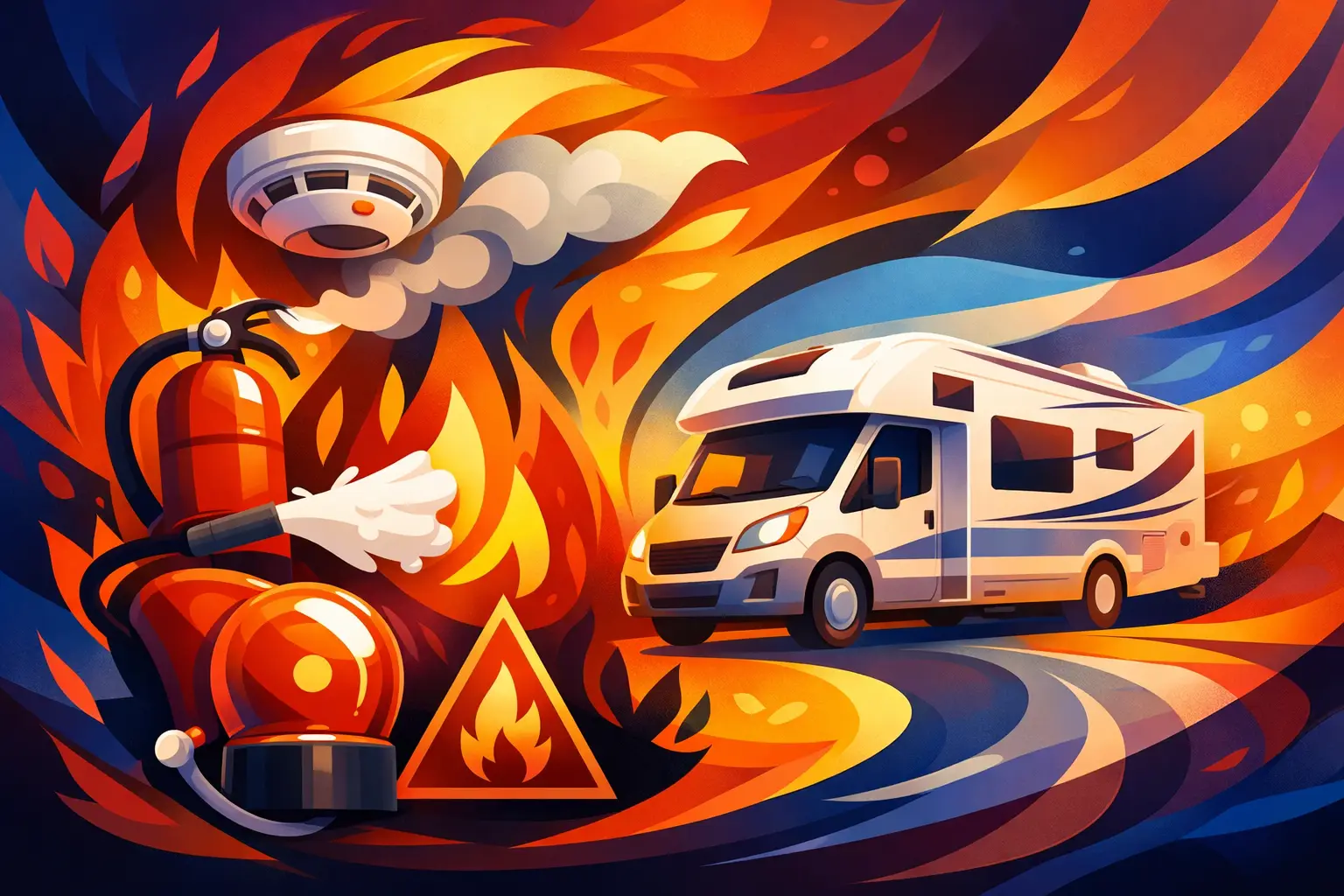
Motorhome Fire Safety Checklist for Every Trip
A fire in a motorhome can develop far faster than most owners expect. Soft furnishings, compact cooking areas, gas appliances and limited exits create a very different risk from home. This motorhome fire safety checklist gives you a sensible routine to follow before setting off, while on site and when packing away, so you can focus on the freedom of the road rather than avoidable worries.
Start with the essentials before every journey
Fire safety is not just about carrying an extinguisher. The best outcome is never needing it. A few minutes spent checking your motorhome before each holiday can identify a damaged cable, leaking gas connection or obstructed exit before it becomes a serious problem.
Begin with the basics: make sure your smoke alarm and carbon monoxide alarm are fitted, in date and working. Test both alarms using their test buttons, and replace batteries where applicable. Carbon monoxide has no smell or colour, so an alarm is essential wherever a motorhome has gas appliances, a solid-fuel heater or a generator operating nearby.
Your fire extinguisher and fire blanket should be easy to reach without having to lean over the hob or pass through a likely fire area. In many layouts, this means positioning them close to the habitation door or another clear exit. Check the extinguisher’s pressure indicator, condition and service date. If it has been discharged, damaged or is out of date, replace or service it before travelling.

Quick departure check
Before driving away, check that:
- smoke and carbon monoxide alarms test correctly
- the fire extinguisher is in date, secure and accessible
- the fire blanket is visible and can be pulled out easily
- all emergency exits, rooflights and doors open freely
- gas cylinders are properly secured in their locker
- loose items cannot fall onto the cooker, heater or electrical controls
This is a short list, but it covers the safety equipment that matters most when seconds count.
Recommended Reading


Check gas systems with care
Gas is brilliantly practical for touring. It powers cooking, heating and hot water without relying on a mains hook-up, but it needs to be treated with respect. Never ignore a smell of gas, a yellow or sooty flame, unusual appliance behaviour or a hissing sound around the gas locker.
Before a trip, inspect the gas hose for cracking, stiffness, rubbing or damage at the connections. Make sure the cylinder is upright, restrained and stored only in its designated locker. The locker should be clear of camping equipment, cleaning products and anything that could damage the regulator or block ventilation.
Check that the cooker, oven and heating controls are switched off before travel. Turn off the gas supply at the cylinder when the motorhome is not in use, unless your vehicle handbook or installed system states otherwise for a specific appliance. Do not travel with a portable gas heater running, and never use a barbecue, charcoal grill or camping stove inside the motorhome, awning or garage compartment. Even with a door open, the fire and carbon monoxide risk is too high.
If you suspect a leak, do not operate electrical switches, use a naked flame or start the engine. Turn off the gas supply if it is safe to do so, ventilate the vehicle, move people away and arrange for a suitably qualified gas engineer to inspect the system.
Keep electrics from becoming a hidden hazard
Electrical faults are another common source of motorhome fires, particularly where owners add chargers, inverters, leisure batteries or high-wattage appliances. The compact nature of a motorhome means cables are often routed through lockers and tight spaces, where damage can go unnoticed.
Inspect mains leads and hook-up adapters before each use. Look for cuts, flattened sections, loose plugs, scorched marks or signs of overheating. Use a proper outdoor-rated hook-up lead of the correct length rather than joining several domestic extension leads together. Keep connections off wet grass where possible and protect them from standing water.
Inside the motorhome, avoid overloading sockets with multi-way adaptors. A kettle, microwave, fan heater and hairdryer can quickly exceed the available supply, particularly on lower-amp campsite pitches. Check the site’s electric hook-up limit before using several appliances at once. If a plug, socket or cable feels hot, switch it off and investigate rather than carrying on.
Leisure battery systems deserve the same attention. Batteries should be securely mounted, properly ventilated where required and connected with correctly rated cables and fuses. If you are adding solar panels, a battery charger or inverter, choose quality components designed for leisure vehicles and get professional help where you are unsure. A cheap or improvised installation can cost far more than it saves.
Make cooking safer in a small space
Cooking is one of the pleasures of motorhome touring, especially after a long day outdoors. It is also the moment when fire safety needs your full attention. The hob is close to curtains, tea towels, worktops and often a narrow walkway, so simple habits make a real difference.
Keep flammable items away from the cooker before lighting it. That includes tea towels, oven gloves, kitchen roll, aerosol sprays and packaging. Use pans that fit the burner properly, turn handles inwards and never leave cooking unattended, even for a quick trip to the washroom or to answer the door.
If a pan catches fire, do not throw water over it. Turn off the heat if safe, use a fire blanket carefully or leave the vehicle and call for help if the fire cannot be controlled immediately. A fire blanket is generally the first choice for a small pan fire, while an extinguisher can make a confined cooking fire spread if used incorrectly.
Take extra care when cooking with children or pets on board. Establish a clear no-go area around the hob, especially in narrow coachbuilt motorhomes and campervans where there is little room to pass.
Plan an escape route, not just equipment storage
Alarms and extinguishers buy time, but getting everyone out is the priority. Every person travelling with you should know how to open the main door and at least one alternative exit. This may be a rear door, cab door, window or emergency rooflight, depending on your layout.
Do a quick mental walk-through when you first set up on site. Where are the keys? Is the main door blocked by chairs, shoes, bikes or an awning table? Can you reach an exit in darkness? Keep the central aisle as clear as possible overnight, and keep a torch or charged phone within reach of the bed.
If you tour with children, explain the plan in calm, simple terms. Their job is to get outside and move to an agreed safe meeting point, not collect belongings or look for pets. For couples and families, this small conversation can prevent confusion in a frightening moment.
Use campsite habits that reduce risk
Fire safety continues after you park up. Leave enough space around external vents, flues and the barbecue area. Do not dry clothes over heaters, block fridge ventilation grilles or place storage boxes against appliance vents. Good ventilation helps appliances work correctly and reduces heat build-up.
When using a barbecue, position it well away from the motorhome, awning fabric, stored fuel and overhanging trees. A level, stable surface matters, particularly on busy family sites where children and dogs may run past. Let the barbecue cool completely before packing it away.
At night, make a habit of checking the hob and oven are off, charging leads are in good condition and the route to the door is clear. You may choose to isolate the gas supply at the cylinder overnight, particularly if you are not using gas heating. It depends on your motorhome system and comfort needs, but the key is to know what is operating and why.
Replace worn safety gear before it lets you down
Safety equipment is easy to overlook because it spends most of its life unused. Add alarm battery changes, extinguisher checks and gas hose inspections to your regular motorhome maintenance calendar. Many owners find it helpful to do this at the start of the touring season and again before a longer continental or UK road trip.
When choosing replacement safety equipment, look for products suited to leisure vehicles: compact sizes, secure mounting options and clear instructions matter in a small living space. Quality alarms, properly rated extinguishers, fire blankets and well-made electrical accessories are practical upgrades, not unnecessary extras.
A well-prepared motorhome still feels like a home on wheels, just one where everyone knows the exit, the alarms work and the next journey can begin with greater peace of mind.