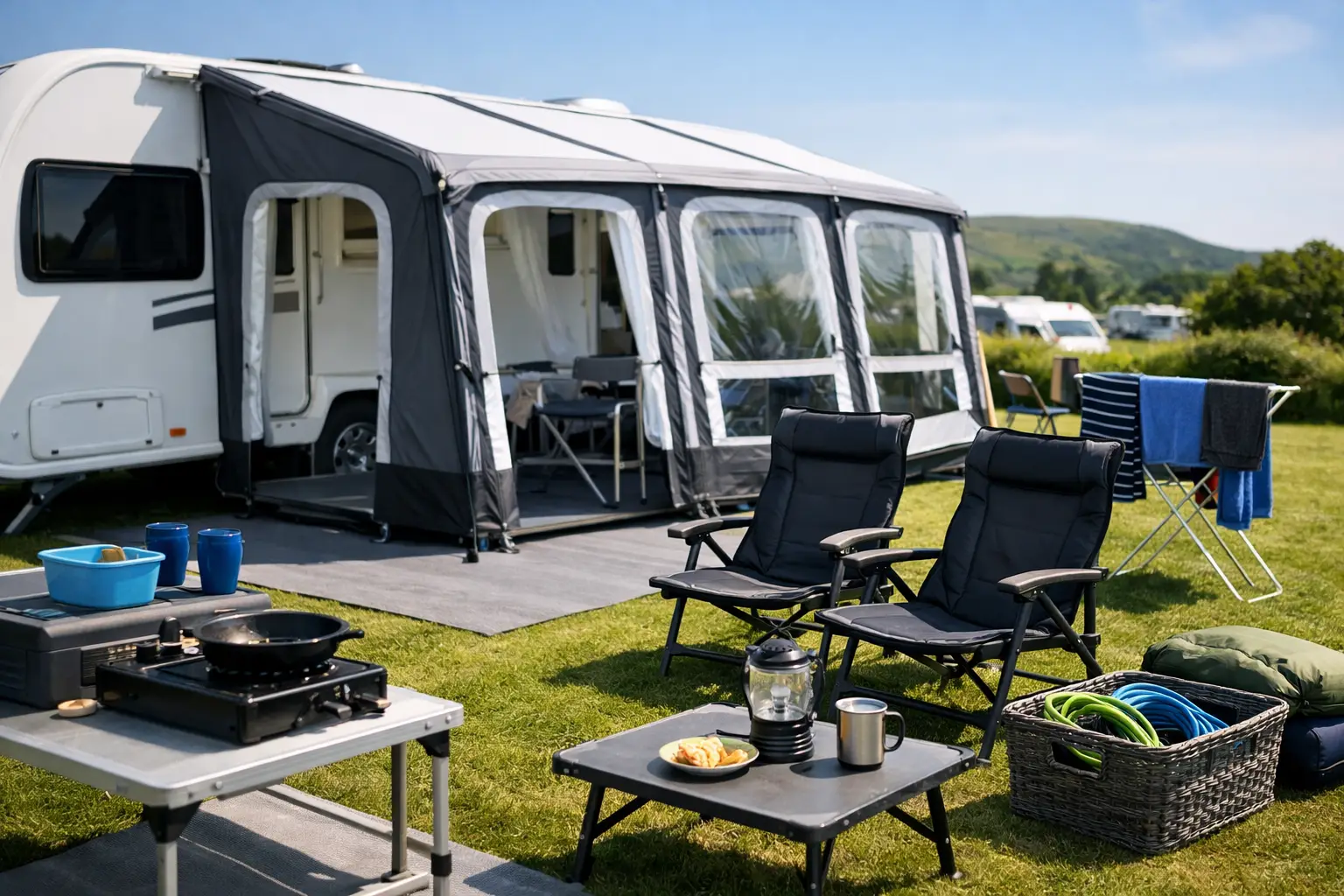
Caravan Awning Accessories Guide for UK Touring
A caravan awning can turn a cramped touring pitch into a proper living area, but only when the small supporting items are up to the job. This caravan awning accessories guide focuses on the kit that makes a real difference in British conditions: wet grass, gusty coastal sites, uneven ground and the familiar scramble to get set up before the rain arrives.
The best approach is not to buy every accessory at once. Start with the items that protect your awning and improve safety, then add comfort extras around the way you holiday. A couple enjoying quiet weekend breaks will need something different from a family using the awning as a dining room, play area and storage space for two weeks.
Start with a secure, weather-ready pitch
An awning is only as dependable as the way it is fixed to the ground. Standard pegs supplied with an awning may be fine on soft, level grass, but they are rarely ideal for every campsite surface. Carrying a selection of pegs prevents a simple job becoming an afternoon of frustration.
Screw-in pegs are a popular choice for firm or stony ground because they grip well and can be fitted with a cordless drill or peg puller. Heavy-duty steel pegs suit hard pitches, while broad plastic pegs can work well on softer ground. Take care around buried services, especially when pitching on a serviced site, and always follow the campsite’s guidance.
A peg remover is a small purchase that earns its place quickly. After a wet week, ordinary tent pegs can be remarkably stubborn, and levering them out with an unsuitable tool can bend the peg or damage your hands. A proper remover also makes pack-down quicker on moving day.
Storm straps are inexpensive reassurance
Storm straps run over the awning and anchor securely at both sides. They are particularly useful on exposed coastal pitches, open fields and sites where the weather changes rapidly overnight. They should be tensioned firmly but not excessively, as overtightening can place unnecessary strain on the awning fabric and poles.
For seasonal pitches or longer stays, use storm straps alongside correctly fitted pegs rather than as a substitute for them. Check the tension after heavy rain, as wet ground can soften and allow anchors to move.
Flooring that keeps the awning usable
Awning flooring is one of the biggest upgrades for comfort. Without it, people bring mud, grass cuttings and damp straight into the caravan. The right groundsheet creates a cleaner entrance, gives children somewhere comfortable to play and makes the whole outdoor area feel more settled.
Breathable awning carpets are a sensible choice for grass pitches. They allow air and moisture through, helping to protect the turf underneath and meeting the rules of many UK campsites. They are also easy to sweep and usually roll or fold into a manageable bag. A solid plastic groundsheet may feel more waterproof, but it can trap moisture and damage grass, so it is not suitable everywhere.
Consider the awning size before buying. A carpet that is slightly smaller than the enclosed area is often preferable, as it reduces the chance of rainwater tracking beneath the caravan wall or pooling at the edges. Add a doormat at the entrance and you will notice far less dirt making its way indoors.
Lighting for evenings outside
Once the kettle is on and the site has settled down, good awning lighting makes the space much more inviting. Battery-powered LED strip lights, lanterns and rechargeable hanging lights all work well, depending on whether you want general illumination or a softer atmosphere around the table.
For a simple setup, choose rechargeable lights with adjustable brightness and a warm-white setting. They avoid trailing cables across the doorway and can be moved outside for cooking or reading. If you prefer mains lighting, use equipment designed for outdoor or awning use and keep leads tidy, protected and away from wet ground.
A small motion-sensor light near the entrance is useful for late-night trips to the facilities block. It is a practical safety addition that also saves everyone being woken by a bright main light.
Furniture that earns its storage space
An awning can easily become cluttered, so choose folding furniture that has more than one purpose. A lightweight camping table is ideal for meals, games and food preparation, while stackable or folding chairs can be stored in the caravan when travelling. For longer holidays, a compact cupboard gives food, cups and cooking bits a home instead of leaving them on the floor.
Think about how you actually use the space. Families may value a larger table and sturdy chairs, whereas a touring couple could get more use from two reclining chairs and a small side table. If you work remotely while away, a stable table, comfortable seat and practical lighting will matter more than a full dining set.
Avoid filling every corner just because the awning is available. Clear walkways are safer, particularly when children, pets or damp footwear are involved. An awning should reduce indoor clutter, not simply move it outside.
Heating, cooling and sensible ventilation
British summer evenings can feel surprisingly cold, even after a warm day. A low-wattage electric heater can take the chill off an enclosed awning on a mains pitch, but it must be used with care. Check your campsite’s electrical supply limit, use a suitable hook-up lead and never leave a heater running unattended.
Ventilation matters just as much. Cooking, wet coats and several people in a confined area soon create condensation. Keep vents clear, open a door or mesh panel when conditions allow, and avoid drying large amounts of wet clothing in a fully closed awning. A small rechargeable fan can be welcome during hot spells, especially in a sun-facing porch awning.
Never use a barbecue, charcoal burner or fuel-burning heater inside an awning. The fire and carbon monoxide risk is serious, regardless of how open the doors might seem.
Useful accessories for a better caravan awning setup
Some accessories are less exciting than new furniture, but they solve the small annoyances that affect every trip. An awning rail brush helps remove grit from the caravan rail before threading the fabric through. This reduces snagging and protects the material over time. Silicone-free awning rail lubricant can also help if the bead is difficult to feed, but use only a product suitable for the job.
A repair kit is worth keeping in the caravan. Include matching repair tape or patches, spare pegs, pole clips, a mallet, a small brush and a few cable ties. A loose fitting or tiny tear is much easier to deal with on site than after it grows in wind and rain.
For privacy and shade, consider breathable side panels, sun canopies or window blinds made for your particular awning model. These can make a noticeable difference on a busy site or during bright mornings. Compatibility is essential here: measure carefully and check the fitting system before buying.
Storage and pack-down accessories
Packing an awning away wet is sometimes unavoidable, but it should be dried as soon as possible at home. Folding it away damp for days can lead to mildew, unpleasant odours and shortened fabric life. A large storage bag or labelled holdall keeps poles, fabric, pegs and straps together so nothing is left behind on the next departure day.
Pole pads and protective mats are useful where poles meet the caravan or sit on hardstanding, helping to prevent rubbing and slipping. If you use an inflatable awning, keep the correct pump, pressure gauge and any compatible replacement valve parts with the awning rather than in a separate garage box.
Choose accessories for your touring style
The most useful caravan awning accessories are the ones that suit your usual pitches, the length of your stays and the amount of gear you can realistically carry. New owners should prioritise secure pegging, a breathable carpet, storm straps, a mallet and basic lighting. Once those essentials are covered, comfort items such as furniture, storage and privacy panels are easier to choose with confidence.
Before setting off, lay out your awning kit at home and check that it is complete, clean and dry. A well-prepared awning setup gives you more time for the view, the first cup of tea and the freedom that makes touring so rewarding.