
Best Campervan Thermal Curtains for UK Trips
A cold strip of glass beside the bed can make an otherwise cosy campervan feel distinctly uninviting by 3am. The best campervan thermal curtains help tackle that problem without taking up valuable locker space. They add a useful layer between you and the windows, improving privacy, reducing draughts and helping the cab or living area hold on to warmth during UK touring trips.
For weekend campers and long-term travellers alike, thermal curtains are one of those simple upgrades that make a real difference. The right set will fit your van properly, close without fuss and stay practical through damp mornings, busy campsites and frequent packing away.
What Makes the Best Campervan Thermal Curtains?
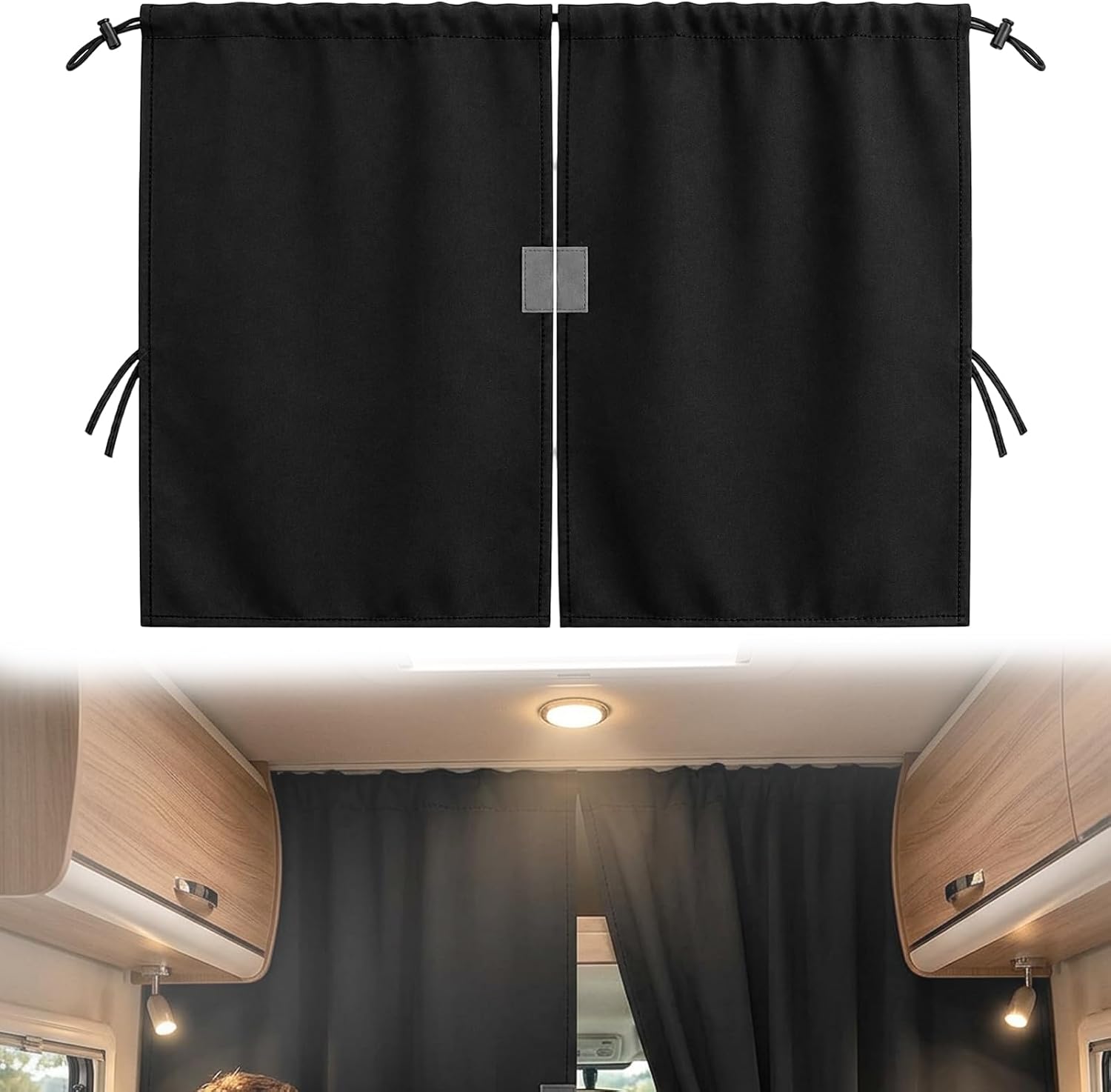
A thermal curtain is not just a dark curtain with a thicker feel. Its job is to slow heat transfer through the glass, where much of a campervan’s warmth can be lost. Most effective designs combine a decorative or hard-wearing front fabric with a thermal lining, often including a blackout layer. This gives you three benefits at once: more warmth, more privacy and less early-morning light.
Fit matters just as much as fabric. Curtains that stop well short of the window, leave wide gaps at the sides or hang loosely at the top will still look smart, but they will allow cold air to circulate. For the best result, choose curtains that overlap the window edges and sit as close to the wall or door as your rail system permits.

For cab windows, purpose-made insulated screens can be more effective than conventional curtains because they cover the windscreen and side windows directly. However, internal thermal curtains remain a versatile choice for the living space, rear doors, side doors and sleeping areas. Many owners use both: a cab screen for overnight stops and lined curtains throughout the van.
Choose Curtains for Your Campervan Layout
There is no universal best option because window shapes, rails and daily routines differ between campervans. Before shopping, measure every window you want to cover rather than relying only on the make and model of your vehicle. Width and drop are the essentials, but also check the available space around handles, flyscreens, cupboards and bed platforms.
Recommended Reading

Ready-made, vehicle-specific or made-to-measure?
Ready-made thermal curtains are usually the most affordable route. They can work well for rectangular windows and are ideal if you are fitting out a van on a sensible budget. Look for enough extra width to create gentle gathers when closed, as a flat, tightly stretched curtain provides less insulation and may leave gaps.
Vehicle-specific sets are designed around the windows, rails and fittings of popular campervan conversions. They can save time and give a neater finish, particularly around rear doors or sliding doors with awkward shapes. Check exactly what is included, though. A listing may cover the rear windows only, the cab only or a complete set.
Made-to-measure curtains are worth considering when your van has unusual glazing, a bespoke conversion or an existing rail arrangement that is difficult to replace. They cost more, but a close fit can improve thermal performance and make the interior feel properly finished. For a van used throughout autumn and winter, that investment may be easier to justify.
Rails, hooks and poppers
The fixing method affects convenience every time you stop for the night. Curtain rails with gliders offer a traditional, homely look and make it easy to open a window a little without removing the whole curtain. They suit most side and rear windows, provided there is space for the rail and fabric.
Poppers and press studs are popular on door curtains because they keep the material close to the glass and stop it swinging while driving. Magnetic fixings can be quick to fit and remove, but they only work reliably where there is suitable metal around the window. Suction cups are useful for temporary privacy curtains, although they are less dependable in very cold weather or on damp glass.
If you regularly use the sliding side door, make sure the curtain can be secured out of the way. A loose curtain caught in the door track is a nuisance you only need once.
Materials That Work on British Touring Trips
Thermal lining is the feature to prioritise. A multi-layer lining with blackout properties is generally more useful than a thin decorative fabric alone, especially for spring and autumn breaks when evenings cool quickly. It also helps keep the van darker during bright summer mornings – welcome when children, or tired adults, need a little longer in bed.
A reflective backing can improve insulation by reflecting radiant heat, but consider how it looks from inside and whether it creates extra rustling or stiffness. Quilted fabrics feel warm and can soften the interior, while heavier woven materials often hang better and stand up well to regular use. The trade-off is bulk: thick curtains take more room when tied back and can feel cumbersome in a compact conversion.
For family campervans and vans used with dogs, washable fabric is a sensible priority. Condensation, muddy hands and campsite cooking all leave their mark. Check the care instructions before buying. Some thermal curtains can be machine washed on a gentle setting, while others need wiping down or professional cleaning because their backing can be damaged by heat.
Colour is partly personal, but it has a practical side too. Dark shades provide a cosy, private feel and tend to block light well, though they can make a small van seem more enclosed. Lighter greys, creams and soft neutral colours keep the cabin brighter in daytime. If you want a lighter interior, choose pale curtains with a proper blackout lining rather than sacrificing insulation for appearance.
Curtains, Condensation and Ventilation
Thermal curtains can reduce the cold surface effect of glass, but they cannot solve condensation on their own. Moist air from breathing, cooking and drying clothes still needs somewhere to go. In fact, curtains held tightly against damp windows may trap moisture if the van is not ventilated.
Keep roof vents open as recommended by your vehicle manufacturer, even in cooler weather, and use a window vent position where it is safe to do so. Wipe down wet glass in the morning before packing curtains away. If the lining feels damp, leave it open to air while you make breakfast rather than rolling it up immediately.
This is particularly relevant on off-grid overnight stops, where a small space can collect moisture quickly. A good heating and ventilation routine, alongside thermal window coverings, is far more effective than relying on any single accessory.
A Quick Buying Check Before You Order
When comparing the best campervan thermal curtains, check these practical details before focusing on colour or pattern:
- Measure the glass area and the available fixing space, including clearance for handles and doors.
- Confirm whether the set includes rails, hooks, tie-backs, poppers or only the curtain panels.
- Look for thermal and blackout lining rather than assuming a thick-looking fabric is insulated.
- Check the packed bulk, washing instructions and whether the curtains can stay fitted while travelling.
- For cab areas, decide whether an insulated screen would provide better overnight coverage than curtains alone.
A low price can be tempting, but poorly fitting curtains often end up stored in a cupboard after one trip. Buying for the way you actually travel is the better value. A summer-only van may need privacy and blackout first, while a campervan used for year-round escapes benefits most from a close-fitting, well-lined design.
Make Them Work Harder on Every Trip
Close thermal curtains before the van cools down in the evening, rather than waiting until the heater has already been working for an hour. During sunny winter days, open south-facing curtains to let in warmth, then close them again before dusk. This small routine can make the interior more comfortable without asking more of your heating system or leisure battery.
Tie curtains back securely while driving and avoid blocking mirrors, lights or safety equipment. It is also worth keeping a small microfibre cloth nearby for morning windows – a simple habit that protects your curtains and keeps the living space feeling fresh.
The best campervan thermal curtains should make each stop feel less like making do and more like settling in. Choose a fit that suits your van, a lining that suits your season and fittings you will not resent using after a long day on the road. Then you can concentrate on the view outside, knowing the inside is ready for a comfortable night.