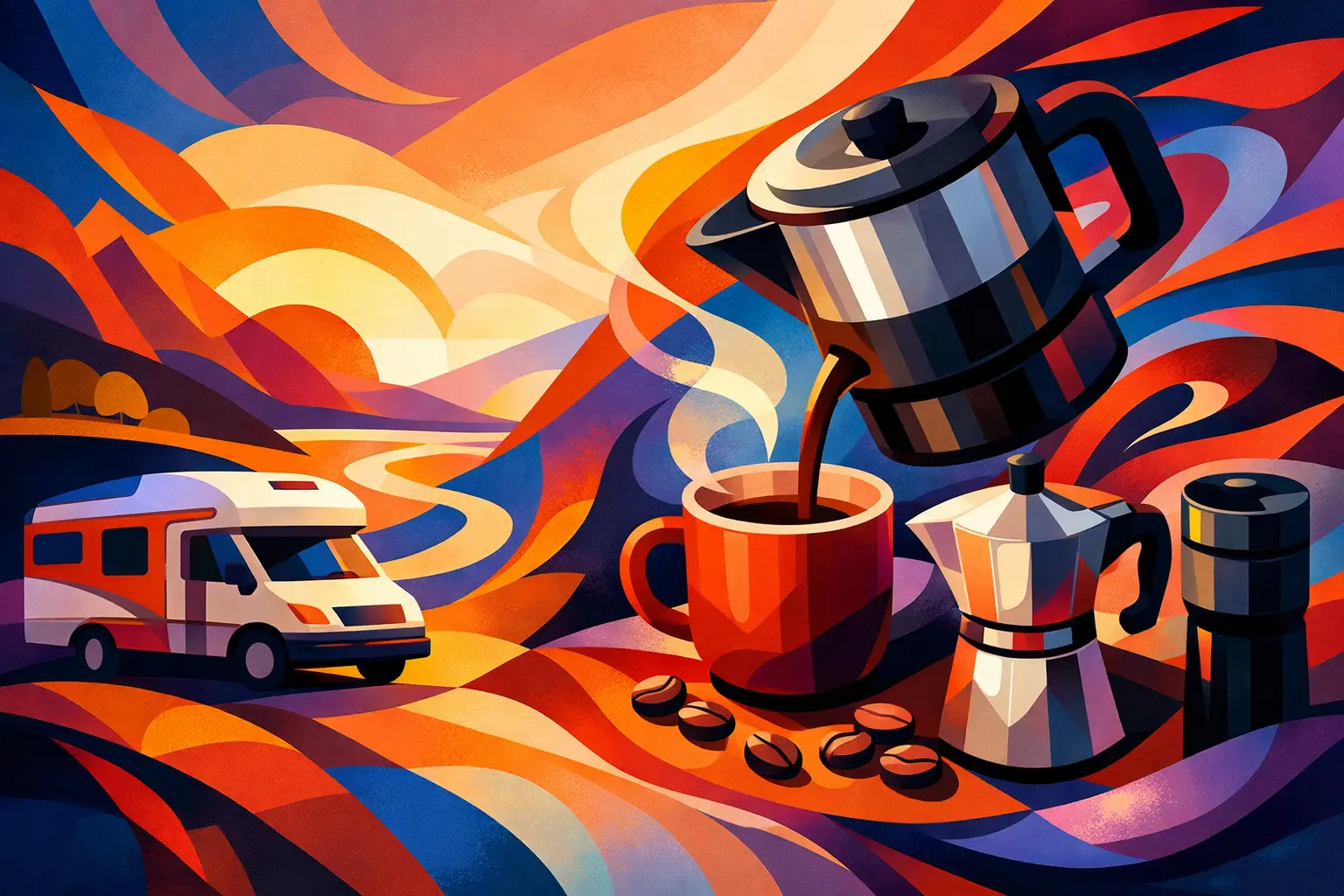
Best Campervan Coffee Maker Choices
The first morning at a quiet stopover can be brilliant – until the coffee setup demands more power, water or washing-up space than your campervan can spare. The best campervan coffee maker is not always the one that makes the most elaborate drink. It is the one that suits how you travel, whether that means a quick brew before a coastal walk, a proper flat white on an electric pitch, or dependable coffee far from a mains hook-up.
For most UK campervan owners, the choice comes down to four things: power, space, cleaning, and the style of coffee you genuinely enjoy. Get those right and a simple morning routine becomes one of the best comforts of touring.
Choosing the best campervan coffee maker for your trips
Think about where you spend most of your nights before focusing on features. If you mainly use serviced campsites, a mains-powered machine can be a realistic luxury. If you favour pub stopovers, festivals, wild-feeling locations where permitted, or off-grid sites, a manual brewer will usually make much more sense.
Your existing cooking setup matters too. A compact gas hob makes a moka pot or stove-top kettle an easy option. An induction hob needs induction-compatible cookware. If your campervan has limited worktop space, a brewer that packs inside a mug or stores in a cupboard is more useful than a machine that looks smart at home but rattles around on the move.

There is also no need to buy a dedicated coffee machine simply because it is marketed for camping. A quality insulated flask, hand grinder and compact brewer can deliver excellent coffee with far less fuss. On the other hand, regular espresso drinkers may decide that a small electric machine is worth the space when they tour mostly with hook-up.
The main coffee maker types compared
Cafetiere: simple, familiar and excellent off-grid
A small cafetiere is one of the most practical choices for a campervan. It needs only ground coffee and hot water, has no electrical demand, and makes enough for one or two people without much effort. Choose a sturdy stainless-steel version rather than glass if it will live in a locker or travel on rougher roads.
Recommended Reading
The trade-off is cleaning. Wet grounds need to be tipped into a bin, caddy or rubbish bag, never down the sink where they can contribute to blocked drains. It also needs a kettle, although that is likely to be useful for tea, porridge and other meals anyway. For couples who enjoy a rounded, full-bodied brew, this remains a very dependable touring option.
AeroPress-style brewer: compact and quick to clean
An AeroPress-style press brewer is a strong choice for solo travellers and anyone short on storage. It is lightweight, produces a clean cup quickly, and the used coffee comes out as a neat puck that can be emptied into the rubbish. That makes it noticeably tidier than a cafetiere when water is limited.
It is best suited to making one or two coffees at a time. If the whole family wants drinks before setting off, repeated brewing can become a chore. Still, for campervan owners who like good coffee without relying on mains electricity, it is hard to beat for convenience.
Moka pot: bold coffee from your hob
A moka pot makes a concentrated, rich coffee that works well on its own or topped up with hot water or milk. It is compact, inexpensive and needs no electricity, so it is ideal for gas-equipped campervans. Several sizes are available, but a two-cup or three-cup model is usually more practical than a large pot in a small vehicle.
Check compatibility before buying. Traditional aluminium moka pots do not work on induction unless used with an adaptor, while stainless-steel induction models can cost more. They also require a little attention on the hob. Leave one unattended and it can overheat, leaving a bitter taste and a messy clean-up.
Pour-over dripper: light, affordable and flexible
A collapsible silicone dripper or compact filter cone is one of the least bulky ways to make fresh coffee. Place it over a mug, add a paper or reusable filter, then pour hot water slowly over the grounds. It is particularly handy for people who like a lighter, cleaner-tasting coffee and want equipment that can disappear into a drawer.
The downside is that paper filters are another consumable to remember. Reusable metal filters reduce waste but can allow more sediment through and take longer to clean. A pour-over setup also benefits from a controlled-pour kettle, although a careful hand with a normal camping kettle will do the job.
Electric espresso machine: best for hook-up comfort
A compact electric espresso machine brings a more home-like coffee routine to a campervan. Pod machines are fast and convenient, while small bean-to-cup and espresso machines offer more control. They are most suitable for travellers who regularly stay on electric hook-up and have secure cupboard space for transport.
Power is the deciding factor. Many coffee machines draw between 1,000W and 1,500W or more while heating. They can run easily from a campsite mains supply, but are rarely sensible from a small leisure battery through an inverter. The inverter must be rated for the machine’s peak load, appropriately installed, and the battery bank must have enough usable capacity. A standard 12V socket is not designed for this job.
Pod machines also create waste and tie you to a particular capsule system. They can still be a good fit for a couple who values speed and consistency, but it is worth balancing that convenience against storage, electricity use and the cost of pods on longer holidays.

Power, water and storage: the details that matter
A coffee setup should work with your campervan, not dictate the whole electrical plan. On a mains pitch, check that your machine and kettle will not overload a low-amp campsite supply when used alongside a heater, microwave or battery charger. Many UK sites provide ample capacity, but not every pitch or continental site is the same.
Off-grid, heating water is often the biggest energy demand. A low-wattage 12V travel kettle may sound ideal, but it can take a long time to boil and will still place a meaningful load on the battery. For most gas-equipped vans, boiling water on the hob and using a manual brewer is more efficient and much quicker.
Consider water use as well. Espresso machines with water tanks, steam wands and drip trays can require more frequent refilling and cleaning. A manual brewer needs only the water in your mug plus a small rinse. If you are carefully managing a modest fresh-water tank, that difference adds up over several days.
Store every item as though you expect to brake sharply. Glass jugs, loose grinders and heavy machines need a dedicated cupboard, non-slip mat or travel case. Do not leave a coffee machine on the worktop while driving, even on a short move between pitches.
A practical setup for different campervan travellers
For occasional weekend campers, a stainless-steel cafetiere and a compact kettle are usually all that is needed. It is familiar, affordable and easy to replace if damaged.
For off-grid couples, a moka pot or press brewer paired with pre-ground coffee offers the best balance of flavour, low power use and small footprint. Add a hand grinder only if freshly ground beans are a genuine part of the ritual, not another task before a morning drive.
For families, a larger cafetiere may be the simplest answer because it makes several cups in one go. If adults have different preferences, two small brewers can actually be easier to pack and use than one complicated machine.
For long-stay campsite tourers, an electric pod or espresso machine can be a worthwhile upgrade. Look for a compact model with a removable drip tray, straightforward controls and parts that are easy to clean in a small sink. Caravan Motorhome RV shoppers should also compare dimensions carefully, including the height needed to lift the lid or remove a water tank.
Do not forget the coffee itself
The best equipment cannot rescue stale coffee. Keep beans or grounds in an airtight container, away from heat and direct sunlight. Buying smaller bags can be smarter for touring than carrying a large supply that loses freshness by the end of a trip.
A small hand grinder gives the freshest result, but it adds time and can be noisy on an early morning pitch. Pre-ground coffee is easier, especially for short breaks, while coffee bags offer the ultimate no-fuss option when space and washing-up are at a premium. They are not the cheapest route, but they are useful as a back-up for travel days.
Whatever you choose, make a trial coffee at home before packing it for a holiday. Check how long it takes, where the grounds go, how it fits in its cupboard and whether your chosen mug actually fits underneath. The right campervan coffee maker should feel like a small pleasure, not another item to manage – leaving you free to enjoy the view while the kettle boils.