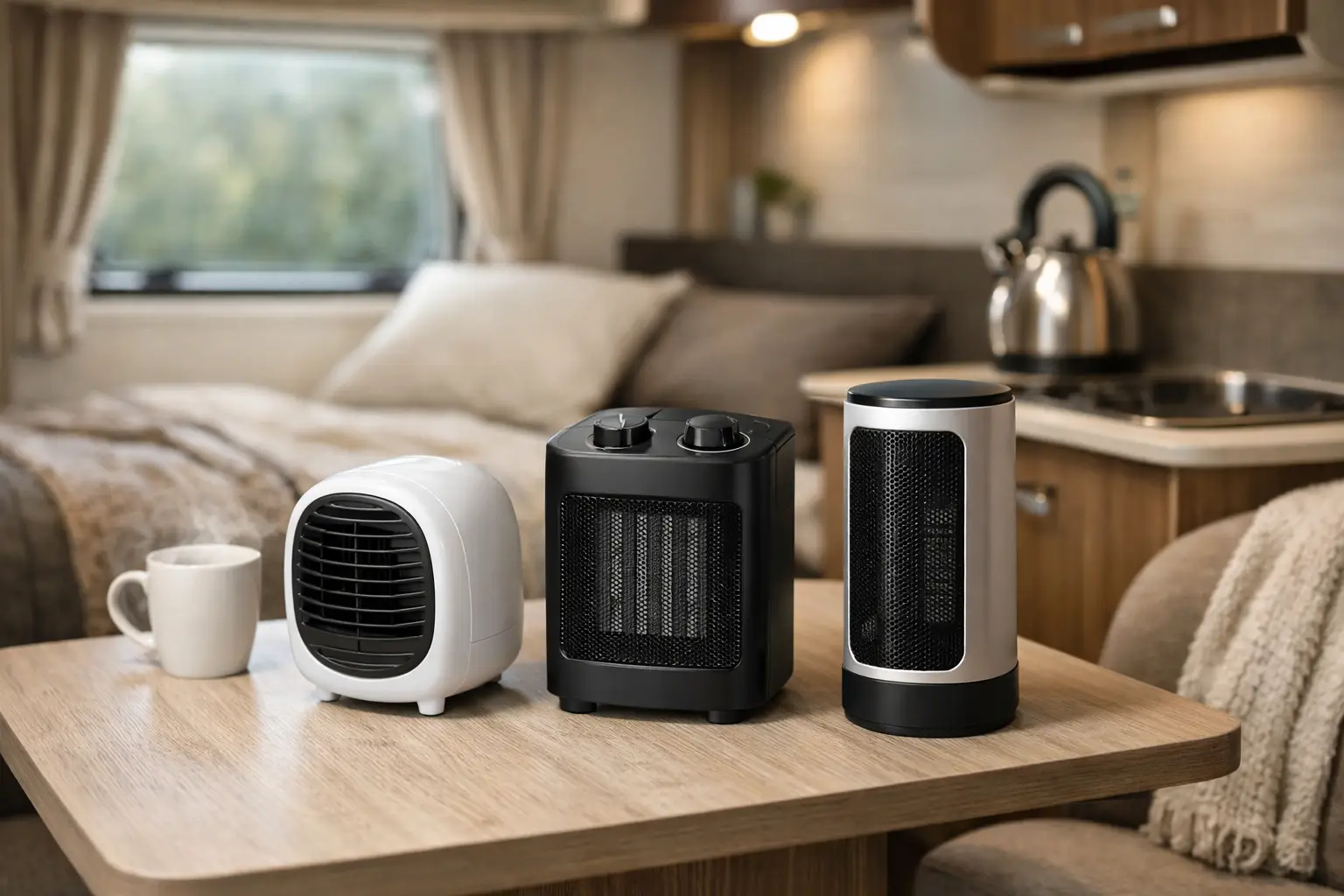
A cold morning in a caravan is when a fan heater earns its cupboard space. You want enough warmth to get dressed comfortably, without tripping the site electrics, drowning out the radio or taking up valuable floor room. This caravan fan heater comparison focuses on the choices that matter most for UK touring: power draw, size, safety, noise and the way you actually camp.
For many caravanners, a compact electric heater is a useful back-up to the vehicle’s fitted heating system. It can take the chill off an awning, warm the lounge before breakfast or provide targeted heat on a pitch with electric hook-up. The best choice is rarely the largest heater. It is the one that suits your caravan, your pitch supply and your touring habits.
Caravan fan heater comparison: what changes the choice?
Fan heaters work by pulling air across an electric element and blowing the warmed air into the room. They heat up quickly, which is their main advantage over many oil-filled radiators. Most portable models offer two heat settings, often around 1,000W and 2,000W, plus a fan-only setting for warmer weather.
The key limitation is the electrical hook-up available on site. A 2,000W heater draws roughly 8.7 amps at 230V. On a 10-amp or 16-amp pitch, that may be perfectly manageable, but remember that the caravan battery charger, fridge, kettle, microwave and water heater may also be using power. On a 6-amp continental-style supply, even a 1,500W heater can be too demanding once other appliances are running.

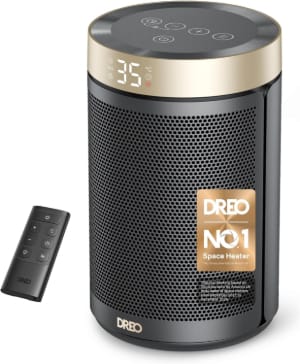
Compact ceramic fan heater ideal for taking the chill off awnings or small caravan interiors without hogging floor space. Offers flexible heat settings, timer and remote control so you can stay cosy from the comfort of your seat.
Caravan Use: Compact footprint, ideal for tight van interiors
Power Options: 1500W output with energy-saving low-heat modes
Comfort Control: Digital thermostat, 12-hour timer, remote operation
A selectable low setting is therefore more valuable than headline wattage. A 500W, 750W or 1,000W option gives you much more flexibility on lower-amp pitches and can maintain comfort overnight without putting the supply under unnecessary pressure.
Small ceramic fan heaters
Ceramic fan heaters are a popular caravan option because they are compact, quick to warm up and commonly available with lower heat settings. Their ceramic heating element is designed to regulate heat effectively, while the fan distributes warmth around a small interior faster than a static heater.
They suit couples and families who want a portable heater for short bursts: warming the caravan first thing, drying the air after a damp walk, or adding a little heat in an awning while someone changes out of wet clothes. Look for a model with an adjustable thermostat, two heat levels and a stable, wide base.
The trade-off is fan noise. Some units are pleasantly quiet; others produce a constant hum that may be noticeable in a compact caravan at night. If you are a light sleeper, use a ceramic heater to warm the space before bed, then rely on the caravan’s installed heating or a low, thermostatically controlled setting if appropriate.
Traditional compact fan heaters
A standard compact fan heater is often the most affordable route to additional warmth. These tend to be simple, light and easy to store in a locker. Many have a basic dial thermostat and fan-only mode, making them useful beyond the colder months.
For occasional weekends away with electric hook-up, this straightforward design can be all you need. It is especially handy as a spare heater to keep in the awning or garage at home. However, cheaper models can be louder, may have fewer low-power choices and can feel less refined in temperature control.
Check the dimensions before buying. A heater that seems tiny on a product page can still take up a surprising amount of room beside a caravan bed or under the dinette. A carry handle and a cable length that reaches a sensible socket position also make day-to-day use easier.
Low-wattage heaters for limited hook-up
Low-wattage fan heaters are the sensible pick for sites with 6-amp supplies, for touring abroad, or for owners who prefer to leave plenty of capacity for cooking and charging devices. They often run at 500W to 1,000W, sometimes with a second setting around 1,500W.
They will not heat a large caravan as quickly as a 2,000W unit, particularly on a frosty evening. Yet they can be a better touring companion because they reduce the risk of repeatedly tripping the bollard. In a well-insulated caravan, a low-power heater can maintain a comfortable background temperature remarkably well once the space is already warm.
If your usual trips involve early and late-season touring, choose controllable warmth rather than maximum output. A thermostat prevents the heater running flat-out when the caravan has reached the desired temperature, which is kinder to your electricity allowance and more comfortable for everyone inside.
Power, pitch supply and real-world running costs
Before plugging in any portable heater, check the amp rating at the site bollard and consider what is already switched on. The calculation is simple: watts divided by 230 gives an approximate amp draw. A 1,000W heater uses around 4.3 amps, while a 1,500W model uses roughly 6.5 amps.
That means a 1,000W heater is normally a comfortable match for a 10-amp pitch, provided you avoid operating power-hungry appliances at the same time. A 2,000W unit on the same supply leaves little room for a kettle or microwave. It depends on how disciplined you are about appliance use and whether the caravan’s built-in systems are also drawing power.
Avoid using a domestic extension lead coiled on a reel inside the caravan. Use the correct caravan-rated hook-up equipment outside, and plug the heater directly into an internal socket. Never run the cable where it could be trapped by a door, covered by a rug or become a trip hazard.
A fan heater should not normally be run from a leisure battery through an inverter. Heating uses a great deal of power and can flatten a battery very quickly, even when the inverter appears capable on paper. For off-grid trips, improve insulation, use suitable gas heating where fitted and follow the vehicle manufacturer’s guidance.
Safety features worth paying for
A caravan moves, has narrow walkways and often contains soft furnishings close together. Safety features are not an optional extra. Choose a heater with tip-over protection, which switches it off if knocked over, and overheat protection, which cuts power if airflow is restricted or the unit becomes too hot.
A cool-touch outer casing is helpful where children, pets or sleepy adults might brush past it. A clear on/off control and thermostat are equally useful, especially in low light. Do not be tempted to dry towels, socks or coats directly over a fan heater. It blocks airflow and creates a fire risk.
Place the heater on a level, firm surface with clear space around the front, back and sides. Keep it well away from bedding, curtains, upholstery, clothing and the caravan’s washroom. Never leave it unattended, run it while travelling, or use it while asleep unless the manufacturer specifically confirms that the model and its settings are suitable. Even then, caution is the better choice in a compact leisure vehicle.
It is also worth checking the plug, cable and casing before each trip. Stop using the heater if the cable is damaged, the plug becomes unusually hot, or the appliance gives off a burning smell. Portable electrical equipment should be maintained properly, particularly when it spends time in damp lockers and awnings.
Noise, storage and where you need heat
The quietest heater is not always the most practical, and the most powerful unit is not always the quickest way to feel comfortable. In a small caravan, positioning makes a major difference. A fan heater aimed safely into the central living area can circulate warmth efficiently, while one tucked behind furniture will struggle and may overheat.
For an awning, think carefully before relying on a fan heater as the main heat source. Fabric spaces lose heat quickly, and an unsuitable heater can draw considerable power for limited benefit. A low setting may be useful for taking the edge off on a mild evening, but ensure the heater is rated for the environment and protected from moisture. Never use an indoor appliance where rain, condensation or wet ground could affect it.
Storage is another practical consideration. A squat, lightweight heater with an integral handle is easier to lift into an overhead locker, but it still needs a secure place where it will not rattle about in transit. Keep the instructions with it so that every user knows its clearance requirements and controls.
Choosing the right heater for your touring style
For occasional summer holidays with electric hook-up, a small ceramic or standard fan heater with a 1,000W setting is a simple, space-saving choice. For regular spring and autumn touring, prioritise an adjustable thermostat, quiet operation and low-wattage control. If you visit a mixture of UK and overseas sites, choose a model with several sensible settings rather than one that only runs at full 2,000W power.
Families should put stability, cool-touch surfaces and easy controls at the top of the list. Couples touring mainly on well-serviced UK pitches may value faster warm-up and a quieter fan. Motorhome and campervan owners with tighter storage should measure the intended locker first and consider whether the fitted heating already covers most needs.
The best fan heater is the one that adds comfort without becoming another thing to manage. Choose a safe, compact model with a useful low setting, respect the pitch amp limit, and your caravan can feel welcoming even when the weather has other ideas.