A quiet aire, a rural CL site or a busy ferry stop can all feel relaxed right up until you leave the motorhome for an hour and start wondering what you have left behind. That is exactly why a good motorhome security devices guide matters. The right setup does more than deter theft – it helps you enjoy the trip without constantly checking the window or second-guessing every parking spot.
The tricky part is that security for motorhomes is rarely about buying one expensive gadget and calling it done. A useful setup is usually layered. You want visible deterrents, sensible physical protection and a few smart devices that alert you quickly if something is wrong.
Table of Contents
- How to use this motorhome security devices guide
- Start with physical security
- Steering wheel and pedal locks
- Wheel clamps and wheel locks
- Door and cab security locks
- Electronic devices add speed and awareness
- Alarms and sensors
- Trackers and GPS recovery systems
- Cameras and motion alerts
- Don’t forget the small valuables inside
- Safes and lockboxes
- Key pouches and signal blocking
- What matters most when buying security devices
- A sensible security setup for most UK owners
How to use this motorhome security devices guide

This high-visibility steering wheel and seat belt lock adds a visible layer of security when your car, van or motorhome is parked on a touring stop. It has a metal head and comes with three keys, so keep a key somewhere separate in case one is misplaced.
FEATURES:
Dual Locking: Secures steering wheel and seat belt
Visible Colour: Yellow finish stands out when fitted
Spare Keys: Supplied with three keys
PROS:
Provides a visible deterrent when parked
Suitable for cars, vans and motorhomes
Three keys offer spares for touring
CONS:
Universal fit may not suit every vehicle
Requires storage space when not in use
Think about how you actually travel before you buy anything. A couple doing long UK tours and staying mainly on established sites may prioritise door locks, a safe and a simple alarm. A family stopping at attractions, beach car parks and motorway services might want stronger external deterrents and better tracking. If you store your vehicle off-site, storage security becomes just as important as holiday security.
That is where many people overspend. They buy gear for worst-case scenarios without checking whether it suits their motorhome, their insurance requirements or the way they tour. In most cases, a balanced mix of devices works better than the most complicated system on the market.
Start with physical security
Physical devices are still the first line of defence because they are visible and inconvenient for a thief to deal with. If someone walks up to a motorhome and sees several obvious barriers, they may move on to an easier target.
Steering wheel and pedal locks
A good steering wheel lock remains one of the simplest buys for any owner. It is easy to fit, highly visible and useful whether you are parked at home, on a campsite or at a day stop. Pedal locks can add another layer, although they take slightly longer to fit and remove, so convenience matters. If you are likely to get lazy with it after a week on the road, it is probably not the right choice.
The best option here is usually the one you will use every single time. Heavy-duty products are excellent, but only if they are practical enough to become part of your normal routine.
Wheel clamps and wheel locks
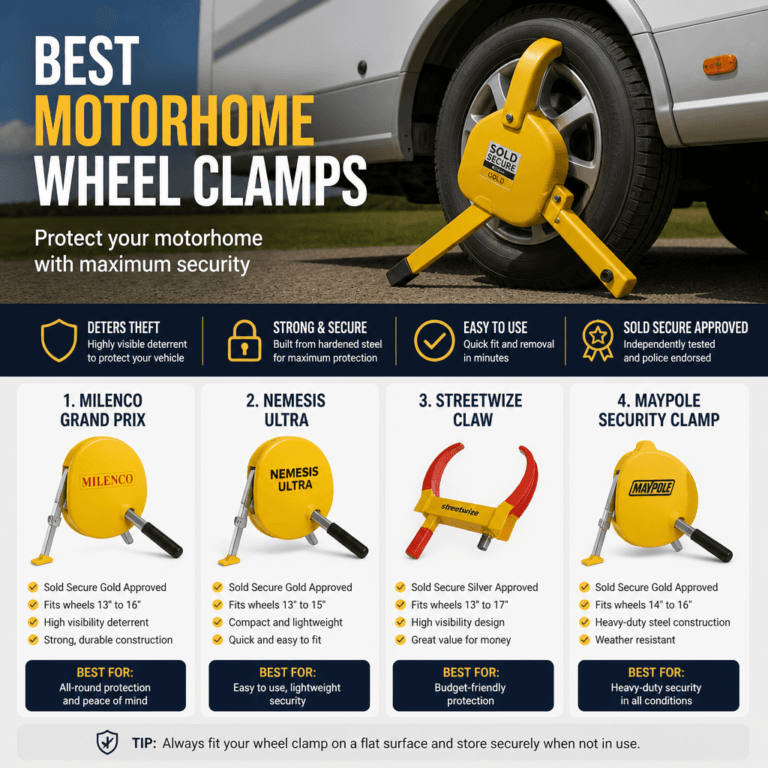
Wheel clamps are more common for storage or longer stays, but some owners use them regularly when pitched up for several nights. They are bulky, so storage space is the main drawback. On a smaller campervan, that can be a deal-breaker. On a larger motorhome with more garage room, they make more sense.
If your vehicle spends part of the year in storage, a wheel clamp can be a strong addition. It is not glamorous, but it sends a clear message.
Door and cab security locks
Factory locks are not always enough, especially on older vehicles. Additional cab door locks, habitation door locks and internal security handles can reduce weak points. This matters because many motorhome thefts are opportunistic rather than highly sophisticated.
Some aftermarket locks are designed for overnight use, while others are aimed at securing the vehicle when left unattended. It is worth checking exactly what each product is built for, because convenience and protection are not always the same thing.

This yellow Alca wheel clamp is designed for use with Ducato and Crafter-based motorhomes and campervans when parked on a touring pitch or at home. Its extendable design and two supplied keys offer a visible deterrent, though check compatibility with your vehicle’s wheels before setting off.
FEATURES:
Extendable Fit: Adjusts to suit compatible wheels
Visible Deterrent: Yellow finish stands out when parked
Spare Key: Supplied with two keys
PROS:
Adds a physical security measure when parked
Extendable design suits compatible vehicles
Two keys provide a spare
CONS:
Check wheel compatibility before buying
Requires storage space when travelling
Electronic devices add speed and awareness
Physical security slows someone down. Electronic security improves your chances of knowing about a problem quickly and recovering the vehicle if the worst happens.
Alarms and sensors
A motorhome alarm system can cover cab doors, lockers, windows and habitation doors, with some systems also offering tilt sensors or perimeter detection. This can be especially useful if your motorhome carries bikes, generators or other valuable kit outside or in external lockers.
Not every owner needs a full premium alarm package. If your vehicle is newer and already has basic security, you may only need to strengthen weak spots. If your van is older or has been upgraded with expensive accessories, a more advanced alarm can be worthwhile.
Look closely at false alarms before buying. A system that goes off every time there is heavy wind or movement on site soon becomes irritating, and people stop using irritating security devices. You should fit motorhome alarm protection to your van.
Trackers and GPS recovery systems
A tracker is one of the most valuable additions for higher-value motorhomes. If the vehicle is moved without permission, a tracker can improve the chances of recovery and may satisfy insurance conditions in some cases.
There are broadly two types. Some are basic GPS units with app-based monitoring, while others connect to monitored recovery services. The first option is often cheaper and easier to manage. The second can offer more reassurance, particularly if you store your motorhome away from home or leave it unattended for long periods.
The trade-off is cost. A monitored tracker may involve installation fees and subscriptions, so it is best suited to owners who genuinely need that extra layer.
Cameras and motion alerts
Dash cams and external security cameras are increasingly popular with motorhome owners. A dash cam is useful while driving and can also offer parking surveillance depending on the model. External cameras with motion alerts can help when the motorhome is in storage or parked on a driveway.
That said, cameras are better for evidence and awareness than prevention. They are helpful, but they should support locks and alarms rather than replace them.
Don’t forget the small valuables inside
Vehicle theft is the biggest worry for most owners, but many losses are much smaller. Mobile phones, tablets, documents, wallets and keys are often what cause the most stress mid-trip.
Safes and lockboxes
A compact safe fixed inside the motorhome can be a smart buy for passports, spare cards and small valuables. It will not stop a determined thief indefinitely, but it can stop a quick grab. That matters when someone only has a short window to get in and out.
Choose something that fits your layout. A huge safe that eats storage space may not be realistic, while a compact lockbox tucked out of sight is often enough for touring essentials.
Key pouches and signal blocking
If your motorhome uses keyless entry, signal-blocking pouches are worth considering. Relay theft is not the only risk owners face, but it is easy enough to guard against with a low-cost product. It is one of those small additions that can make very good sense.

This two-piece set is designed to block signals from keyless-entry car keys when they are stored inside, helping reduce the risk of relay theft at home or on a touring pitch. Keep a spare key in the box and a regularly used key in the pouch, while allowing for secure storage in your caravan or motorhome.
FEATURES:
Signal Blocking: Helps shield keyless-entry keys when enclosed
Two Pieces: Includes a box and pouch
Key Storage: Keeps keys contained between journeys
PROS:
Offers two storage options for car keys
Useful for touring and overnight stops
Helps protect against keyless relay theft
CONS:
Keys must be enclosed to block signals
Limited to storing compatible keys
What matters most when buying security devices
This part of the motorhome security devices guide is the one that saves money. Good security products should fit your vehicle, your habits and your storage space. There is no point buying a massive clamp you hate carrying, or a complex alarm app you never check.
Compatibility comes first. Always check whether a lock or alarm is designed for your motorhome base vehicle and habitation layout. Next comes ease of use. Security only works if you actually use it when tired, in the rain and halfway through a busy travel day.
It is also worth checking insurance expectations. Some insurers prefer or require specific approved devices for higher-value vehicles. Even if they do not, fitting recognised security products may still help with peace of mind.
Finally, think in layers. A steering lock, added door security and a tracker often make a more practical package than spending the same money on one premium item.
A sensible security setup for most UK owners
For many touring owners in the UK, the sweet spot is a visible steering wheel lock, upgraded door security, an alarm or sensor system that suits the layout, and a tracker if the vehicle value justifies it. Add a small safe for documents and a key-blocking pouch if your fob needs one, and you have covered the main risks without turning every stop into a security drill.
If storage security is the bigger concern, shift more of your budget towards wheel clamps, trackers and external cameras. If day-trip parking is your bigger concern, visible deterrents and good alarms usually deserve more attention.
That is the real lesson. The best security setup is not the most expensive one. It is the one that matches the way you travel and gives you confidence to lock up, head out and enjoy the day.
At Caravan Motorhome RV, we know most owners are not looking for gadgets for the sake of it. They want practical gear that protects the vehicle, fits real touring life and feels worth the money. Get the basics right first, then build from there, and every trip starts to feel that bit easier.